


Application of titanium mesh in orbital fracture surgery
Orbital fracture is a common facial injury, often caused by accidents. In recent years, titanium mesh has been widely used as an emerging medical material in orbital fracture surgery. The superior performance of titanium mesh makes it an important choice for repairing orbital fractures.
1. Basic characteristics of titanium mesh
Titanium mesh is a biocompatible and corrosion-resistant medical implant material with the following characteristics:
1) Lightweight: The density of titanium mesh is relatively low, and it will not cause excessive burden on surrounding tissues after implantation.
2) High strength: Titanium mesh has a certain mechanical strength and can provide stable support for orbital fractures.
3) Easy to shape: The mesh structure of titanium mesh is convenient for doctors to shape, trim, and fix to adapt to different fracture conditions of patients.
2. Application of titanium mesh in orbital fracture surgery
1) Reconstruction of orbital structure: After orbital fracture, it is often necessary to restore the anatomical structure of the orbit. Titanium mesh has become an important material for reconstructing orbital structures due to its excellent elasticity and strength. By implanting titanium mesh, the firmness and stability of the eye socket can be effectively restored.
2) Promoting healing: Titanium mesh has good compatibility with surrounding tissues, which can reduce the occurrence of infection and facilitate fracture healing. Meanwhile, the mesh structure of titanium mesh facilitates the growth of granulation tissue, further promoting fracture repair.
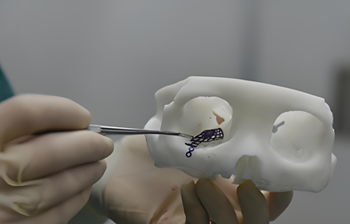
3) Personalized customization: With the development of computer-aided design and manufacturing technology, doctors can create a three-dimensional skull model based on the patient's orbital CT data, and reconstruct the titanium mesh shape required for orbital bone defects accordingly. This personalized customized titanium mesh can more accurately adapt to the patient's fracture situation, reduce surgical difficulty, and shorten surgical time.

3. Advantages and precautions of titanium mesh implantation
1) Advantages:
Good stability: Titanium mesh can provide stable support for orbital fractures and reduce the risk of postoperative recurrence.
Good compatibility: The titanium mesh has good compatibility with surrounding tissues, reducing the occurrence of rejection reactions and complications.
Convenient shaping: The mesh structure of titanium mesh is convenient for doctors to shape and trim to meet different surgical needs.
2) Attention:
Preoperative preparation: Doctors need to carefully evaluate the patient's fracture condition and choose the appropriate titanium mesh model and specifications. At the same time, it is necessary to ensure that the patient's physical condition is suitable for the surgery.
Intraoperative procedure: When implanting titanium mesh, doctors need to strictly follow surgical procedures to ensure that the titanium mesh can be accurately and firmly fixed at the fracture site. At the same time, it is necessary to pay attention to protecting the important tissues and blood vessels around.
Postoperative care: It is necessary to closely observe the patient's condition changes and promptly deal with possible complications after surgery. At the same time, it is necessary to guide patients to undergo appropriate rehabilitation training to promote fracture healing and functional recovery.
Titanium mesh has broad application prospects and significant therapeutic effects in orbital fracture surgery. However, doctors also need to fully consider the patient's specific situation and surgical needs when selecting and using titanium mesh to ensure the safety and effectiveness of the surgery.


