


Discover excellent quality at your fingertips! Titanium tubes set new industry standards with their extraordinary corrosion resistance, high strength and lightness. Whether it is the heart of precision instruments or the harsh environment of the chemical industry, it can handle it with ease. Contact me now to get a complete list of titanium tube types and quotes! Contact us: +8619929189593
China Titanium Rods Manufacturers Factory Suppliers

We specialize in producing all kinds of titanium rods, mainly titanium clad copper rods, titanium round rods, rolled titanium rods, titanium hexagonal rods, hollow titanium rods, forged titanium rods, etc.
Our company has advanced production equipment and professional testing process, as well as long-term production of rare metal materials such as titanium and titanium alloy products. The company has rich practical experience in the production of titanium chemical machinery and equipment.
Company advantages
Professional team
We have hundreds of professional and technical staff, and we can provide you with professional services.
Large scale
We have a workshop of more than 3000 square meters with fully automatic CNC production line, and we are committed to providing customers with the best products and services.
Individual services
We can provide customized services to meet customers' special requirements. If you have any special requests, please send us detailed information.
Free samples
We can provide samples for free, and customers pay for the freight. If the sample cost is relatively high, a certain sample fee may be charged.
Global supply chain
We are present worldwide, supported by local customer service and a strong network of sales representatives. Our logistics centers with large warehouse capacities, located close to our customers' sites (Europe, America, Asia Pacific), ensure the shortest delivery times.
24-hour online customer service
Our customer support service is available online 24 hours a day. After receiving service information or feedback from a customer, we will respond and review the feedback as soon as possible.


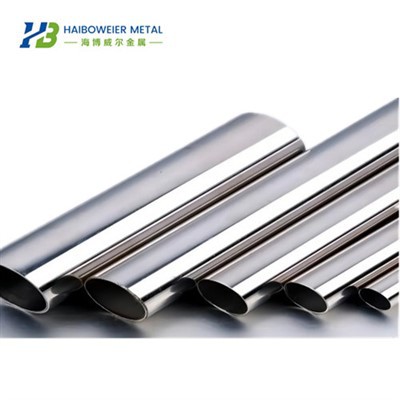


Titanium tubes are metal tubes made from titanium. Titanium tubes are lightweight, strong, and have excellent mechanical properties. They are used in many industries due to their strength, unique density, and resistance to corrosion. Titanium tubes are often more efficient than competing materials such as stainless steel or superalloys because they are lightweight and resistant to corrosion. Titanium tubes are biocompatible and non-toxic, and are often used in more complex and sophisticated applications such as surgical instruments and orthopedic implants. They are also used in many industries including: aerospace, chemical, automotive, medical, oil and gas, etc.
We manufacture two main types of titanium tubing, but there are many products available. Here are some common titanium tubing products:
★Pure titanium tube
Pure titanium pipe is a pipe that contains less than 98% titanium and small amounts of other elements. It also contains small amounts of oxygen, nitrogen, hydrogen, carbon, silicon, and iron. It has similar strength to steel but weighs 57% less.
Titanium pipes are also resistant to heat and low temperatures. Pure titanium pipes are strong and lightweight, with excellent mechanical properties. They are often used in heat exchange equipment such as condensers, evaporators, and main pipelines. Pure titanium pipes are also heat-resistant and can maintain their strength and stability at temperatures up to 500 degrees. They also have good resistance to low temperatures.
Below are common pure titanium tube products:
●Titanium heating tube
Titanium heating tubes are used in heat transfer systems that use liquids that can cause corrosion, such as seawater and brackish water. Titanium is resistant to erosion, biological attack and contamination.
It also has a high corrosion fatigue limit and high specific strength. Titanium heating tubes are also used to heat liquids in plating baths and tanks. The heaters are immersed directly in the working solution. When heated to higher temperatures, titanium can react with gases such as oxygen, nitrogen and hydrogen.
●Seamless Titanium Tube GR4
GR4 seamless titanium tubes are made by stretching titanium into a tube. Welded tubes are made by pulling the ends of the tube together and sealing them with a weld. They have no welded parts or joints.
GR4 seamless titanium tubes are high strength, corrosion resistant and durable. They are used in aircraft hydraulic systems, chemical processing plants, offshore drilling rig components, marine and subsea equipment and medical implants.
GR4 seamless titanium tubes are available in a variety of tempers, dimensions and surface finishes.
●Titanium Rectangular Tube Grade 2
Titanium Grade 2 Rectangular Tubes are one of the most common types of unalloyed titanium. Grade 2 titanium rectangular tube is commercially pure (CP) titanium, made from unalloyed titanium. It is a fully annealed high-strength titanium alloy containing small amounts of aluminum and vanadium. They are lightweight, have good mechanical and thermal properties, and are resistant to corrosion.
●Titanium tube GR1
GR1 Titanium Tube is a seamless tube made from commercially pure grade 1 titanium. Grade 1 titanium is the softest and most ductile grade of titanium. It is also highly ductile, with high ductility and impact toughness. It has a high strength to weight ratio and is resistant to corrosion and oxidation. This makes it suitable for pipelines in aggressive environments. GR1 Titanium Tube is used in a variety of applications, including: underwater equipment, exhaust pipes.
★Titanium alloy pipe
Titanium alloy tubing is a tube made from titanium or titanium alloy. Titanium alloys are a mixture of titanium and other chemical elements. Titanium alloy tubing is a strong, ductile material with a low density and a high strength-to-weight ratio.
It is biocompatible and non-toxic and is often used in complex applications such as surgical instruments and orthopedic implants. Titanium alloy tubing is also often used in highly corrosive industrial applications and processes that use chlorides. It is also well suited for alkaline environments and inorganic salt solutions.
Below are common titanium alloy tube products:
●Titanium alloy tube grade 7
Titanium grade 7 is the most corrosion resistant of all titanium alloys. It is similar to grade 2, but with the addition of 0.2% palladium. This addition of palladium improves corrosion resistance, especially in mineral acids and strong brines. Grade 7 is also resistant to crevice corrosion at low temperatures and high pH levels. It is usually stored in plates, sheets, pipes, fittings and tubes. They are often used in the chemical and marine industries.
●Grand5 Titanium Alloy Tube
Titanium alloy Grand5 tube is a widely used titanium alloy that is considered the strongest titanium alloy. It is also known as Ti-6Al-4V. Grade 5 titanium is an alpha-beta alloy consisting of 6% aluminum, 4% vanadium, and the rest titanium. It has good tensile properties at ambient temperatures and can resist creep up to 300 degrees. It also has excellent resistance to fatigue and crack propagation. Grade 5 titanium can be cold drawn and extruded, but this is usually limited to small industrial processing plants.
●Titanium capillary tube
Titanium capillary tube is a hollow cylindrical tube made of titanium. Titanium capillary tubes are tubes in which the movement of the fluid is determined by the viscosity of the material. Titanium capillary tubes are made from larger tubes by drawing and stretching. They have a density of more than 60% compared to nickel alloys and stainless steel.
●Titanium steel composite pipe
Titanium steel composite pipe is a pipe with an inner tube made of titanium and an outer tube made of carbon steel. It combines the high mechanical strength of carbon steel with the corrosion resistance of titanium. Titanium steel composite pipes are a structural material with high strength and corrosion resistance. Titanium is a metal with many excellent properties, such as low density and high strength. It also has excellent corrosion resistance, especially in harsh environments.
Pure titanium tube
Pure titanium tubes have many benefits, including:
●Strength: Titanium tubes are strong and durable. They have a high strength to weight ratio.
●Corrosion Resistance: Titanium pipes are resistant to pitting corrosion, crevice corrosion, stress corrosion cracking, corrosion fatigue and erosion. They are also resistant to sulfide stress corrosion.
●Thermal properties: Titanium pipes have low thermal expansion and higher thermal conductivity than austenitic steels. They can withstand high temperatures without losing weight.
●Manufacturability and weldability: Titanium pipes are easy to process and weld.
●Density: Titanium tubes are lightweight and have a low density. This means they can be made with a thinner cross-section using less metal.
●Biocompatibility: Titanium is biocompatible and inert, so it does not tarnish or rust. It is also hypoallergenic, so it is used in medical implants and jewelry.


Titanium Alloy Pipe
Titanium alloy pipes have many advantages, including:
●High strength: Titanium alloy pipes are strong and highly resistant to corrosion, stress corrosion cracking and erosion.
●Low density: Titanium pipes are lightweight, have low thermal expansion and higher thermal conductivity than austenitic steels.
●Corrosion resistance: Titanium is inherently resistant to corrosion because it reacts with oxygen and nitrogen.
●Non-magnetic: Titanium alloy pipes are non-magnetic.
●High temperature resistance: Titanium alloys have excellent heat resistance and durability.
●Fatigue life: Titanium alloy pipes have a fatigue life more than 10 times that of ordinary steel.
●Biocompatibility: Titanium is biocompatible and non-toxic, making it ideal for surgical instruments and orthopedic implants.
●Heat Transfer Properties: Titanium tubes have excellent heat transfer properties due to their thermal conductivity and resistance.
Pure Titanium Tube
Pure titanium tubes have many applications, including:
●Aerospace: Pure titanium tubes are used in aircraft hydraulic systems, aircraft honeycomb panels, and other aerospace parts. They are also used in rockets and spacecraft because they can withstand extreme temperatures and have a low density.
●Chemical Processing: Pure titanium tubes are used in chemical plants where they are exposed to aggressive solutions and environments.
●Marine: Pure titanium tubes are used in marine and subsea equipment, offshore drilling rig components, and surface condensers. Titanium is highly resistant to corrosion, even in contaminated seawater, hot seawater, and marine silt.
●Heat Transfer Equipment: Pure titanium tubes are used in heat transfer equipment such as condensers, evaporators, and conveyor tubes.
●Medical:Pure titanium tubes are used in medical implants.
●Other industries:Titanium tubes are used in the oil industry, power plants, sports, dental and medical industries.


Titanium Alloy Tube
Titanium alloy tubes have many applications, including:
●Aerospace: Titanium alloy tubes are used in aircraft, spacecraft, and rockets due to their low density and ability to withstand extreme temperatures.
●Marine: Titanium is the metal of choice for offshore oil rigs and other boat parts that are exposed to seawater.
●Medical: Titanium is used in a variety of medical applications, including surgical instruments and implants such as hip pads and joints (joint replacements).
●Industrial: Titanium alloy tubes are used in dozens of other industrial applications, such as flue gas desulfurization for pollution control, PTA units for polyester production, pressure vessels, heat exchangers, and hydrometallurgical autoclaves.
●Automotive: Titanium is used in automobiles to reduce the weight of the vehicle.
●Consumer: Titanium alloys are used in golf clubs, laptops, bicycles and crutches.
Maintenance and Storage of Titanium Tubes and Titanium Alloy Tubes
Titanium alloy pipes and elbows should be inspected regularly, their surfaces should be kept clean, dirt should be removed, and they should be stored carefully in a ventilated area indoors. Do not pile them up or store them outdoors.
When using ball valves, shut-off valves and gate valves in elbows of titanium alloy pipelines, they can only be fully opened or fully closed. They are not allowed to be used for flow control to avoid erosion of the sealing surface and accelerated wear.
The gate valve and the upper thread shut-off valve are equipped with inverted sealing devices. Turn the handwheel to the uppermost position to ensure that the head surface will not be rusted or corroded. Keep the storage environment of titanium alloy pipes, titanium elbows, titanium large and small heads, titanium tees, etc., titanium pipe fittings in a dry and ventilated place. Keep the surfaces of pipes and fittings clean and tidy, and store them neatly.
Precautions When Using Titanium Tube
Welded titanium alloy pipes should be welded by gas shielded welding or vacuum welding. Oxygen-acetylene welding or carbon dioxide welding should not be used, and ordinary manual arc welding should be avoided.
When installing titanium and titanium alloy pipes, do not use iron tools and materials to knock them down or squeeze them; rubber plates or soft plastic plates should be inserted between carbon steel supports and hangers and titanium and titanium alloy pipes to avoid direct contact with titanium and titanium alloy pipes; when passing titanium and titanium alloy pipes through walls or ceilings, casings should be installed. The gaps should be at least 10 mm and should be filled with insulation. The insulation should not contain iron impurities.
When installing titanium and titanium alloy pipes, do not use iron tools and materials to knock them down or squeeze them; rubber plates or soft plastic plates should be inserted between carbon steel supports and hangers and titanium and titanium alloy pipes to avoid direct contact with titanium and titanium alloy pipes; when passing titanium and titanium alloy pipes through walls or ceilings, casings should be installed. The gaps should be at least 10 mm and should be filled with insulation. The insulation should not contain iron impurities.
When installing titanium and titanium alloy pipes, titanium pipe manufacturers should take care to avoid contact or collision with ferrous materials during transportation and storage of titanium and titanium alloy pipes.
Titanium and titanium alloy pipes should be cut mechanically, the cutting speed should be low. When cutting or grinding titanium pipes with grinding wheels, special grinding wheels should be used; flame cutting is not allowed. The groove should be machined.
Certificates
We have several technical certificates.

Our Factory
We have a workshop of more than 3000 square meters with fully automatic CNC production line, and we are committed to providing customers with the best products and services.


Frequently Asked Questions
Question: What is a titanium extrusion tube?
Answer: Titanium extrusion tubes are hollow cylindrical structures made from titanium, a lightweight and corrosion-resistant metal. They are used in many industries, including aerospace, automotive, medical, and industrial.
Titanium extrusion tubes are made using a rotational piercing process. In this method, the billet is forced through two convex tapered rollers that rotate in the same direction. The rollers compress the material, and a conical mandrel is mounted inside the central cavity.
The titanium extrusion process typically begins with a solid round titanium rod. The rod is then cut into shorter blanks, which are then induction heated to a specific extrusion temperature.
Question: What are the advantages of titanium extrusion tubing?
Answer: Titanium extrusion tubing has a number of advantages, including:
High strength-to-weight ratio: Titanium is a high-strength, lightweight material, making it a good choice for a wide range of piping applications.
Corrosion resistance: Titanium is resistant to corrosion and chemical components, making it suitable for outdoor applications.
Lower density: Titanium extrusion tubing has a lower density than steel, copper, or nickel products.
High rigidity: Titanium extrusion tubing is very strong and rigid compared to components made from other alloys.
Extrusion molding: Extrusion molding allows long tubular components to be continuously produced with a high degree of accuracy. This can help reduce production costs and reduce equipment downtime.
Question: What are the disadvantages of titanium extrusion tubing?
Answer: Titanium extrusion tubing has a number of disadvantages, including:
High Cost: Titanium extrusion tubing is more expensive than other metals and is difficult to cast.
Low Modulus: Titanium extrusion tubing has a low modulus of elasticity.
Creep Unstable: Titanium extrusion tubing has creep instability.
High Temperature Reactivity: Titanium extrusion tubing is reactive at high temperatures and loses strength above 400 degrees Celsius.
Susceptible to Contamination: Titanium extrusion tubing is sensitive to contamination from oxygen, nitrogen, hydrogen and other foreign materials.
Challenging Welding Requirements: Titanium extrusion tubing has challenging welding requirements.
Lower Strength at Elevated Temperatures. Titanium extrusion tubing has lower strength at elevated temperatures.
Corrosion resistance: Titanium welded pipes may have a rapid decrease in corrosion resistance due to stress corrosion cracking in the weld. Thermal conductivity: Titanium extrusion pipes have low thermal conductivity, which may cause a large temperature difference between the surface and the inner layers during hot extrusion.
Q: What is TC11 titanium alloy tube?
A: TC11 titanium alloy tube has a chemical composition of Ti-6.5Al-3.5Mo-1.5Zr-0.3Si. It has higher strength, better thermal stability and better creep resistance than Ti-6Al-4V alloy.
TC11 titanium alloy tube is a heat-resistant titanium alloy that is mainly used in the aviation industry. It can also be used to create semi-finished products such as bars, forgings and stamped forged parts.
Question: What is 3Al2.5V Titanium Tubing?
A: 3Al2.5V Titanium Tubing is an alloy containing 3% aluminum and 2.5% vanadium. It is also known as ASTM B348 Grade 9.
Here are some characteristics of 3Al2.5V Titanium Tubing:
Strength: It is 20-50% stronger than commercially pure titanium alloys at room and elevated temperatures.
Formability: It is more ductile and weldable than Ti-6Al-4V (Grade 5).
Oxidation Resistance: It can withstand oxidation up to 600 degrees F (316 degrees).
Ductile and Strong: Suitable for a variety of industrial applications.
Question: What are the applications of titanium capillary tubes?
Answer: Titanium capillary tubes have many applications, including:
Medical: dentures, dental implants, surgical instruments, and other medical devices.
Industrial: industrial piping, heat exchangers, condensers, evaporators, and consumer products.
Other: aerospace, military, jewelry, telecommunications, and other industries.
Question: What are the manufacturing processes for seamless titanium tubes?
Answer: Seamless titanium tubes are made using the extrusion process. This process involves heating titanium blanks to high temperatures and then forcing them through a mold.
The manufacturing process for seamless tubes also involves piercing and extrusion. Piercing involves making a hole in a solid blank, while extrusion uses a mandrel to shape the tube and reduce its diameter.
Question: What are the features of GR 12 titanium alloy tube?
A: Corrosion Resistance: Grade 12 titanium has excellent acid corrosion resistance and very good resistance to crevice corrosion in hot brines.
Heat Resistance: Grade 12 titanium provides better heat resistance than pure grades of titanium.
Strength: Grade 12 titanium is used under moderate reducing or fluctuating conditions. Cold Formability: Grade 12 titanium has excellent cold forming ability and weldability.
Density: Grade 12 titanium has a density of 4.43 g/cm3 and a melting point of 1632 degrees (2970 degrees Fahrenheit). Forming: Grade 12 titanium can be hot or cold formed using bending press, hydropress, stretching or impact hammer method.
Question: What is GR 12 Titanium Alloy Tube?
A: GR 12 Titanium Alloy Tube is a titanium alloy alloyed with Ni, Pd and Mo, which has excellent corrosion resistance and higher strength than grade 2 titanium. Gr. 12 Titanium provides excellent acid corrosion resistance as well as very good resistance to crevice corrosion in hot salt solutions.
Question: What is the role of seamless titanium tubes in power generation?
Answer: Welded titanium tubes are vital in power generation, especially in nuclear power plants. Due to its resistance to corrosion and high temperatures, it is used in nuclear reactor components such as heat exchangers and condensers. Titanium tubes are also used in desalination plants to convert seawater into fresh water.
Question: What are the applications of titanium tubing in the medical industry?
Answer: The medical industry uses titanium tubing for implants and prosthetics. Due to its biocompatibility and corrosion resistance, it is widely used in areas such as joint replacements and dental implants. Titanium tubing is used in surgical instruments and medical gas systems due to its strength, durability, and ability to provide safe and clean gas distribution.
As one of the most professional titanium tube manufacturers and suppliers in China, we're featured by good service and competitive price. Please rest assured to buy high quality titanium tube for sale here from our factory. Also, customized service is available.
