


Selected high-quality titanium wire, with its excellent corrosion resistance and high strength characteristics, leads the innovation trend. Whether it is scientific research and development, artistic sculpture or high-end jewelry production, titanium wire is your indispensable ideal choice. Consult the manufacturer immediately, specializing in the production of high-standard titanium wire and its processed parts, with a full range of varieties and can also be customized! Contact us: +8619929189593
China Titanium Rods Manufacturers Factory Suppliers

We specialize in producing all kinds of titanium rods, mainly titanium clad copper rods, titanium round rods, rolled titanium rods, titanium hexagonal rods, hollow titanium rods, forged titanium rods, etc.
Our company has advanced production equipment and professional testing process, as well as long-term production of rare metal materials such as titanium and titanium alloy products. The company has rich practical experience in the production of titanium chemical machinery and equipment.
Company advantages
Professional team
We have hundreds of professional and technical staff, and we can provide you with professional services.
Large scale
We have a workshop of more than 3000 square meters with fully automatic CNC production line, and we are committed to providing customers with the best products and services.
Individual services
We can provide customized services to meet customers' special requirements. If you have any special requests, please send us detailed information.
Free samples
We can provide samples for free, and customers pay for the freight. If the sample cost is relatively high, a certain sample fee may be charged.
Global supply chain
We are present worldwide, supported by local customer service and a strong network of sales representatives. Our logistics centers with large warehouse capacities, located close to our customers' sites (Europe, America, Asia Pacific), ensure the shortest delivery times.
24-hour online customer service
Our customer support service is available online 24 hours a day. After receiving service information or feedback from a customer, we will respond and review the feedback as soon as possible.


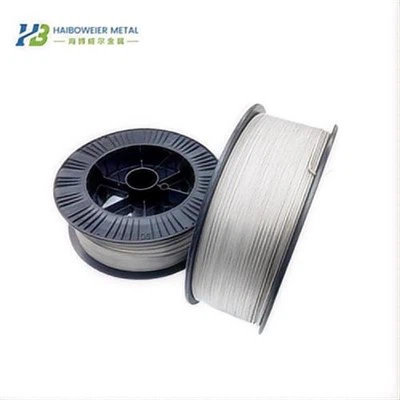


Titanium wire is made by drawing extruded titanium rod of various diameters. It has tensile strength and is non-magnetic. Titanium wire is a flexible, lightweight and durable metal. It is also chemically resistant and hypoallergenic. Titanium wire is used in many areas, including: military, eyewear, earrings, hats, galvanic hangers, welding wire, aerospace, petrochemical, medical and health care, automotive, construction, sports and leisure products.
Types of Titanium Wire
We produce two main types of titanium wire, but there are many products available. Here are some common titanium wire products:
★Pure Titanium Wire
Pure titanium wire is made by drawing extruded titanium rod into various diameters. Pure titanium wire is soft, ductile, and easy to form. It has excellent corrosion resistance and weldability and is used in a variety of applications. Pure titanium wire is available in grades 1–4, with grade 1 having the highest corrosion resistance and formability, but the lowest strength. Grade 4 has the highest strength and moderate formability.
Below are common pure titanium wire products:
●High Purity Titanium Wire
High purity titanium wire has an oxygen content of less than {{0}}.01% and a tensile strength of about 250 MPa. Titanium with an oxygen content of 0.2-0.4% has a tensile strength of 300-450 MPa.
High purity titanium wire is a high-quality wire with a melting point of 1942 K. It is lightweight, has a low density, and is highly resistant to corrosion, acids, alkalis, high and low temperatures.
●Titanium Welding Wire GR2
Titanium Welding Wire GR2 is a pure titanium welding wire used for commercial purposes. It contains less impurities than GR1 welding wire, has good mechanical properties and welding process characteristics. It is the most widely used titanium alloy for industrial applications due to its balance of strength, formability and weldability.
●GR3 Titanium Wire
GR3 titanium wire is a commercially pure titanium wire manufactured through an annealing and drawing process. It is composed of approximately 98% titanium and small amounts of other elements such as oxygen and iron. GR3 titanium wire has high tensile strength and low thermal conductivity. It is also corrosion resistant and hypoallergenic. It has a tensile strength of 377-520 MPa and an elongation at break of 18%.
GR3 titanium wire is widely used in the healthcare industry and for surgical implants. Titanium wire is often preferred due to its ability to combine high strength, light weight, corrosion resistance, biocompatibility and high temperature resistance. GR3 titanium wire is also used in the military, aerospace, petrochemical, medical, automotive, construction, sports and entertainment industries.
●Titanium Wire GR1
Titanium wire GR1 is a kind of titanium wire that is polished and annealed. It is one of the softest and most ductile grades of titanium, with excellent corrosion resistance and weldability.
Titanium wire GR1 has a good strength-to-weight ratio and is resistant to corrosion in oxidizing and mildly reducing environments. It is easy to process, has good machinability in stamping, welding and cutting.
★Titanium Alloy Wire
Titanium alloy wire is a mixture of titanium and other elements that has high tensile strength and toughness. It is also lightweight, corrosion resistant, and can withstand extreme temperatures. Titanium alloy wire is used in many fields, including: military, eyewear, earrings, hats, galvanic hangers, welding wire, aerospace, petrochemical, medical and health, automotive, construction, sports and leisure.
Below are common titanium alloy wire products:
●6al4v Titanium Metal Wire
6al4v titanium metal wire is a titanium alloy containing 6% aluminum and 4% vanadium. It is also known as Ti-6AL-4V or Ti 6-4.
6al4v titanium metal wire is a versatile material that is used in many industries including medical, aerospace, oil and gas, and marine. It is strong, lightweight, and corrosion resistant. It is also biocompatible, has good fatigue strength, and osteoconductivity.
6al4v titanium metal wire is used in many industries including: aerospace, medical, marine, chemical processing, joint replacement.
6al4v titanium metal wire is also used as a base wire for wire springs, flat springs, and other wire products.
●Titanium Wire for 3D Printing
Titanium wire is used in additive manufacturing 3D printing. Titanium is a popular material for 3D printing due to its strength, light weight, resistance to corrosion and high temperatures. It is often used in aerospace, industrial and medical applications, including compressor blades and discs, and jet engine rings.
●Titanium Nickel Alloy Wire
Titanium nickel alloy wire, also known as nitinol, is a shape memory alloy (SMA). It has a typical composition of 40-50% nickel and 50-60% titanium.
Titanium nickel alloy wire has superelasticity and shape memory properties. This means that it can be deformed at one temperature and then return to its original shape when heated above its transformation temperature.
●Ti1533 Titanium Wire
Ti1533 titanium wire is a material made from titanium alloy. It is a high-strength, heat-treatable, metastable beta-titanium alloy that can be cold rolled. It is often used in the aerospace industry.
Ti1533 titanium wire has excellent cold forming and weldability. It is also corrosion-resistant and hypoallergenic. Its extreme strength and corrosion resistance make it ideal for aerospace components and medical implants.
Pure Titanium Wire
Pure titanium wire is often preferred due to its ability to combine high strength, light weight, corrosion resistance, biocompatibility and high temperature performance. This makes titanium ideal for use in aerospace, medical engineering, chemical processing, marine and high temperature industries.
Pure titanium wire has many benefits, including:
●Corrosion Resistance: Pure titanium wire has high resistance to corrosion, especially in seawater and chemical environments.
●High Strength to Weight Ratio: Pure titanium wire is known for its high strength to weight ratio, making it strong and durable while remaining lightweight.
●High Temperature Performance: Pure titanium wire has a relatively high melting point (over 1650 degrees or 3,000 degrees Fahrenheit).
●Biocompatibility: Pure titanium wire has high biocompatibility.
●Shape Memory Function: Pure titanium wire has good shape memory function.
●Low Ultrasonic Resistance: Pure titanium wire has low ultrasonic resistance.
●Non-Magnetic: Pure titanium wire is non-magnetic.


Titanium Alloy Wire
Titanium alloy wire perfectly inherits the advantages of titanium and titanium alloys, and has a series of excellent characteristics, such as good corrosion resistance, high specific strength, non-magnetic, high biocompatibility, low impedance to ultrasound, good shape memory function and many more.
Titanium alloy wire has many advantages, including:
●Corrosion resistance: Titanium alloy wire is naturally resistant to corrosion because it reacts with oxygen and nitrogen.
●Strength to density ratio: Titanium alloy wire has a strength to density ratio that can produce lightweight parts with high specific strength.
●Machinability: Titanium alloy wire has good machinability.
●Temperature stability: Titanium alloy wire is corrosion resistant and performs well at high temperatures.
●Biocompatibility: Titanium wire is biocompatible.
●Shape memory: Titanium wire has good shape memory function.
●Non-magnetic: Titanium wire is non-magnetic.
●Ultrasonic resistance: Titanium wire has low ultrasound resistance.
Pure titanium wire
Pure titanium wire is half the weight of steel but has the same strength and is twice as strong as aluminum but weighs only a little over half.
Pure titanium wire is used to weld titanium equipment, pipes, turbine disks and blades. It is also used in the military, aerospace, petrochemical, medical, automotive, construction and sports industries.
Pure titanium wire also has many applications, including:
●Welding: More than 80% of titanium wire is used for welding, including welding titanium equipment, pipes and aircraft jet engines.
●Chemical Processing:Titanium wire is used in the chemical processing industry and can be anodized for hanging parts or components.
●Racking Systems:Titanium wire is used for racking systems that require durable materials.


Titanium Alloy Wire
Titanium alloy wires have a high strength to density ratio, high corrosion resistance, and can withstand moderately high temperatures without creep. They are also a better choice than steel in applications where light weight, corrosion resistance, biocompatibility, and high temperature resistance are required.
Titanium alloy wires are used in many applications, including:
●Medical and Health: Implantable medical devices such as defibrillators, pacemakers, and bone growth stimulators.
●Aerospace: Aircraft, armor, warships, spacecraft, and missiles.
●Marine: Nuclear submarines, deep-sea vehicles, nuclear icebreakers, seawater pipelines, minesweepers, and hydrofoils.
●Chemical Processing: High-temperature industrial applications.
●Other:Golf clubs, laptops, bicycles and crutches. Titanium alloy wire is also used in glasses, earrings, hats, electroplating hangers, welding wire, petrochemical, automobile, construction, sports and entertainment products.
Titanium Wire Manufacturing Process
Titanium wire must go through the following processes during production.
Hot Forging
The forging process is carried out above the recrystallization temperature of the metal. Hot forging involves heating a malleable metal part to approximately 75% of its melting point. The heated metal is then shaped using processes such as forging, pressing, and upsetting.
01
Hot Rolling
The rolling process is carried out at a temperature above the recrystallization temperature. When titanium is heated to the recrystallization point, it becomes more pliable and can be given the correct shape.
02
Cold Rolling
A rolling process in which the plastic deformation temperature is below the recovery temperature. Cold rolling is a metalworking process in which steel is strengthened by changing its shape without heating. This can only happen when the metal temperature is below the recrystallization temperature, which is usually room temperature.
03
Annealing
A heat treatment process for metals in which the metal is heated slowly to a certain temperature, held for a sufficient time, and then cooled at an appropriate rate (usually slow cooling, sometimes controlled cooling). Annealing changes the physical and sometimes chemical properties of the material, increasing ductility and decreasing hardness, making it more workable.
04
Pickling
Immerse parts in a sulfuric acid solution to remove oxide and other films on the metal surface. This is a pre- or intermediate treatment for galvanizing, enameling, rolling and other processes.
05
Here are some tips for caring for titanium wire:
●Cleaning: Titanium wire is reactive at high temperatures, which can cause contamination and embrittlement. You can clean titanium with a small amount of mild soap and warm water. You can also use an ammonia cleaner such as Windex or a commercial jewelry cleaning solution. Avoid using harsh cleaners such as chlorine or bleach.
●Handling: After cleaning, handle titanium wires with clean gloves to prevent recontamination.
●Storage: When not wearing titanium wire, store it in soft cloth bags or the original box to protect it from exposure to the elements.
●Tools: Use tools designed for titanium. Do not use soft abrasives that may have materials embedded in them.
Instead, use a carbide tool or file to remove burrs. Do not use stainless steel grinding wheels or brushes that you also use for other alloys.
●Solvent Cleaning: If you are cleaning titanium with solvents, you should clean it with a stainless steel brush. Steel wool should never be used when cleaning titanium wire, as it will affect the corrosion resistance of the metal.

Precautions When Using Titanium Wire

Here are some safety precautions when handling titanium wire:
●Avoid Dust and Fumes:Avoid the generation or accumulation of dust or fine particles that may cause a fire. If dust is generated, provide adequate ventilation. Avoid breathing dust and fumes.
●Wear Protective Gear:Wear gloves when handling consumables. Wear protective clothing and equipment. If exposure limits are exceeded, use a NIOSH approved respirator.
●Avoid Contact:Avoid contact with skin and eyes. Do not ingest.
●Keep Containers Closed:Keep containers closed when not in use.
●Keep Away from Incompatible Materials:Titanium wire is incompatible with acids and oxidizing agents.
●Prevent Entry into Waterways:Prevent entry into drains and waterways.
●Stay away from unprotected people:Keep unprotected people away.
Certificates
We have several technical certificates.

Our Factory
We have a workshop of more than 3000 square meters with fully automatic CNC production line, and we are committed to providing customers with the best products and services.


Frequently Asked Questions
Question: What is high strength titanium alloy wire?
Question: What are the disadvantages of titanium wire?
Cost: Titanium wire is more expensive than other metal wires.
Temperature: Titanium is not suitable for use at very high temperatures, above 400 degrees Celsius.
Reactivity: Titanium and titanium alloys have poor chemical reactivity with other materials at high temperatures. This property can lead to mold damage and requires different refining, melting, and casting methods.
Casting: Titanium cannot be cast like aluminum or iron.
Contamination: Titanium is susceptible to attack by oxygen, nitrogen, hydrogen, and foreign impurities. Contamination and defects created during the welding process can reduce the strength and corrosion resistance of titanium.
Manufacturing: The Kroll process used to produce titanium wires uses many impurities.
Question: What type of titanium wire is best for your application?
The type of titanium wire you should choose depends on where you will be using it in your project. If you want to make a gas stove or oven with a titanium cooktop, then heat-resistant titanium wire is the best choice for you.
Electric grade titanium is also the best type of titanium wire to use when you need low current resistance but also need resistance to corrosion from salt water or chemicals such as acids or alkalis.
Question: What is the production process of titanium wire?
Question: How is titanium wire used?
The wire is a popular choice for making frames and suspension springs because it has a high strength-to-weight ratio.
Other applications can be divided into two types: masonry, which involves using titanium wire in building construction, and mechanical engineering, which involves using titanium wire in aerospace or other industries. Metals such as platinum, cobalt, or nickel are also used with titanium to produce an alloy that meets the specific needs of a particular application or project.
Question: What are the applications of titanium wire in medical industry?
Titanium wire is used in many medical applications, including:
Implants. Titanium and its alloys are used to make artificial hip and knee joints, bone plates, screws, prosthetic heart valves, pacemakers, and artificial hearts. Titanium is also used in dental implants, crowns, bridges, and dentures.
Surgical instruments. Titanium rods are used to make surgical instruments such as laser electrodes, dental drills, and forceps.
Bone fixation. Titanium is used for internal and external fixation of bone fractures, including fusion devices, pins, bone plates, screws, intramedullary nails, and external fixators.
Internal Fixation: Titanium is used in internal devices such as pacemakers and internal fixation devices.
Question: What are the advantages of GR 2 titanium wire?
Corrosion Resistance: GR 2 titanium wire is as resistant to corrosion as grade 1 titanium and can withstand temperatures up to 400 degrees Fahrenheit. It can also withstand oxidation up to 600 degrees Fahrenheit.
Strength: GR 2 titanium wire is strong and can withstand prolonged temperatures up to 800 degrees Fahrenheit. It can also withstand intermittent temperatures up to 1000 degrees Fahrenheit.
Weldability: GR 2 titanium wire is unalloyed titanium, also known as Beta-C titanium. It is lightweight and has good weldability.
Formability: GR 2 titanium wire is lightweight, strong, and easy to form. This makes it ideal for processes such as welding, hot forging, and extrusion.
Other properties: Titanium wire GR 2 also has low density, is resistant to acids and alkalis and has low thermal conductivity. It is also non-toxic and non-magnetic.
Question: What is titanium coating wire?
Question: What are the disadvantages of Ti1533 titanium wire?
Cost: Ti1533 titanium wire is relatively expensive compared to other metals such as steel and aluminum.
Machining: Ti1533 titanium wire is a hard metal that is difficult to machine and shape using traditional tools and methods.
High Temperatures: Ti1533 titanium wire begins to lose strength at temperatures above 400 degrees Celsius.
Welding: Ti1533 titanium wire is very difficult to weld.
Hardness: Ti1533 titanium wire cannot be heat treated to achieve a hardness similar to steel.
Stress Corrosion: Ti1533 titanium wire is susceptible to stress corrosion at moderately high temperatures.
Impurities: Ti1533 titanium wire is sensitive to impurities.
Question: What types of titanium wire are there?
As one of the most professional titanium wire manufacturers and suppliers in China, we're featured by good service and competitive price. Please rest assured to buy high quality titanium wire for sale here from our factory. Also, customized service is available.
