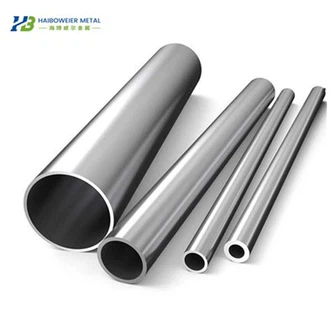
Are nickel alloys considered stainless steel
In the industrial materials field, "nickel alloy" and "stainless steel" are often mentioned in juxtaposition, and there's even a misconception that the two are the same. This confusion stems not only from the similarity in their names but also reflects a misconception about the classification system for metal materials.

Matrix Elements Determine Material Properties
Nickel alloys are composite metal systems composed of nickel as the matrix element, with alloying elements such as chromium, molybdenum, and copper added. Their core characteristic is that the nickel content typically exceeds 50%. Nickel's electronic structure imparts the material with adaptability to extreme environments, including high-temperature and corrosion resistance. Research and development of this type of material began in the early 20th century, and it has gradually evolved into a family of materials covering fields such as aviation, energy, and chemical engineering.
Stainless steel is essentially "acid-resistant stainless steel," referring to an iron-based alloy that is stable in air and mildly corrosive media. Its identification criteria require a chromium content of at least 10.5%, and it achieves rust resistance by forming a dense protective chromium oxide film. Based on differences in metallographic structure, stainless steel can be subdivided into austenitic, ferritic, and martensitic types, forming a comprehensive system covering both civilian and industrial applications. The essential difference between the two is that nickel alloys are nickel-dominant alloy systems, whose performance is highly dependent on the nickel matrix. Stainless steel, on the other hand, is an iron-based alloy system with chromium as the core element, and its rust-resistant properties are primarily determined by chromium. Although some stainless steels contain nickel, the nickel content typically does not exceed 30%, far below the threshold for nickel in nickel alloys.
Composition
The Compositional Logic of Nickel Alloys
Nickel alloys use a high proportion of nickel (50%-75%) to form the material skeleton, supplemented by elements such as chromium (10%-30%) and molybdenum (5%-15%) to form strengthening phases. This compositional design imparts three key properties to the material:
Corrosion Resistance: The high nickel content inhibits chloride-induced pitting corrosion, while molybdenum enhances resistance to crevice corrosion.
High-Temperature Resistance: Nickel's melting point (1453°C) and high-temperature stability support the material's application in environments above 1000°C.
Workability: Through solid solution strengthening and aging treatments, a dynamic balance of strength and toughness can be achieved. Stainless Steel Composition Logic
Stainless steel has an iron matrix (≥50%), with chromium (10.5%-30%) forming a passive film, and nickel (0%-35%) acting as an austenite stabilizer to regulate the microstructure. This compositional combination yields:
Economical: The iron matrix reduces material costs by over 60% compared to nickel alloys;
Formability: The austenitic structure imparts excellent deep-drawing and weldability;
Corrosion Resistance: Chromium forms a stable protective layer in oxidizing media, while nickel enhances corrosion resistance in reducing media.
Performance Characteristics
Corrosion Resistance
Nickel alloys perform exceptionally well in highly corrosive media, such as those containing chloride ions and sulfides. Their corrosion resistance stems from the stabilization of the passive film by nickel and the synergistic strengthening effects of elements such as molybdenum and copper. In contrast, the corrosion resistance of stainless steel is highly dependent on the oxide film formed by chromium, making it susceptible to localized corrosion in strong acidic or alkaline environments or at high temperatures.
High-Temperature Resistance
Nickel-based alloys significantly outperform stainless steel in maintaining strength at high temperatures. Nickel's crystal structure maintains strong atomic bonding at high temperatures. Combined with the protective alumina layer of cobalt, aluminum, and other elements, it maintains structural stability above 1000°C. Stainless steel, on the other hand, experiences strength degradation and accelerated oxidation above 600°C.
Economics
Cost differences restrict application scenarios. Due to its high nickel content and complex processing, nickel alloys are approximately three to five times more expensive than stainless steel. This cost difference results in nickel alloys being primarily used in high-value-added sectors such as petrochemicals and aerospace, while stainless steel, with its cost-effectiveness, dominates the civilian market in construction, home appliances, and other applications.
Application Logic
Specific Applications of Nickel Alloys
Nickel alloys' applications focus on the need for adaptability to extreme environments:
In the energy sector, they must withstand the combined effects of high temperatures, high pressures, and corrosive media;
In aerospace, they must meet the dual constraints of high-temperature creep strength and lightweighting;
In the biomedical field, they must balance shape memory functionality with biocompatibility. Stainless Steel's Dominance
Stainless steel's applications focus on balancing cost-effectiveness and versatility:
In architectural decoration, weather resistance and processing costs must be balanced;
In food processing, hygiene standards and molding process requirements must be met;
In automotive manufacturing, lightweighting and collision safety must be balanced.
The relationship between nickel alloys and stainless steel is essentially a differentiated response of materials science to the boundaries of human activity. While stainless steel, with its economic advantages, underpins the foundation of modern industry, nickel alloys, through their adaptability to extreme environments, are expanding the boundaries of human exploration. From deep-sea oil fields to interstellar space, from microscopic devices to macroscopic engineering, the evolution of metal materials demonstrates the two-way interaction between technological innovation and demand-driven development.