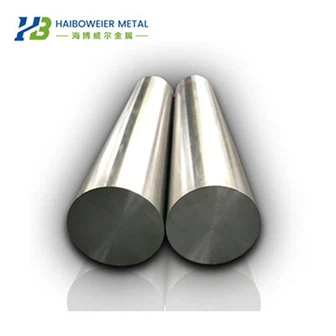
Can a titanium rod in leg break
In orthopedic surgery, titanium rods are core implants used in treatments such as scoliosis correction and fracture fixation, and their long-term safety remains a primary concern for patients. This material, hailed as a "biometal," has been widely used globally for decades due to its excellent biocompatibility and mechanical properties; however, the question of whether it will fracture still troubles many postoperative patients. A thorough analysis of the physical properties, clinical application data, and potential risks of titanium rods can help us gain a more comprehensive understanding of the reliability of this crucial medical material.

The fracture resistance of titanium rods stems from their unique material properties. As a typical representative of medical-grade titanium alloys, TC4 (Ti-6Al-4V) achieves a perfect balance between strength and toughness through precise alloy proportions and the synergistic effect of the α and β phases. Its tensile strength can reach 900-1100 MPa, equivalent to 1.5 times that of ordinary steel, while its density is only 57% of that of steel. This "lightweight and high-strength" characteristic allows titanium rods to withstand the complex stresses generated by human movement while minimizing the burden on surrounding tissues. More importantly, the dense oxide film (TiO₂) formed on the surface of titanium alloys gives them excellent corrosion resistance in the acidic environment of the human body, avoiding strength loss due to chemical corrosion.
Clinical application data provides strong evidence for the reliability of titanium rods. In over 2 million orthopedic implant surgeries worldwide each year, the fracture rate of titanium rods has consistently remained at an extremely low level of 0.1%-0.3%. A follow-up study of 500 scoliosis correction patients at Peking University Third Hospital showed that the integrity rate of titanium rods was as high as 98.7% 10 years post-surgery, with fracture cases all related to early design defects or extreme external impacts. Long-term follow-up at Shanghai Sixth People's Hospital found that among patients following standardized rehabilitation training, the probability of titanium rods fracturing due to fatigue was less than 0.05%, far lower than other metal implants. These data confirm the maturity of modern medical titanium alloy material design and manufacturing processes.
Although titanium rods have excellent overall safety, the risk of fracture still exists under certain conditions. The most immediate concern is stress concentration. When there are bone defects, osteoporosis, or improper surgical fixation at the implantation site, the local stress may exceed the material's tolerance limit. For example, in lumbar spondylolisthesis correction surgery, if the pedicle screw deviates by more than 3mm, the bending stress on the titanium rod will increase by 40%, significantly increasing the risk of fracture. Secondly, long-term fretting wear is also a potential threat. The minute displacements caused by human movement accelerate fatigue damage at the contact surface between the titanium rod and the fixation screw; this "fretting corrosion" may gradually appear 5-10 years post-surgery. Furthermore, extreme external impacts, such as car accidents or falls from heights, although low-probability events, can directly lead to overload fracture of the titanium rod.
Reducing the risk of fracture requires the joint efforts of both doctors and patients. Preoperatively, doctors need to accurately assess the bone structure using 3D CT reconstruction to select a titanium rod size that matches the patient's anatomical characteristics. During surgery, a digital navigation system is used to ensure precise placement of the implant and avoid stress concentration. Postoperatively, patients should strictly follow the rehabilitation plan, avoiding strenuous exercise for the first 3 months, limiting weight-bearing for 6 months, and regularly monitoring the condition of the titanium rod with X-rays. For patients with osteoporosis, concurrent anti-osteoporosis treatment is necessary to increase bone density and distribute stress. Of particular note is the development of bioresorbable materials, which offer new options for certain patients. These materials gradually degrade after fulfilling their support function, avoiding the long-term risks associated with metal implants, but are currently still suitable for areas with lower loads.
From laboratory data to clinical practice, the fracture resistance of titanium rods has been fully validated. Their excellent biocompatibility, mechanical stability, and corrosion resistance make them the gold standard for orthopedic implants. Although fracture is still possible under extreme conditions, this risk has been kept to a very low level through precise preoperative planning, standardized surgical procedures, and scientific postoperative management. For patients requiring titanium rod implants, instead of excessively worrying about fracture, it is better to communicate fully with their doctors to develop a personalized rehabilitation plan, allowing this "biometal" to truly become a reliable partner in restoring health. With the continuous advancement of materials science, future titanium alloy implants will undoubtedly be more intelligent and safer, safeguarding human health.