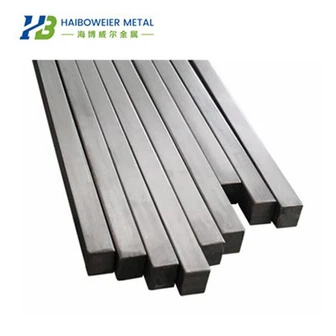
Titanium Alloy Grades: An Overview of Four Main Types
There are over 100 titanium alloy grades according to literature, but only a dozen or so are actually used industrially. However, these grades are difficult to remember clearly, so metallurgists classify them by their microstructure.
Titanium Alloy Classification
Based on changes in microstructure, titanium alloys are classified into four types: α-type, near-α-type, α+β-type, and β-type titanium alloys.
Pure titanium undergoes a crystal structure change at approximately 882℃. Below this temperature, titanium has a hexagonal close-packed (HCP) structure, known as the α phase. At higher temperatures, it transforms into a body-centered cubic (BCC) structure, known as the β phase. Alloying elements affect the content of the α or β phase at room temperature. Aluminum, oxygen, and nitrogen typically stabilize the α phase, while elements such as vanadium, molybdenum, chromium, and niobium tend to stabilize the β phase, resulting in the main titanium alloy series. We can also understand the general structural changes as follows: α → near-α → α+β → β. With these structural changes, properties such as strength, ductility, heat resistance, formability, and heat treatment response also change.
α Titanium Alloys
Commonly seen alloys TA0, TA1, TA2, TA3, TA7, TA9, and TA10 are relatively common industrial pure titanium alloys, also used in applications requiring particularly high corrosion resistance. These alloys are not chosen for their extremely high strength; their excellent corrosion resistance, good weldability, and relatively good machinability are their advantages. Therefore, they are commonly used in chemical equipment, heat exchangers, piping systems, petrochemical equipment, chlor-alkali equipment, and water treatment systems. For equipment exposed to corrosive media, high tensile strength is less advantageous than titanium's corrosion resistance.
Near-α Titanium Alloys
Near-α alloys are mainly composed of the α phase, containing a small amount of the β phase. Grades include TA11, TA15, TA13, and TA19. Compared to ordinary α alloys, these materials exhibit superior high-temperature strength and creep resistance. These are commonly used in aerospace structures and engine-related components. For example, TA15, also known as BT20, and TA19, corresponding to Ti-6242S, offer improved performance. Their properties enhance the strength of titanium at room temperature while maintaining its performance over extended periods at high temperatures.
α+β Titanium Alloys
The most common alloy types include TC1, TC4, TC6, TC10, and TC11. We will focus on TC4, as it is the most extensively studied, longest-used, best-performing, and most widely applied alloy. TC4's chemical formula is Ti-6Al-4V, and it is internationally known as Grade 5 titanium. Its composition includes approximately 6% aluminum and 4% vanadium.
α+β titanium alloys can be more challenging to weld and machine. The final performance is largely determined by the machining process, heat treatment, and material condition. α+β titanium alloys can be more challenging to weld and machine.
β Titanium Alloys
β titanium alloys contain a higher proportion of β-stabilizing elements. For example, TB2, Beta C, and other metastable β alloys. A notable characteristic of these materials is their formability. In the solution-treated state, some β alloys are relatively easy to cold-form. Their strength can be significantly improved after aging. For some grades, tensile strength can reach around 1300–1400 MPa, depending on composition, processing technology, and heat treatment. This makes β titanium alloys attractive in fields such as springs, fasteners, aerospace components, and oil and gas equipment. β alloys are generally more expensive, and their properties are very sensitive to processing technology and heat treatment. They are not simply "strengthened" versions of TC4.
Choosing the Right Titanium Alloy for Your Industry
When choosing a suitable titanium alloy, factors such as good corrosion resistance may make α alloys more suitable. For high-temperature applications, α+β alloys (such as TC4) offer good combined strength and toughness, making them the most commonly used titanium alloys. β alloys are particularly important for high strength, cold formability, or specific heat treatment properties.
Precautions for using Xuze titanium alloys:
Environment for use
Required strength
Processing and forming methods
Welding and heat treatment
Cost budget
Conclusion
You will then have mastered the "first principles" of titanium alloy selection: For corrosion resistance and good weldability, choose α; for high temperature resistance, choose near-α; for comprehensive performance, choose α+β (TC4 as a backup); for cold forming and ultra-high strength, choose β