


Various ways to achieve corrosion resistance of titanium alloys
With the continuous advancement of science and technology, titanium alloys, as an important engineering material, have been widely used in aerospace, marine engineering, medical and other fields. However, the corrosion resistance of titanium alloys is directly related to their service life and safety. Therefore, how to ensure the corrosion resistance of titanium alloys has become an important research topic. Haiboweier editors will introduce various ways to achieve corrosion resistance of titanium alloys, including the natural formation of surface oxide film, micro-arc oxidation technology, surface modification and sealing treatment, alloying, application of super-hydrophobic film and comprehensive protection strategy.
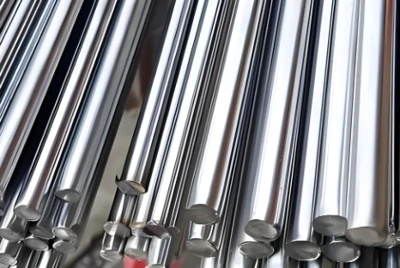
Natural formation of surface oxide film
Titanium alloys can naturally form a dense titanium dioxide (TiO₂) oxide film in the air. This oxide film is very thin (usually only a few nanometers thick), but very dense, and can effectively block the contact between external corrosive substances and the titanium matrix. In addition, this oxide film also has the ability to self-repair. Even if it is partially damaged, it can be quickly re-formed through oxidation reaction, thereby continuing to play a protective role. This self-repairing ability enables titanium alloys to maintain good corrosion resistance during long-term use.
Micro-arc oxidation technology
Micro-arc oxidation (MAO) is a method for generating a controllable dense oxide ceramic film on the surface of titanium alloy. This technology generates spark discharge on the surface of titanium alloy through electrochemical principles, forming micro-arc oxidation spots, and then generating a dense oxide ceramic layer. This ceramic layer not only has a strong bond with the substrate, but also has excellent corrosion resistance and wear resistance. For example, the ceramic film constructed on the surface of TC4 titanium alloy by micro-arc oxidation technology is mainly composed of anatase and rutile TiO₂, which can effectively block the intrusion of water and corrosive ions and significantly improve the corrosion resistance of titanium alloy.
Surface modification and sealing treatment
In order to further improve the corrosion resistance of micro-arc oxidation film, researchers often use sealing methods or combine them with other surface treatment technologies. Sealing treatment can seal the micropores in the micro-arc oxidation film and reduce the contact between the corrosive medium and the substrate. For example, coating the surface of titanium alloy after micro-arc oxidation with low surface energy materials (such as octadecyltrimethoxysilane, OTMS) for modification can construct a superhydrophobic film, which significantly reduces the adhesion and penetration of corrosive media on the surface. In addition, by combining micro-arc oxidation with hydrothermal growth, the hydrotalcite film is grown in situ on the surface of magnesium alloy after micro-arc oxidation, which can also close the micropores and improve the corrosion resistance.
Alloying
The corrosion resistance of titanium alloys can be significantly improved by adding specific alloying elements. For example, adding a trace amount of tantalum (Ta) elements can significantly improve the corrosion resistance of TA23 titanium alloy, increase the self-corrosion potential and reduce the self-corrosion current density. In addition, the addition of neutral elements such as zirconium (Zr) can also improve the corrosion resistance of titanium alloys, because these elements can inhibit the further growth of corrosion holes by forming a thicker passivation film. Microalloying technology can also regulate the phase change behavior, grain size and grain boundary characteristics of titanium alloys, thereby optimizing the organizational structure of the material at the microscale and improving its comprehensive performance.
Application of superhydrophobic film
Constructing a superhydrophobic film on the surface of titanium alloy is an effective corrosion resistance strategy. Superhydrophobic film has extremely low surface energy, which can significantly reduce the contact between water-soluble corrosive media and the substrate, thereby reducing corrosion. For example, the superhydrophobic film constructed on the surface of titanium alloy by micro-arc oxidation combined with self-assembly of low surface energy substances can significantly improve its corrosion resistance in corrosive Cl⁻ solution. This superhydrophobic film not only has good corrosion resistance, but also has good mechanical stability and self-cleaning properties.
Comprehensive protection strategy
The corrosion resistance of titanium alloy can be further improved by combining multiple surface treatment technologies. For example, the composite coating prepared on the surface of titanium alloy by combining micro-arc oxidation with laser processing technology has excellent corrosion resistance and wear resistance. In addition, various surface treatment technologies such as sol-gel technology and electrochemical deposition technology can be combined to form a multi-level protection system to improve the corrosion resistance of titanium alloy.
The corrosion resistance of titanium alloy has been significantly improved. The natural formation of surface oxide film, micro-arc oxidation technology, surface modification and sealing treatment, alloying, application of super-hydrophobic film and comprehensive protection strategy and other means work together on the surface of titanium alloy to form a multi-level protection system. The application of these technologies has made titanium alloy widely used in aerospace, marine engineering, medical and other fields, and has provided a strong guarantee for its long-term stable operation.


