


Why are titanium frames considered a boon for people with allergies?
For people with allergies, life seems to be fraught with hidden minefields. Wearing metal jewelry for extended periods can cause skin redness, swelling, and itching; ordinary eyeglass frames can cause rashes on the bridge of the nose; even everyday accessories like earrings and watches can trigger allergies. In the search for safe materials, titanium frames stand out with their absolute advantage of being "allergenic," becoming a savior for allergy sufferers. From medical implants to fashion accessories, the biocompatibility of titanium has long been scientifically proven. When applied to eyeglasses, jewelry, and other personal items, it gently yet firmly builds a safety barrier for sensitive individuals.
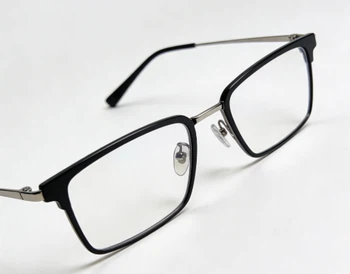
Titanium's "Gentle Gene": Biocompatibility Legacy from the Medical Field to Everyday Accessories
Titanium's biocompatibility is considered the pinnacle of metals. As the only "human-friendly metal" certified by the international medical community, titanium has been widely used in implants such as cardiac stents, artificial joints, and dental implants since the mid-20th century. Its core advantage lies in the fact that titanium almost never triggers an immune response or rejection when in contact with human tissue. For example, after artificial joint implantation, a thin protein film gradually forms on the surface of titanium, allowing it to coexist harmoniously with surrounding tissues and avoiding the inflammation or loosening problems that can occur with traditional metals. This characteristic is known in the medical field as "bioinertness," meaning that titanium does not actively react chemically with the human body, thus minimizing the risk of allergies.
When titanium extends from medical applications to everyday accessories, its biocompatibility remains impeccable. Ordinary metal eyeglass frames often contain nickel and chromium, elements that can easily leach out under sweat or friction, irritating the skin and causing contact dermatitis. Statistics show that approximately 15%-20% of the population is allergic to nickel, and wearing nickel-containing eyeglass frames may cause redness, itching, or even blisters on the bridge of the nose. Titanium frames, on the other hand, typically have a purity of over 99%, containing almost no common allergens such as nickel and cobalt. The dense oxide film (titanium dioxide) formed on its surface further blocks the release of metal ions, maintaining a "zero-irritation" state even with prolonged wear or in humid environments (such as during exercise and sweating). A laboratory test by a certain brand showed that when titanium frames and nickel-containing stainless steel frames were simultaneously immersed in artificial sweat for 72 hours, the concentration of nickel ions released by the stainless steel frame was 200 times that of the titanium frame, while almost no metal ions were detected in the titanium frame solution.
Lightweight and Durable: A Double Benefit for Sensitive Individuals
People with allergies often have to weigh "safety" against "comfort" when choosing accessories. Traditional metal frames are heavy, prone to corrosion, and can cause skin irritation and damage due to friction from prolonged wear, especially on the bridge of the nose or ears. Plastic frames, while lightweight, are prone to aging and deformation, and some inferior plastics may contain plasticizers, posing a risk of allergies. The advent of titanium frames has completely broken this dilemma.
Titanium has only 40% the density of stainless steel, yet possesses higher strength than aluminum alloys. For example, a typical pair of eyeglass frames weighs only 10-15 grams, about half the weight of a stainless steel frame of the same size, providing almost no pressure when worn, making it especially suitable for people with low nose bridges or sensitive ears. A follow-up survey conducted by an ophthalmology hospital showed that 92% of patients wearing titanium frames reported "no discomfort even after prolonged wear," while only 58% of patients wearing traditional metal frames gave a similar assessment. Furthermore, titanium has extremely high corrosion resistance; even when used at the beach or in high-humidity environments, it will not rust or discolor, avoiding secondary irritation to the skin from metal corrosion. An outdoor enthusiast with allergies shared, "Before, when I wore stainless steel frames while hiking, my nose would always become red and itchy after sweating; after switching to titanium frames, even after a whole day in the sun, my skin remains 'calm and undisturbed.'"
From "Functional Necessity" to "Fashion Expression": The Diverse Charm of Titanium Frames
In the past, titanium frames were often labeled as "conservative" due to their strong "medical" feel. However, with advancements in manufacturing processes, titanium frames have transcended functional boundaries and become a "new favorite" in the fashion world. Through electrolytic polishing, anodizing, and other technologies, titanium frames can present sophisticated colors such as deep space gray, champagne gold, and rose pink, and can even simulate natural textures like wood grain and stone grain, satisfying diverse aesthetic needs. A designer brand's "Aurora Series" titanium frames, crafted with a multi-layer coating process, create a gradient rainbow effect on the temples, quickly becoming a "sold-out" item among young consumers after their launch.
For business professionals, the minimalist lines and matte finish of titanium frames are suitable for formal occasions with suits, while also conveying a subtle sense of technology. The lightweight design and non-slip nose pads of sporty titanium frames make them ideal for fitness and running. Furthermore, the hypoallergenic nature of titanium frames is being incorporated as a core selling point by more and more brands. Data from an international eyewear chain shows that titanium frame sales have grown at an average annual rate of 45% over the past three years, with a repurchase rate of up to 80% among consumers with allergies, proving that safety and style are not mutually exclusive.
When allergies become an "invisible shackle" in life, the emergence of titanium frames undoubtedly opens a window of freedom for sensitive individuals. They protect every inch of skin they come into contact with with titanium frames using medical-grade safety standards, enhance wearing comfort with a lightweight and durable design, and satisfy individual needs with diverse and fashionable expressions. From "avoiding it at all costs" to "actively choosing it," titanium frames are proving with their strength that allergies don't have to "compromise," and that safety and well-being can coexist. Choosing titanium frames is choosing a gentler, more confident lifestyle-after all, treating sensitivities with gentleness is the most sincere love for life.


