


Advantages Of Titanium Rods in Automotive Components
With the continuous upgrading of automobile manufacturing, the selection of component materials is no longer just a matter of cost, but directly affects the overall vehicle performance, safety, and durability. Titanium rods, as a metallic material combining high strength and lightweight characteristics, are increasingly playing an important role in automotive components. Compared with traditional steel or aluminum alloys, titanium materials have significant advantages in weight, corrosion resistance, and high-temperature stability, making them suitable for use in engine components, suspension systems, and fasteners. Especially in the fields of high-performance cars and racing cars, where material requirements are even higher, the ability of titanium rods to maintain stable performance in extreme environments is particularly crucial. Simultaneously, with the development of manufacturing technology, the processing capabilities of titanium materials are constantly improving, and its application range is gradually expanding. Titanium rods not only improve the performance of individual components but also have a positive impact on the optimization of the overall vehicle structure, resulting in a comprehensive improvement in the vehicle's power performance, handling experience, and long-term stability.
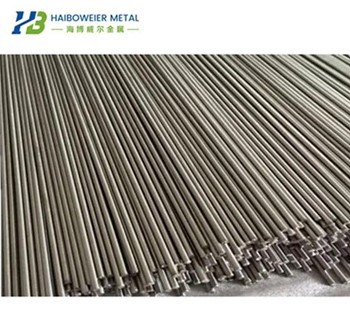
Specific Advantages of Titanium Rods in Components
· Lighter Weight
Titanium rods have a low density, which helps reduce the weight of components, thereby reducing the overall vehicle load.
· Higher Strength
Titanium rods are not easily deformed under high loads, making them suitable for critical structural components.
• Strong corrosion resistance
Resistant to rust in humid or salt spray environments, suitable for long-term use.
• Good high-temperature resistance
Maintains structural stability even in the high-temperature environment of an engine.
• Outstanding fatigue resistance
Withstands long-term vibration and impact, extending component lifespan.
• Improved overall performance
Indirectly improves vehicle acceleration and handling performance through weight reduction and structural reinforcement.
Effects of Titanium Rods Compared to Traditional Materials
In automotive component manufacturing, steel and aluminum alloys have always been the mainstream materials. Steel's advantage is high strength, but its disadvantage is its weight, which increases the overall vehicle load and affects fuel efficiency and handling sensitivity. While aluminum alloys are lighter, they are prone to fatigue under high-intensity operating conditions, especially under long-term vibration or impact, resulting in relatively weak durability. Titanium rods achieve a more ideal balance between these two materials: they possess strength close to that of steel while having lightweight properties similar to aluminum alloys. Furthermore, in high-temperature environments, steel is prone to performance changes, while titanium materials have better stability, maintaining consistent performance during long-term engine operation.
Understanding the Practical Value of Titanium Rods
Q: Why are titanium rods suitable for use in automotive parts?
A: Because they can provide high strength while reducing weight, improving overall performance.
Q: Which parts are best suited for titanium rods?
A: For example, internal engine components, suspension systems, and high-strength fasteners.
Q: Are titanium rods easily damaged?
A: No, they are not easily damaged. They have strong fatigue resistance and are suitable for long-term use.
Q: Will using titanium rods affect costs?
A: It will increase costs, but in return, it will result in higher performance and a longer service life.
The Evolution of Titanium Rod Applications from Basic to Core
In the early stages of the automotive industry, titanium rods were mainly used in small parts, such as bolts and connectors. The primary goal at this stage was to reduce weight and improve corrosion resistance. With technological advancements, titanium materials were gradually applied to suspension systems and chassis structures, making vehicles more stable during dynamic driving. Further development led to the entry of titanium rods into engine systems, such as connecting rods and valve components. Lightening these key components can significantly improve engine efficiency. Moving to a higher level, some high-end automobiles are already using titanium materials for overall structural optimization, achieving a better balance between body strength and weight.
Advantages and Overall Value
The advantages of titanium rods are not isolated but rather the result of multiple combined properties. The performance improvements brought by lightweighting, the safety guarantees provided by strength, and the durability brought by corrosion resistance all contribute to enhancing the overall performance of automotive components. It not only improves the performance of individual components but also positively impacts the overall vehicle operating efficiency, ensuring stable performance in various complex environments.
The advantages of using titanium rods in automotive components are mainly reflected in lightweighting, high strength, corrosion resistance, and high-temperature resistance. By reducing component weight, vehicle acceleration performance and fuel efficiency can be effectively improved, while optimizing the handling experience. In terms of structural safety, the high strength of titanium materials can improve the reliability of key components, allowing the vehicle to maintain stable operation under high loads or complex road conditions. Furthermore, its excellent fatigue resistance extends the service life of components and reduces maintenance costs. Compared with traditional steel and aluminum alloys, titanium rods have a greater advantage in overall performance, making them particularly suitable for the high-performance automotive field. Although the cost is high, the performance improvements and durability it brings make it important in high-end automobile manufacturing.


