Corrosion Resistance Study of Titanium Alloy Marine Oil and Gas Transportation Systems
Marine oil and gas transportation systems operate in high-salt, high-humidity, and complex chemical environments for extended periods. The corrosion resistance of materials directly impacts system safety and service life. Traditional metals are prone to corrosion failure in seawater environments, increasing maintenance costs and operational risks. Titanium alloys, with their unique material properties, are increasingly becoming an important choice in marine engineering, and their corrosion resistance warrants in-depth research and analysis.

The Influence Mechanism of Marine Environment on Corrosion of Transportation Systems
Marine environments contain large amounts of chloride ions, which have a strong corrosive effect on metal surfaces. During long-term operation, transportation systems are also affected by temperature changes, pressure fluctuations, and fluid erosion, further complicating the corrosion process. Pitting or crevice corrosion is prone to occur in localized areas, and once defects form, the corrosion rate accelerates significantly. This environmental characteristic places higher demands on materials, requiring stable corrosion resistance.
The Formation Principle of the Protective Structure on the Surface of Titanium Alloys
When titanium alloys come into contact with oxygen or water, a dense oxide film forms on their surface. This protective structure has good stability and can prevent corrosive media from further penetrating the internal metal. Even with minor surface damage, titanium alloys can self-repair and restore their protective capabilities within a short time. This self-protective property allows titanium alloys to exhibit a low corrosion rate in marine environments.
Corrosion Resistance Performance in Transportation Systems
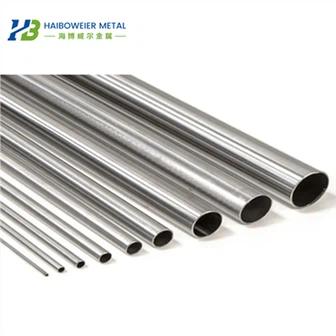
In marine oil and gas transportation systems, titanium alloys are commonly used in pipelines, connectors, and critical structural components. During long-term operation, their surface condition remains stable, and large-area corrosion is not easily observed. During the transportation of saline media, the material effectively resists chemical corrosion, reducing the risk of leakage. Practical applications show that titanium alloys maintain good performance under complex operating conditions, ensuring the safe operation of the system.
Key Factors Affecting Corrosion Resistance
Although titanium alloys exhibit excellent corrosion resistance, they are still affected by several factors:
- Temperature changes affect the stability of the oxide film.
- Differences in media composition may alter the corrosion rate.
- Surface treatment quality affects the protective effect.
- Long-term stress may induce localized damage.
- Differences in manufacturing processes affect material uniformity.
These factors need to be controlled during application.
Technological Directions for Enhancing Corrosion Resistance
To further improve the performance of titanium alloys in marine transportation systems, optimization can be achieved through technological means. For example, advanced surface treatment processes can enhance the stability of the protective layer and improve the material's adaptability to extreme environments. Optimizing the structural layout during the design phase to reduce corrosion concentration areas can also effectively extend service life. Combining monitoring technology with equipment operation status tracking allows for timely detection and handling of problems, thereby maintaining long-term stable system operation.
Titanium alloys exhibit outstanding corrosion resistance in marine oil and gas transportation systems. By combining material properties with engineering applications, corrosion risks can be effectively reduced. With continuous technological advancements, their application in marine engineering will become more widespread, providing more reliable protection for oil and gas transportation systems.