


Can Titanium Meet High-end Demands?
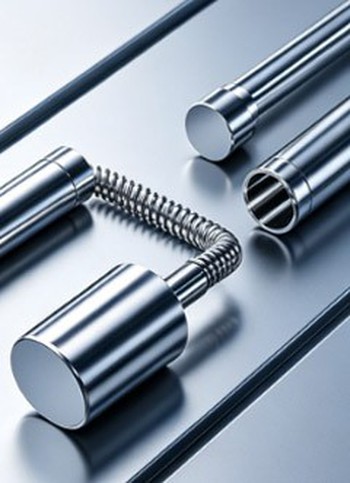
Against the backdrop of continuous upgrades in high-end manufacturing, material properties have become a key factor determining product reliability and technological level. The question of whether titanium can meet high-end demands actually involves its comprehensive performance across multiple dimensions, including strength, weight, corrosion resistance, and processing precision. Currently, titanium and its alloys (including titanium rods and tubes) are widely used in many high-end fields and are gradually becoming one of the key structural materials. However, its adaptability still depends on specific application scenarios and technical requirements.
High Strength and Lightweight Meet Structural Requirements
One of the most prominent advantages of titanium materials in high-end manufacturing is the balance between strength and weight.
- Under the same strength requirements, titanium is significantly lighter than steel, contributing to overall lightweight design.
- In aerospace structural components, titanium can maintain sufficient load-bearing capacity while reducing weight.
This characteristic makes it very suitable for weight-sensitive high-end applications.
Excellent Corrosion Resistance Adapts to Complex Environments
High-end applications often involve complex or even extreme working environments, requiring extremely high material stability.
- Titanium exhibits strong corrosion resistance in seawater, acidic and alkaline environments, and high-humidity environments.
- In chemical equipment and marine engineering, titanium significantly extends equipment lifespan.
This stability gives it an irreplaceable advantage in harsh environments.
Biocompatibility Supports High-End Medical Applications
The application of titanium in the medical field is another important manifestation of its ability to meet high-end demands.
- Titanium has excellent biocompatibility and can be used in human implant materials, such as bone screws and joints.
- It is less prone to rejection during long-term implantation, resulting in high safety.
This characteristic makes titanium a key choice for high-end medical materials.
Processing and Precision Capabilities Determine High-End Adaptability
Although titanium has superior performance, its processing is relatively difficult.
- Titanium materials require high-quality equipment and processes during cutting and forming.
- High-end applications have stringent requirements for dimensional accuracy and surface quality, necessitating more mature manufacturing capabilities.
Whether titanium can meet high-end demands also depends on the technological level and processing capabilities of enterprises.
High-End Demand Continues to Drive Material Performance Upgrades
As industry continues to develop towards higher precision and higher reliability, the performance requirements for titanium are also increasing.
- Aerospace, new energy, and high-end equipment manufacturing continue to expand the application scope of titanium materials.
- The development of new processes and alloys is continuously pushing the boundaries of titanium's performance.
This trend is enhancing titanium's adaptability in high-end applications.
Titanium has already proven its value in several high-end sectors, demonstrating the fundamental ability to meet high-end demands, particularly excelling in lightweighting, high strength, and corrosion resistance. However, its effectiveness still depends on the support of processing technologies and industrial capabilities. With continuous advancements in materials technology, the application scope of titanium in high-end manufacturing is expected to further expand, playing a crucial role in more key areas.


