


Are titanium-coated pans safe
Driven by the dual demands of healthy eating and efficient cooking, titanium-coated pans, with labels like "safe and non-toxic" and "lightweight and durable," have quickly become a hot topic in the cookware market. From mothers and babies to professional chefs, their promotional slogans of "zero heavy metal release" and "physical non-stick" accurately address consumer concerns about food safety. However, as the market expands, controversy has arisen over whether titanium coatings release harmful substances and whether they are safe for high-temperature use.
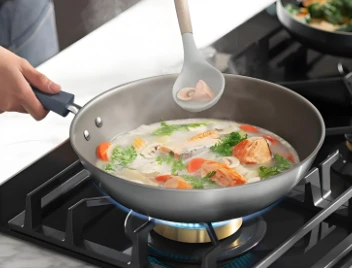
The Myths and Realities of Titanium
Before exploring titanium-coated pans, it's important to understand titanium itself. It's a silvery-white transition metal renowned for its high strength, low density, and excellent corrosion resistance. Pure titanium does possess excellent biocompatibility and is widely used in the medical field for artificial joints, dental implants, and skull plates, earning it a reputation as safe and healthy.
However, medical titanium undergoes rigorous processing, and its safety cannot be equated with the safety of titanium coatings used in cookware. When titanium moves from the medical field to the kitchen, its form and usage undergo fundamental changes. The "titanium" in titanium-coated pots isn't the pure titanium plate we imagine, but rather a coating material in the form of a powder or alloy. This change in form leads to significant differences in performance and safety.
Decoding Titanium-Coated Pots
So-called "titanium-coated pots" on the market are essentially composite products. Their base material is typically aluminum or iron, with a titanium coating applied to the surface through a special process. The key secret is that the so-called titanium coating is often simply a mixture of extremely fine titanium powders mixed with traditional chemical coatings like Teflon. This design attempts to combine the excellent thermal conductivity of aluminum with the durability of titanium, but the actual results vary greatly depending on the process and quality. Consumers should understand that when purchasing a titanium-coated pot, they are primarily paying for the concept of "titanium" rather than the actual titanium metal. In many cases, the titanium content is extremely low, making it more of a marketing gimmick than a functional improvement.
A Comprehensive Analysis of Safety Hazards
The safety issues of titanium-coated pots primarily arise from three aspects, which deserve consumers' attention.
Coating delamination is the primary risk. Over time, the titanium coating can gradually flake off due to scratches from spatulas, wear from cleaning, or high temperatures. These tiny fragments can enter the human body through food. Although titanium itself is non-toxic, the accumulation of foreign matter can pose a potential health risk.
Even more worryingly, once the coating is damaged, the underlying aluminum substrate is exposed. Aluminum can dissolve and migrate into food under high temperatures and acidic conditions. Multiple studies have linked excessive aluminum intake to neurological damage and bone disease.
The release of toxic gases at high temperatures is another hidden killer. When a titanium-coated pan is left unheated or the oil temperature exceeds 260°C, the polymer components in the coating may decompose, releasing toxic gases such as perfluoroisobutylene. This gas is extremely dangerous to birds and can also irritate the human respiratory system.
Identification and Purchasing Guide
Faced with the dazzling array of titanium pans on the market, consumers need to master a few identification techniques.
The first rule is to carefully read the product labeling. Pure titanium pans are often clearly labeled "pure titanium" or "TI99%," while titanium-coated pans often use vague terms such as "titanium coating" or "titanium alloy non-stick coating."
Price is a key consideration. A genuine pure titanium pan typically costs three to five times more than a titanium-coated pan. If a "pure titanium pan" is unusually cheap, it's likely just a titanium-coated pan.
Pay attention to the product's weight and feel. Pure titanium pans are relatively light yet sturdy, while titanium-coated pans, due to their aluminum base, feel lighter and less durable. Consumers can also inspect the edges and back of the pan for details that may reveal the base material.
Choosing well-known brands and products that have passed national safety certifications (such as GB 4806.9-2016 Food Contact Materials Standard) can reduce purchasing risk to a certain extent.
Use Titanium-Coated Pans Intelligently
If you've already purchased a titanium-coated pan, using it intelligently can minimize risks.
Controlling the heat is key. Preheat over medium-low heat to avoid drying out an empty pan. Titanium-coated pans conduct heat well, so you don't need high heat to achieve the desired effect.
Choose the right cookware. Always use a wooden, silicone, or special nylon spatula; avoid metal spatulas to avoid scratching the coating.
Gentle cleaning is essential. Wait until the pan cools down before cleaning. Use a soft cloth and neutral detergent, avoiding harsh cleaning tools like steel wool.
Check the coating regularly. If you notice scratches, blistering, or peeling, stop using the pan immediately, as this indicates the aluminum base may be exposed.
A consumer stood in front of the cookware section, holding two pans: one a pricey pure titanium pan, the other a titanium-coated pan advertised as "Titanium Technology." His choice was essentially a trade-off between short-term savings and long-term health. While the pure titanium pan had a higher initial investment, it offered safety, stability, and a long lifespan. While the titanium-coated pan may appear cost-effective, it carries the risk of coating peeling and exposing the base material. True safety comes from a clear understanding of the product's nature, not blindly trusting marketing rhetoric.


