Titanium Foil Buying Guide
Simply put, titanium foil is a sheet material thinner than titanium plate. Its unique properties-such as high strength, light weight, and corrosion resistance-have made it a sought-after choice for buyers across various specialized industries. In the new energy battery sector, it is highly valued for its uniform electrical conductivity and high-temperature resistance. Beyond these attributes, its stability and biocompatibility make it an indispensable material in fields such as electronics, medicine, and the chemical industry. This guide will help you select the right titanium foil product for your project.
Common Titanium Foil Grades and Characteristics
We typically offer three grades of titanium foil that meet your needs for both industrial and commercial applications, allowing you to make the right choice for your project.
1. Grade 1 Pure Titanium Foil: This is the softest and most ductile of the pure titanium grades. It is an excellent choice if your product requires processes such as bending, stretching, deep drawing, or complex forming. It is widely used in industries producing precision electronic components and deep-drawn parts.
Applications: Ultra-precision electronic components, flexible components, deep-drawn parts.
2. Grade 2 Pure Titanium Foil: This is the most widely used and cost-effective titanium material, offering a balance of strength, corrosion resistance, and workability. It is easy to weld and machine, making it suitable for most standard industrial applications. It is commonly used for corrosion-resistant industrial components, medical device parts, and new energy batteries.
3. Grade 4 Titanium Alloy Foil (Ti-6Al-4V): Compared to the first two grades, this material offers higher strength and superior fatigue resistance. These properties make it an ideal choice for high-strength structural components and high-end mechanical equipment.
Standard Thickness Ranges and Applications
The thickness of titanium foil directly determines its range of applications. We offer various custom thickness specifications (the thicknesses below are for reference only; please purchase based on your specific requirements):
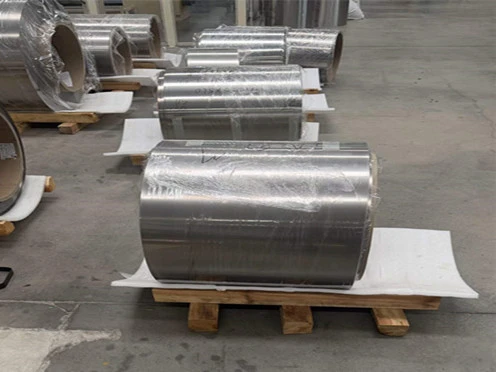
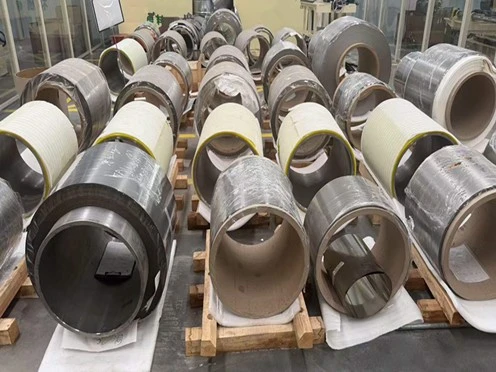
• 0.002mm – 0.01mm: Ultra-thin titanium foil. Used for flexible circuits, precision sensors, instrument surface coatings, and microelectronic components. • 0.02mm – 0.1mm: Precision thin foil. Widely used in medical device components, aerospace gaskets, and precision filtration assemblies.
• 0.1mm – 0.8mm: Standard industrial foil. Suitable for chemical processing linings, sealing gaskets, stamped hardware, and industrial anti-corrosion component

Application
1. Electronics Industry
In today's society, as electronic devices evolve toward miniaturization and greater precision, the use of titanium foil in the electronics industry is gaining increasing importance. It is utilized in components such as electronic component leads and lead frames, where its excellent electrical conductivity and corrosion resistance ensure stable operation. In high-end sensors, titanium foil also serves as the substrate material for sensing elements, guaranteeing the sensor's accuracy and reliability.
2. Medical Industry
Commercially pure titanium foil is non-toxic and biocompatible; it is commonly used for dental accessories, auxiliary components for medical implants, and seals for medical equipment.
3. Chemical Industry
Titanium foil exhibits exceptional resistance to acid and alkali corrosion, making it an ideal material for chemical equipment linings and anti-corrosion gaskets, significantly extending equipment service life.
4. Aerospace
High-strength, lightweight titanium foil is widely used in aircraft engine components, thin-gauge airframe structural parts, precision aerospace components, and electronic parts, meeting rigorous aviation safety standards.
Selecting Titanium Foil
1. Material Grade Selection
For general industrial corrosion resistance and standard processing applications, Grade 2 titanium offers the best cost-performance ratio. Grade 1 titanium is suitable for precision forming and flexible components, while Grade 5 titanium is used for aerospace applications requiring high strength.
2. Confirming Thickness Tolerances
Precision electronics and medical projects require strict thickness tolerances; however, for general industrial use, standard tolerances suffice and help reduce costs.
3. Checking Surface Quality and Purity
High-quality titanium foil features a smooth surface free from scratches, oxidation, or peeling, with uniform coloration. High-purity titanium foil is suitable for medical and precision electronics applications.
4. Verifying Standards and Certifications
All our titanium foils comply with the ASTM B265 standard. For bulk orders, we provide mill test reports and material certificates to facilitate project acceptance.
5. Customization Services
We offer customization options for width, length, and soft-annealing treatments, as well as coil and sheet cutting services, to meet your specific processing requirements.
Factors Affecting Titanium Foil Costs
Rising raw material costs and the technical challenges associated with producing ultra-thin titanium foil drive up overall costs. Driven by the demand for specialized components, electronic products, and new energy batteries, purchasers are compelled to utilize materials that offer corrosion resistance, high strength, and ductility.
There are two ways to learn more about our products:
1. Contact us directly: WhatsApp/WeChat +8613636823845
2. Visit our website: haibowellti.com. We look forward to hearing from you!