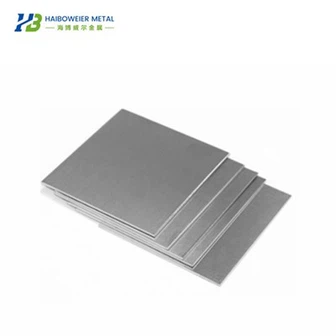
Are titanium cutting boards any good?
The kitchen is the heart of the home, and the cutting board, as a fundamental piece of cooking equipment, directly impacts the safety of food preparation and the comfort of the cooking experience. Traditional wooden cutting boards are prone to cracking and mold, plastic cutting boards are easily scratched and harbor dirt, and while stainless steel cutting boards are durable, they can easily damage knife blades… Against this backdrop, titanium cutting boards, with their unique metallic properties, are gradually becoming a new choice for families and catering professionals who prioritize quality and health. Are they truly effective? The answer lies in the deep compatibility of titanium's physicochemical properties with the kitchen environment.

Titanium's biocompatibility is one of the core advantages of titanium cutting boards. As a metal widely used in medical implants (such as artificial joints and bone screws), titanium has excellent compatibility with human tissues and blood, is non-toxic, and does not release harmful substances. This means that when using a titanium cutting board to process food, there is no need to worry about heavy metal migration or chemical substances seeping into the food, making it especially suitable for scenarios with extremely high safety requirements, such as cutting fresh fruits and vegetables and preparing infant food. In contrast, some inferior plastic cutting boards may release harmful substances such as bisphenol A (BPA) after high temperatures or prolonged use, while wooden cutting boards are prone to harboring carcinogens such as aflatoxin if not properly maintained. Titanium's inherent safety provides an invisible barrier to kitchen health.
Durability is another major advantage of titanium cutting boards. Titanium is 60% as hard as steel, but only 60% as dense. This "light yet hard" characteristic makes it resistant to scratches when cut by blades, while maintaining a smooth surface. Traditional wooden cutting boards develop uneven knife marks over time, becoming a breeding ground for bacteria; plastic cutting boards are easily scratched by blades, leaving white residue that mixes into food and affects its taste. Titanium cutting boards, however, remain smooth even after long-term use, requiring only a rinse with water or a wipe with a soft cloth for cleaning, significantly reducing cleaning difficulty and the risk of bacterial growth. Furthermore, titanium boasts exceptional corrosion resistance, making it resistant to mold and deformation in the humid kitchen environment. Its lifespan far exceeds that of wood and plastic, making it more economical and environmentally friendly in the long run.
The practicality of titanium cutting boards also lies in their multi-functional design. Many titanium cutting boards feature a double-sided design: one side is a smooth metal surface, suitable for cutting cooked foods or ingredients requiring a clean surface; the other side uses a special process to increase friction, preventing raw ingredients from slipping and improving cutting efficiency. Some high-end models also feature non-slip silicone edges or a foldable design, facilitating storage and preventing safety hazards caused by the cutting board slipping during cutting. More importantly, titanium has poor thermal conductivity; even food placed on the cutting board directly from the refrigerator will not deform due to temperature differences or condensation on the food surface. This characteristic is particularly useful when handling frozen foods.
Of course, titanium cutting boards are not without their flaws. They are generally more expensive than traditional wooden or plastic cutting boards, and the cutting noise from the metal is slightly louder than from wooden cutting boards, which may require some adjustment for users sensitive to noise. However, considering its exceptionally long lifespan, zero maintenance costs (unlike wooden cutting boards which require regular mineral oil application), and absolute safety, these "minor drawbacks" seem insignificant.
From medical-grade safety to kitchen-grade practicality, titanium cutting boards are redefining the standards of food preparation in modern kitchens as "invisible health guardians." They not only solve the pain points of traditional cutting boards-prone to mold, difficult to clean, and easily scratched-but also enhance cooking safety and efficiency with the unique properties of titanium. Whether for everyday home use or the professional needs of restaurants, titanium cutting boards, with their core advantages of durability, safety, and ease of cleaning, have become the preferred solution for upgrading kitchen equipment. Choosing a titanium cutting board is not just choosing a cutting tool, but choosing a healthier and more worry-free cooking lifestyle.