


Are Titanium Frying Pans Really Worth Buying?
The Truth About Titanium Cookware That Most Cookware Brands Won't Tell You
You probably see them everywhere on social media. Titanium pans are non-toxic, non-stick, and uncoated, making them seem very safe.
Titanium pans on the market can generally be divided into three categories:
1. Pure Titanium Cookware – Made entirely of titanium. Expensive.
2. Titanium Composite Cookware – Made of three layers: aluminum, steel, and titanium, with the layer in contact with food being titanium.
3. Titanium-Based Non-Stick Pans – Ordinary non-stick coating (usually PTFE) with a small amount of titanium added.
Knowing this, you'll know how to choose the right titanium cookware for you.
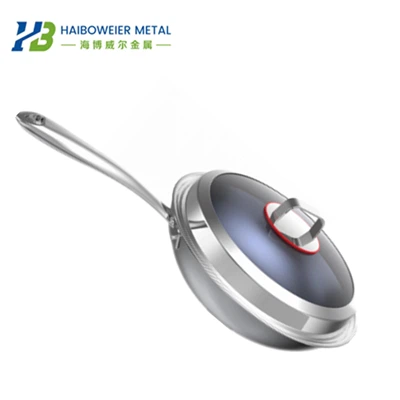
Why are people interested in titanium pans?
Market research has proven that titanium pans are indeed more durable, have a longer lifespan, are non-toxic, safe, lightweight, rust-free, and healthy than other cookware. These are the reasons why we choose them.
However, its drawback is that while lightweight, its thermal conductivity is poor. When frying food, uneven heating results in uneven cooking of the food's surface.
Titanium itself isn't truly non-stick. Non-stick pans often have a coating, but over time, this coating wears off and ages, reducing its non-stick properties.
The most pressing questions people have:
- What comes into contact with my food?
- Is it free of polytetrafluoroethylene (PTFE)? Is it free of perfluoroalkyl and polyfluoroalkyl substances (PFAS)?
- Is it made of pure titanium or just coated?
- How high a temperature can it withstand?
If you can't provide demonstrable answers to these questions, your brand will lose consumer trust.
The question is… is a titanium frying pan truly non-stick and worth buying?
It depends on your expectations.
✅ If you want the following features, then a titanium frying pan might be worth buying:
- Very lightweight frying pan
- Will not rust or corrode
- More durable than cheap nonstick pans
- More convenient for everyday use (especially suitable for those with poor wrists or who dislike heavy cookware)
- Safer than cheap nonstick pans
If you want the following features, then a titanium frying pan might not be worth buying:
- Perfectly even heat conduction
- Achieve true nonstick performance without oil or special techniques
- Affordable price
- Frequently grilling and frying food at high temperatures
- Coating that will never fade (it's impossible)
What should you pay attention to before buying?
- **What is the coating?** PTFE? Ceramic? Pure titanium surface? Their performance varies greatly.
- **Do they explicitly state that they are PFAS/PTFE free?** **Transparency is a good sign.**
- **What is the maximum safe temperature?** **Don't guess-this is important.**
- **How long is the warranty?** **Cheap brands often disappear when problems arise.**
**Is the brand honest?** Reputable manufacturers will detail the manufacturing process of their cookware.
---
In everyday life, titanium cookware is indeed good, but it's not a magic bullet, nor is it a rip-off.
When choosing a titanium cookware, carefully read the instruction manual. Check if it has a coating, whether it's a composite titanium cookware or a pure titanium cookware. Don't just listen to the manufacturer's claims, slogans, and advertising; remember that your ultimate goal in choosing a titanium cookware is to ensure the health and safety of the food you cook.


