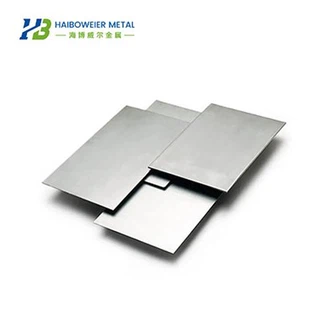
How Titanium Foil Rolls Combine Lightweight and High Strength
In high-demand industries such as aerospace, medical, electronics, and new energy, titanium foil rolls are considered an ideal material choice. But how can a material so thin still offer such exceptional strength? The answer lies in the unique physical properties of titanium and the metallurgical innovations behind its production.

Titanium's Atomic Structure: The Origin of Lightness and Strength
Titanium has a density of only 4.43 g/cm³-about 60% that of steel-yet its tensile strength can rival many high-strength steels. This is primarily due to its hexagonal close-packed (HCP) crystal structure at room temperature, which provides rigidity and excellent resistance to deformation. Even in ultra-thin forms like foil, titanium retains remarkable mechanical performance thanks to this atomic arrangement.
Alloy Enhancement for Superior Strength
While commercially pure titanium grades like Grade 1 and Grade 2 are used in foil form, many high-performance titanium foils are made from alloys-particularly Grade 5 (Ti-6Al-4V). The addition of aluminum and vanadium enhances both tensile strength and thermal stability through solid solution strengthening and precipitation hardening.
These alloying elements improve performance significantly without adding much weight. The result: a material that remains lightweight while achieving tensile strengths exceeding 900 MPa, making it ideal for demanding environments like aerospace insulation and surgical implants.
Precision Manufacturing Ensures Structural Integrity
Titanium foil rolls undergo a highly controlled production process, including cold rolling, annealing, and precision surface treatments. These steps refine the microstructure of the material, resulting in a dense, uniform grain structure.
A well-aligned, fine-grain internal structure ensures that the foil remains strong even when it is only microns thick. Unlike traditional metal foils that may tear or warp under stress, titanium foils maintain their mechanical strength and stability, even at ultra-thin dimensions.
High Cost, But High Value
Titanium foil rolls are more expensive to produce compared to aluminum or stainless steel foils due to their complex refining and processing methods. However, their performance-to-cost ratio is outstanding in high-end applications.
In aerospace engine insulation, cardiovascular stents, electric vehicle battery housing, and other critical uses, titanium foils reduce system weight, increase safety, and extend product life. These benefits often offset the higher upfront investment, offering long-term cost efficiency.
Titanium Foil Rolls Across Industries
Titanium foil rolls are not limited to aerospace-they're now being adopted across multiple industries due to their performance advantages:
Medical Devices: Used in implants, stents, and microelectronic housing for biocompatibility and mechanical reliability.
Energy Storage: Applied in battery tabs and casing for excellent corrosion resistance and thermal control.
Consumer Electronics: Suitable for heat dissipation layers, EMI shielding, and flexible components.
Aerospace & Aviation: Ideal for structural reinforcements, noise-damping barriers, and high-temperature insulation.
Titanium Foil Rolls Set the Benchmark for High-Performance Materials
The combination of lightweight and high strength in titanium foil rolls is no accident. It results from a synergy of atomic structure, advanced alloying, and precision processing. For engineers and product designers aiming to push the boundaries of performance, titanium foil rolls offer an exceptional materials solution.
HAIBOWEIER METAL supplies top-quality titanium foil rolls customized to your specifications, including multiple grades, thicknesses, and finishes. Whether you're designing for aerospace, medical, or electronics, our titanium solutions ensure strength, lightness, and long-term reliability.