How to bend and shape nickel-titanium alloy wire
Nitinol alloy wire, due to its excellent shape memory effect and high corrosion resistance, has been widely used in many fields such as medicine, electronics, and aviation. Especially in industries such as dental correction, robotics, and medical devices, the bending and shaping function of nickel-titanium alloy wire is particularly important. So, how to bend and shape nickel-titanium alloy wire? Haibowell editor will give you a detailed analysis of the bending and shaping process, techniques, and precautions of nickel-titanium alloy wire.
1. Characteristics and application of nickel-titanium alloy wire
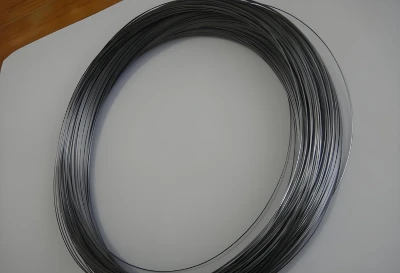
Nitinol alloy wire is an alloy material composed of nickel and titanium elements. Its unique shape memory effect enables it to return to its original shape under specific temperature conditions. This feature makes nickel-titanium alloy wire have irreplaceable advantages in many fields. Common applications include dental braces, vascular stents, aerospace components, and key components in various medical devices.
2. Principle of bending and shaping of nickel-titanium alloy wire
The bending and shaping of nickel-titanium alloy wire uses the shape memory effect principle of the alloy. The shape memory effect refers to the ability of a material to "remember" a certain shape within a specific temperature range and automatically return to that shape when external conditions change. In order to achieve bending and shaping, the nickel-titanium alloy wire must first be heated to enter a specific phase, usually through high-temperature heating or temperature control. After this heat treatment, the nickel-titanium alloy wire can maintain the desired bending shape after cooling.
3. Steps for bending and shaping of nickel-titanium alloy wire
1) Preparation:
Before starting bending and shaping, you first need to prepare the nickel-titanium alloy wire to ensure that there are no impurities on its surface and it is clean. Usually, a precision cutting tool is used to cut the nickel-titanium alloy wire to a suitable length.
2) Heating treatment:
The nickel-titanium alloy wire is heated to a certain temperature, usually between 300°C and 500°C. This temperature range can activate its shape memory effect, causing the structure of the alloy wire to change, thereby achieving bending and shaping.
3) Bending operation:
After the alloy wire reaches the required temperature, the bending operation is performed. At this time, a special bending tool is required to ensure the accuracy of the bending angle and direction. Because the nickel-titanium alloy wire has high elasticity, a certain amount of force needs to be maintained during bending, while avoiding excessive bending.
4) Cooling and shaping: After the bending operation is completed, the nickel-titanium alloy wire needs to be allowed to cool naturally or quickly in the cooling tank. During this process, the alloy wire will solidify in its new shape and maintain this shape until it is heated again.
5) Final inspection: The cooled nickel-titanium alloy wire should be subjected to a final inspection to ensure that its bending angle and shape meet the requirements. If there is a deviation, it can be heated again and the shape can be adjusted.
4. Precautions
When bending and shaping the nickel-titanium alloy wire, the following aspects need special attention:
1) Temperature control: The shape memory effect of nickel-titanium alloy wire is very dependent on temperature. Too high or too low temperature may affect its bending effect. Therefore, the accuracy of temperature control equipment is crucial.
2) Bending angle: Since nickel-titanium alloy wire has strong elasticity, excessive bending may cause its material properties to deteriorate and even affect the shape memory effect. Therefore, sharp bending should be avoided when bending.
3) Cooling rate: The cooling process also affects the shaping effect of nickel-titanium alloy wire. Rapid cooling may cause its shape to be unstable. It is recommended to use an appropriate cooling rate.
4) Surface protection: The surface of nickel-titanium alloy wire is easily scratched during the bending and shaping process. Therefore, direct friction between the tool and the wire surface should be avoided as much as possible during operation to protect its smooth surface.
As a high-performance material with shape memory effect, the bending and shaping process of nickel-titanium alloy wire plays an important role in many high-precision industries. Through reasonable temperature control, bending operation and cooling shaping, the special properties of nickel-titanium alloy wire can be effectively utilized to produce precise and reliable products. Whether in medical devices or other fields, the application of nickel-titanium alloy wire has demonstrated its strong adaptability and innovation potential. Mastering its bending and shaping skills can not only improve work efficiency, but also provide support for the realization of more innovative technologies.