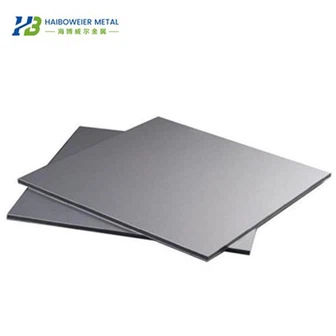
Introduction to titanium alloy coils
Titanium alloy coil is a titanium alloy material used to manufacture various products and has many unique characteristics and advantages of the process. Titanium alloy coils have become a widely used material in various industries due to their excellent performance and advantages. It is produced using specialized technology to provide superior performance for industrial applications. Titanium alloy coils are made by processing titanium alloy materials into thin, top-layer coils, usually in a shape or roll shape.
Production Process
The production of titanium alloy coils involves multiple processes such as smelting, casting, rolling, and heat treatment. The process begins by melting high-purity titanium scrap and then casting it into a slab. These slabs are then rolled into thin sheets using specialized equipment and heat treated to improve their mechanical properties. The production process for manufacturing titanium alloy coils usually includes forging, hot rolling, cold rolling, drawing, cutting, surface treatment and other steps.
Characteristic:

advantage
The advantages of using titanium alloy coils are many. It is a lightweight material that is easy to handle and install. Its high strength-to-weight ratio makes it an ideal replacement for heavier materials, reducing energy consumption and overall costs. Titanium alloy coils are also highly corrosion-resistant and offer excellent durability in harsh environments. Additionally, its biocompatibility makes it suitable for use in medical implants.
Dimensions
Titanium coils are available in various sizes and thicknesses to suit different applications. The most common sizes on the market are thicknesses between 0.1 mm and 3.0 mm and widths up to 1300 mm. Titanium coil dimensions vary by manufacturer and application, and are typically described in terms of thickness, width, and length. The length can be customized according to customer requirements.
Common titanium alloy grades include Ti-6Al-4V, Ti-6Al-4V ELI, Ti-3Al-2.5V, Ti-CP (pure titanium), etc. Titanium alloy grades have different alloy compositions and performance characteristics, each of which has Has its own unique properties and applications.
Grade 1 Titanium Coil: This is the purest form of titanium coil and offers excellent corrosion resistance and formability. It is commonly used in the chemical processing industry.
Grade 5 Titanium Coil: This alloy is the most common titanium coil used in aerospace and marine applications. It has high strength and corrosion resistance.
Grade 7 Titanium Coil: This grade of titanium coil is ideal for applications that require corrosion resistance in sour environments.
Grade 9 Titanium Coil: This alloy offers exceptional strength and is commonly used in the aerospace and marine industries.
Titanium alloy coils are used in a variety of industries
including aerospace, marine, chemical processing, medical and construction. Due to its superior performance and durability, it is used in aircraft structures, naval components, chemical reactors, medical implants, and building structural components.
Aerospace industry: used in aircraft structures, engine parts, aerospace equipment, etc.
Medical industry: used for medical devices such as artificial joints and rapid implants.
Chemical industry: used in corrosion-resistant vessels, heat exchangers and pipes.
Sporting goods: used in high-performance bicycles, golf clubs, etc.
Marine Engineering: Components and equipment used in marine environments.
in conclusion
Titanium alloy coil is a versatile material used in various industries due to its excellent properties and advantages. Its production process includes melting, casting, rolling and heat treatment to produce thin sheets with maximum strength and durability. Understanding the dimensions, types and applications of titanium alloy coils can help in choosing the right material for a specific application.