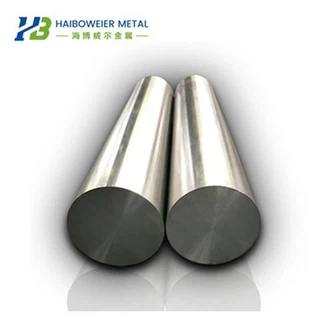
Preparation and application of alloy targets
Overview of alloy targets
An alloy target is a material composed of two or more metallic elements and has unique physical and chemical properties. The types and combinations are almost unlimited, ranging from traditional metal alloys to high-tech specialty alloys. With the rapid development of thin film technology, the importance of alloy targets is not only reflected in their impact on film properties, but also in that they provide a reliable way to achieve diversification and customization of material properties, making Alloy targets have become an indispensable key material in modern thin film preparation technology.
Preparation of alloy targets

a. Raw material selection and pretreatment
Raw material selection: First, select high-purity metal raw materials according to the type and use of the required alloy.
Pretreatment: including metal purification, crushing, etc., to ensure the quality of raw materials and the smooth progress of the preparation process.
b. Alloying method
Smelting method:
Steps: Mix different metal elements in specific proportions and heat them above the melting point in a controlled environment to fully fuse them.
Advantages: Suitable for fusible metals and can achieve mass production.
Disadvantages: Poor applicability to high melting point or easily oxidized metals.
Powder metallurgy method:
Steps: After mixing the metal powder evenly, it is pressed into shape by high pressure and then sintered at high temperature.
Advantages: Suitable for alloys with high melting points or special properties, and the chemical composition can be precisely controlled.
Disadvantages: higher cost and long production cycle.
c. Post-processing and quality control
Mechanical processing: cutting and grinding the smelted or sintered alloy target to meet specific size and surface roughness requirements.
Quality inspection: Conduct composition analysis, density testing and structural inspection on the alloy target to ensure that it meets the strict standards for film preparation.
d. Packaging and storage
Packaging: Pack in a dust-free, dry environment to prevent contamination and damage to materials during transportation and storage.
Storage: Stored under specific conditions to maintain material stability and performance.
The entire preparation process requires strict process control and quality management to ensure that the final alloy target material can meet the precise requirements for high-performance thin film preparation.
Thin film preparation technology
a. Magnetron sputtering
Principle: Using plasma guided by a magnetic field, atoms or molecules on the target surface are sputtered onto the substrate to form a thin film.
Advantages: Able to prepare high-quality films at low temperatures, suitable for heat-sensitive materials; suitable for the preparation of large-area uniform films.
Disadvantages: Relatively complex equipment requirements; certain materials may require higher sputtering power.
b. Electron beam evaporation
Principle: Use a high-energy electron beam to heat the target material, causing it to evaporate and condense on the substrate to form a thin film.
Advantages: Accurate control of deposition rate and film thickness; suitable for high melting point and high purity materials.
Disadvantages: It may produce higher heat load and affect some base materials; the cost is higher.
c. Technology Selection Considerations
Properties of target materials: Different alloy targets may be more suitable for specific deposition techniques.
Thin film applications: Different applications have different requirements for film performance, uniformity and purity.
Cost-Effectiveness: The choice of technology is also influenced by cost-effectiveness.
Availability of equipment: The equipment available in the laboratory or production environment also affects technology selection.
Thin film preparation technology is a diversified and constantly developing field, and the selection and application of alloy targets are crucial to achieving high-efficiency, high-performance thin films.

Case studies in specific applications
a. Solar cells: Application of CIGS alloy targets
Case background: Copper indium gallium selenide (CIGS) alloy targets are particularly important in the field of solar cells because they can provide efficient photoelectric conversion.
Preparation technology: CIGS alloy targets are usually deposited on the substrate using magnetron sputtering or co-evaporation technology.
Technical advantages: CIGS thin film solar cells have high light absorption and conversion efficiency, and are highly adaptable to manufacturing processes.
b. Semiconductor equipment: Application of AlGaAs alloy targets
Case background: Aluminum gallium arsenide (AlGaAs) alloy targets are used in the semiconductor industry to manufacture various high-performance electronic and optoelectronic devices.
Preparation technology: These alloy targets are usually deposited on semiconductor wafers by molecular beam epitaxy (MBE) or metal-organic chemical vapor deposition (MOCVD) technology.
Technical advantages: AlGaAs alloy can accurately control the band gap and electronic properties in the device, which is crucial to improving device performance.
c. Technical challenges and solutions
When applying alloy targets, technical challenges mainly focus on two aspects:
Precise control of alloy composition: For complex alloy systems such as CIGS, ensuring precise and uniform proportions of components is a challenge. Solving this problem often requires delicate preparation processes and strict quality control.
Film uniformity and quality: Especially when preparing large-area films, maintaining film uniformity and high quality is key. This often requires optimization of deposition parameters and the use of advanced preparation techniques.
Examples of alloy targets in specific applications demonstrate their importance and potential in high-tech fields. Through continuous technological innovation and optimization, alloy targets will continue to play a key role in materials science and engineering technology. We are committed to providing comprehensive solutions for scientific research experiments and helping to achieve the highest process standards in thin film preparation!