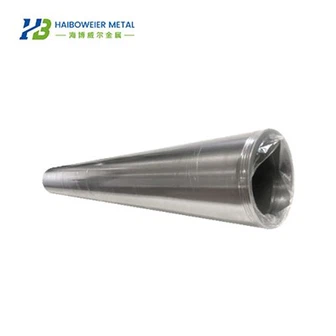
The impact of titanium-clad copper production technology on quality
Titanium-clad copper is a common composite material. It is usually prepared by compounding two different metal materials, titanium and copper, through different processes. Different production processes will affect the composite quality of titanium-clad copper. The following are several common titanium-clad copper production processes and their differences:

Hot rolling process:
This process heats two materials, titanium and copper, to high temperatures and then combines them into one by rolling or rolling. This process usually achieves high physical bond strength, but may be accompanied by a certain degree of material deformation and grain coarsening.
●Advantages: high physical bonding strength and fast preparation speed.
●Disadvantages: It may be accompanied by grain coarsening, which may reduce the overall performance of the material.
Explosive welding process:
The process works by holding separate pieces of titanium and copper together and then triggering an explosion between them, causing the two materials to quickly fuse together. This method enables a very strong material bond, but may result in some degree of material deformation and cracking.

●Advantages: enhanced bonding strength and fast preparation speed.
●Disadvantages: May be accompanied by material cracks and deformation.
Welding process:
Welding titanium and copper together using a welding process usually requires selecting the appropriate welding method and alloy, such as arc welding, TIG welding, etc. This method can achieve better bonding, but it requires good control of the welding temperature and process parameters.
●Advantages: It can achieve better material combination and is suitable for workpieces of various shapes and sizes.
●Disadvantages: Welding process parameters need to be carefully controlled to avoid adverse effects.
Powder metallurgy process:
By mixing titanium and copper powders and going through powder metallurgy processes such as sintering, hot pressing, etc., they are smelted together to form composite materials. This approach enables better uniformity and control of composite composition.
●Advantages: Able to achieve better uniformity and control, suitable for preparing workpieces with complex shapes.
●Disadvantages: The preparation process can be complex and requires appropriate equipment and process control.
Each production process has its advantages and disadvantages, and choosing the appropriate process depends on specific application needs and material performance requirements. Different processes may result in different composite qualities, so process selection and subsequent performance testing and quality control need to be carefully considered when preparing titanium-clad copper.