


Titanium alloy diaphragm for audio equipment
In the audio field, the diaphragm, as the core component for sound reproduction, directly affects the clarity, dynamic range, and timbre of the audio signal. Titanium alloy diaphragms, with their unique physical properties and technological breakthroughs, have gradually become the "gold standard" for high-frequency units in high-end audio equipment. Their application has not only reshaped the sonic boundaries of traditional metal diaphragms but also demonstrated irreplaceable value in professional monitoring and home theater applications.
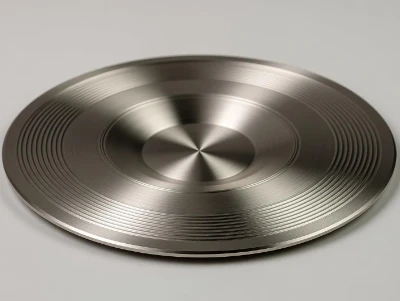
The core advantage of titanium alloy diaphragms stems from their dual characteristics of "lightweight and high rigidity." Compared to traditional aluminum alloy diaphragms, titanium alloys have lower density and higher strength. This contradictory physical property allows them to maintain extremely low inertia during high-frequency vibrations while preserving the diaphragm's shape stability. For example, after a well-known audio brand adopted a titanium alloy diaphragm in its tweeter, its high-frequency response range expanded from 20kHz to 40kHz, and the distortion rate decreased to below 0.05%. This means that when playing string solos in classical music, the subtle vibrations of the strings and the friction sounds of air can be accurately captured, and listeners can even perceive the changes in the bow's pressure. This exceptional reproduction of high-frequency details is the key reason why titanium alloy diaphragms are so highly favored in the professional monitoring field.
The corrosion resistance and long lifespan of titanium alloys further solidify their reliability in harsh environments. Traditional metal diaphragms are prone to oxidation and rust in humid or high-temperature environments, leading to a muffled tone and high-frequency attenuation. Titanium alloys, however, possess chemical stability, allowing them to maintain stable performance in extreme temperatures ranging from -40°C to 80°C. Test data from a car audio manufacturer shows that after 1000 hours of continuous operation, the frequency response curve of a tweeter equipped with a titanium alloy diaphragm almost perfectly matches its initial state, while an aluminum alloy diaphragm exhibits a 5% frequency response shift under the same conditions. This durability advantage makes titanium alloy diaphragms the preferred choice for outdoor audio systems, car audio systems, and other applications requiring long-term exposure to complex environments.
Although titanium alloy diaphragms offer near-perfect high-frequency performance, their "metallic" coloration has historically been a bottleneck hindering their widespread adoption. Early single-layer titanium alloy diaphragms suffered from insufficient damping, easily producing a harsh "metallic whistle" when playing pop music. To solve this problem, engineers developed composite structure technology. Taking a certain brand's titanium sandwich diaphragm as an example, it uses a structure design of two layers of ultra-thin titanium alloy sandwiched with honeycomb aluminum material. This retains the high rigidity of titanium alloy while the honeycomb structure of the aluminum absorbs excess vibration energy, increasing the damping coefficient to more than three times that of traditional metal diaphragms. In actual listening tests, this composite diaphragm reproduces sibilance and breath sounds more naturally when playing vocals, and the high frequencies no longer have a "sharpness," but instead present a silky smooth texture.
From a manufacturing perspective, the processing difficulty of titanium alloy diaphragms far exceeds that of ordinary metals. Although titanium has better ductility than beryllium, the stress cracking problem during hot pressing must still be overcome when manufacturing large bass diaphragms. A high-end audio brand spent two years developing a 12-inch titanium alloy woofer diaphragm, mastering the titanium annealing process. By precisely controlling the heating temperature and cooling rate, they reduced the internal stress of the titanium sheet to below 0.1 MPa, ultimately achieving a diaphragm that remained undeformed even when subjected to a high sound pressure level of 110 dB. This challenge to the limits of technology directly propelled the expansion of titanium alloy diaphragms from high-frequency units to applications across the entire frequency range.
Today, titanium alloy diaphragms are no longer confined to the high-end audio market. As consumer products demand higher sound quality, more and more mid-range speakers are adopting titanium alloy tweeters, paired with paper or carbon fiber woofers, creating a balanced frequency response. This combination retains the clarity of titanium alloy in the high frequencies while neutralizing metallic coloration through the warm texture of the low-frequency unit, allowing ordinary consumers to experience professional-grade sound quality at an affordable price. In the future, with the further maturation of titanium alloy processing technology, its cost is expected to decrease further, and titanium alloy diaphragms may become the standard in the audio industry, ushering in a new era of "high-fidelity" hearing for more music lovers.


