


Titanium ingot smelting technology
The development of titanium ingot smelting technology is an important issue in the metallurgical industry. Titanium is widely used in aerospace, medical, chemical and other fields because of its high strength, low density and excellent corrosion resistance. However, titanium is difficult to smelt due to its high melting point, strong chemical activity, and high affinity with oxygen and nitrogen. Therefore, the development of titanium ingot smelting technology is crucial to meet the growing demand for titanium materials. The production of titanium alloys mainly relies on titanium ingot smelting technology, which is a key process in the manufacturing of titanium products.
There are many methods for melting titanium ingots, including vacuum arc melting (VAR), plasma arc melting (PAM), and electron beam melting (EBM). VAR is a widely used method for producing high-purity titanium ingots. During this process, a consumable titanium electrode is melted in a vacuum chamber, and the molten titanium solidifies by cooling. PAM and EBM are advanced smelting methods that can produce titanium ingots with higher purity and finer structure. In PAM, a plasma arc is used to melt the titanium, while in EBM, an electron beam is used.
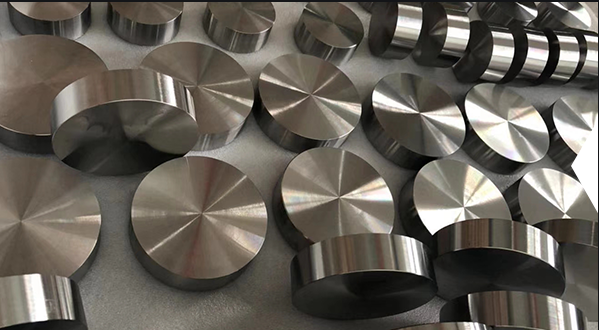
The development of titanium ingot smelting technology includes the optimization of smelting parameters, improvement of equipment and process control, and reduction of production costs. Optimization of melting parameters includes adjustments of melting temperature, pressure and melting rate to achieve the desired ingot purity, structure and uniformity. Improvements in equipment and process control include the design of high-performance furnaces, the development of computer-controlled smelting systems, and the integration of online monitoring and control systems. The reduction in production costs includes reductions in energy consumption, raw material consumption and labor costs.
Smelting technology
1. The first step in titanium alloy ingot smelting technology is the selection of raw materials. Raw materials need to meet strict quality requirements, including chemical composition, impurity content, and particle size distribution. The raw materials are then loaded into the electric furnace.
2. The electric furnace used for smelting titanium ingots is generally a vacuum arc furnace or a cold crucible induction furnace. Vacuum electric arc furnace technology is widely used around the world due to its high melting efficiency, simple operation and easy maintenance. Cold crucible induction furnaces are also alternatives to vacuum arc furnaces.
3. During the melting process, the furnace temperature rises to 1500℃-1800℃ to melt the raw materials. The vacuum environment is used to eliminate any gas or impurities remaining in the raw materials and prevent the titanium alloy from oxidizing.
Once the material is melted, it is refined using various methods such as argon blowing, vacuum refining or slag refining. This refining process can effectively reduce the oxygen, nitrogen and hydrogen content in the titanium alloy melt and improve the quality of titanium alloy ingots.
4. Then pour the molten titanium alloy into the preheated mold. Standard molds for titanium alloy ingots include cylindrical and polygonal molds. The casting process is strictly controlled to maintain the temperature and cooling rate of the ingot to ensure the uniformity and mechanical properties of the titanium alloy ingot structure.

In addition to the development of smelting technology, the recycling of titanium waste and scrap is also important for the sustainable development of titanium resources. Recycling of titanium scrap and scrap not only reduces production costs but also minimizes the environmental impact of titanium smelting. The recycling of titanium scrap and waste materials includes the collection, sorting, cleaning and processing of titanium scrap and scrap materials, and then smelting and casting into ingots.
Titanium ingot smelting technology is an essential step in the titanium alloy production process. The quality selection of raw materials, smelting process, refining process, and casting process fundamentally affect the quality of titanium alloy ingots. With the development of advanced technology, the smelting process of titanium alloy ingots has become more efficient, precise, and environmentally friendly, promoting the development and application of titanium alloys in various industries.
Due to the unique properties of titanium, the development of titanium ingot smelting technology is a challenging task. However, as technology advances and the demand for titanium materials continues to increase, the development of titanium ingot smelting technology is crucial to the growth of the titanium industry. Optimization of smelting parameters, improvements in equipment and process control, and recycling of titanium scrap and scrap are key factors in the development of titanium ingot smelting technology.


