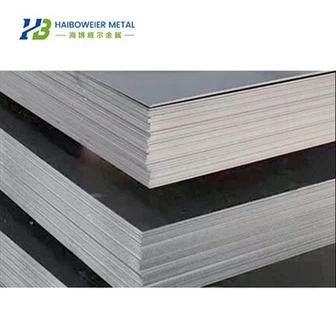
What are the disadvantages of a titanium plate?
As a high-quality metal material, titanium plates are widely used in industrial fields. However, even such a nearly perfect material has some shortcomings. Next, let's discuss some minor problems that may be encountered during the use of titanium plates.

1. High cost
The first significant disadvantage of titanium plates is their high price. Due to the complexity and high energy consumption of the titanium refining process, coupled with the scarcity of raw materials, the cost of titanium products is much higher than that of traditional metals such as steel and aluminum. This high cost not only limits the large-scale application of titanium plates in general industrial fields, but also makes consumers often need to weigh their cost performance when purchasing. In today's pursuit of maximizing economic benefits, high costs have become a major obstacle in the promotion of titanium plates.
2. Difficulty in processing
Titanium plates also face many challenges during processing. Due to its low thermal conductivity, high temperatures are easily generated during cutting, resulting in serious tool wear and low processing efficiency. In addition, titanium plates easily react with oxygen, nitrogen and other elements in the air at high temperatures to form a hard and brittle compound layer, further increasing the difficulty of processing. These factors not only require processing equipment to have higher precision and stability, but also require operators to have rich experience and skills, which virtually increases the cost and difficulty of processing.
3. Complex weldability
The welding of titanium plates is also a technical problem. Due to the high activity of titanium, it is easy to react with oxygen, hydrogen, nitrogen and other gases during the welding process, resulting in defects such as pores and cracks in the weld, which affects the welding quality. Therefore, the welding of titanium plates requires strict control of the welding environment and the use of special processes such as inert gas shielded welding, which undoubtedly increases the complexity and cost of welding. At the same time, there may be differences in welding performance between titanium plates of different grades, and specific welding plans need to be formulated for different situations.
4. Lower intensity
Although titanium plates have excellent corrosion resistance and oxidation resistance, they are slightly inferior to some other metal materials, such as steel, in terms of strength. This means that titanium plates may not be fully qualified in some applications that require higher strength. This characteristic of titanium plates may be a factor limiting its application. In order to make up for this shortcoming, it is often necessary to use thicker titanium plates or combine them with other high-stiffness materials, which undoubtedly increases cost and weight.

5. Environmental impact
Although the titanium plate itself has good corrosion resistance, its performance may be affected in some extreme environments, such as strong acid, strong alkali or high temperature and high pressure environments. In addition, the waste and wastewater that may be generated during the production and processing of titanium may also cause environmental pollution if not treated properly. Therefore, while promoting the application of titanium plates, we also need to pay attention to its impact on the environment and take effective measures to reduce pollution.
In general, although titanium plates have many advantages, there are also some disadvantages that cannot be ignored. In practical applications, we need to comprehensively consider its advantages and disadvantages, rationally select materials, and continuously improve the processing technology to better play the role of titanium plates in various fields.