


What is the difference between titanium alloy and aluminum alloy? Which one is better?
In materials science, titanium alloy and aluminum alloy are like two bright stars, each shining with its own unique light. They not only play an important role in our daily life, but also show irreplaceable value in high-end fields such as aerospace and automobile manufacturing. So, what is the difference between titanium alloy and aluminum alloy? Which one is better?
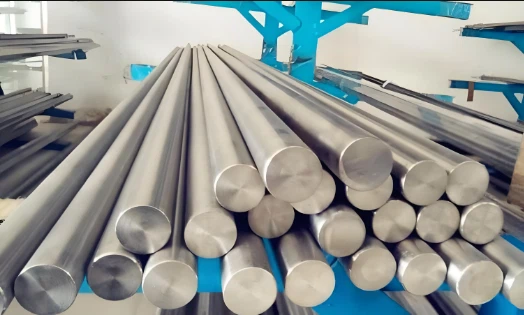
Titanium alloy is a high-strength, low-density material with advantages such as high strength, excellent corrosion resistance, high-temperature oxidation resistance, and biocompatibility. It is suitable for aviation, aerospace, medical and other fields. Titanium alloy has high manufacturing cost, high processing difficulty, easy combustion and reaction, must be processed in an inert atmosphere or oxidant, and the production process is complicated.
Aluminum alloy is a low-density, high-strength material suitable for automobiles, electronics, ships, construction and other fields. Aluminum alloy has good strength, toughness and corrosion resistance, good thermal and electrical conductivity, and is easy to process and form. However, the strength of aluminum alloy is not as good as steel, and it is prone to fatigue and aging.
There are significant differences between titanium alloy and aluminum alloy in terms of color, performance, use, density, corrosion resistance, processing technology and application fields.
1. Color: Titanium alloy is a silvery-white metal, while aluminum alloy is a non-ferrous metal.
2. Performance: The density of titanium alloy is 4.54 grams per cubic centimeter, and it has good high temperature resistance, while the density of aluminum alloy is smaller, only 1/3 of iron, and it has a lower melting point and higher plasticity, making it easy to process.
3. Use: Titanium alloy is often used to make aircraft, submarines, etc. due to its high strength and corrosion resistance, while aluminum alloy is widely used in aluminum alloy doors and windows, aerospace, machinery and other fields.
4. Density and corrosion resistance: Titanium alloy has a lower density, but high strength and good corrosion resistance, especially in oxidizing, neutral and weakly reducing media. Aluminum alloy also has good corrosion resistance, and both can form an oxide film on the surface to effectively prevent corrosion.
5. Processing technology: Titanium alloys are difficult to process and require special equipment and processes, while aluminum alloys are easier to process and can be processed using ordinary cutting equipment and knives.
6. Application fields: Titanium alloys are widely used in aerospace, medical and chemical industries, such as manufacturing key components for aircraft and rockets. Aluminum alloys are widely used in automobiles, construction, electronic products, etc.

So, which one is better, titanium alloy or aluminum alloy? There is actually no standard answer. Titanium alloys and aluminum alloys each have their advantages and disadvantages. The choice of which material depends on the specific application scenario and needs. Titanium alloys perform better in situations requiring high temperature stability and extreme environments, such as aerospace and medical fields, due to their excellent mechanical properties and corrosion resistance. Aluminum alloys are more advantageous in applications requiring lightweight and heat dissipation performance, such as automobiles, construction, and electronic products, due to their light weight, high strength, and good thermal conductivity.


