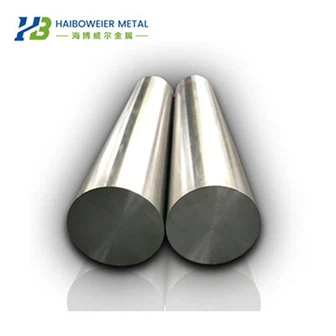
Why do golfers and bike frames prefer titanium bars?
In the realm of premium sports gear, titanium alloys are redefining material paradigms as the undisputed king of lightweight solutions. From precision golf clubs to high-performance bicycle frames, titanium rods have become the go-to choice for manufacturers thanks to their unique physical properties. This article explores the core advantages of titanium alloys from a materials science perspective, supported by industry data and real-world applications, to reveal why they stand as the ultimate "golden partner" for high-end sports equipment.

The "Lightweight Magic" of Titanium: With a density of just 4.51g/cm³ (60% of steel's density)
Titanium alloys demonstrate revolutionary value in two key applications: golf club heads and bicycle frames. Golf Club Heads: Within the 200g weight limit, titanium alloy heads can be 2-3 times larger than stainless steel counterparts. By evenly distributing mass along the clubhead edge, this design increases contact area, allowing average players to extend their tee shots by 15 yards while reducing sidespin errors. For instance, a titanium alloy driver from a premium brand achieved significant distance gains through optimized weight distribution, with a 20% improvement in average strike rate.
Cycling frames: Titanium alloy frames weigh only 60% of steel counterparts yet deliver superior strength and rigidity. Take the Vello Rocky Titanium as an example – its frame weight is kept under 1.5kg, paired with a 24-spoke design that reduces weight and wind resistance, helping riders gain crucial time in races.
The "Golden Balance" of Strength and Toughness
Superior Fatigue Resistance. Titanium alloy exhibits tensile strength far exceeding traditional materials, achieving perfect balance between hardness and toughness. Golf Club Heads: The lightweight design of titanium alloy iron heads allows embedding titanium-diamond composites within the same volume, increasing the clubface friction coefficient by 30% while maintaining stable head weight. This innovation significantly enhances mid-distance shot stabilization, meeting professional players' stringent precision requirements.
Cycling Frame: Titanium alloy frames demonstrate three times greater fatigue resistance than aluminum alloy counterparts, maintaining structural stability even after tens of thousands of cycling vibrations. The Italian manufacturer Campagnolo utilizes titanium alloy in producing racing bicycle components such as pinless crankshafts and front/rear hubshafts, with service life extending over twice as long as those made from chromium-molybdenum alloy.
Corrosion-Resistant "Invisible Shield": Titanium alloys demonstrate exceptional corrosion resistance in harsh environments like humidity and salt spray.
Golf Ball Heads: The naturally formed oxide film on titanium alloy surfaces resists rain and sweat erosion, maintaining a glossy finish without additional coating. In tests, a titanium alloy putter from a certain brand showed no corrosion marks after 500 hours of salt spray exposure, while stainless steel putters developed noticeable rust spots.
Bicycle Frame: Users in humid southern regions need not worry about frame rusting. Titanium alloy frames maintain structural integrity even under prolonged exposure to rain and snow, reducing maintenance costs. A cycling enthusiast shared: "My titanium alloy bike has been in use for 8 years. Aside from normal wear, its frame performance remains as good as new."
The "innovation engine" of material science: Driving equipment upgrades.
Titanium alloy applications are sparking a technological revolution in sports gear. Golf equipment: 3D printing technology has reduced production cycles for titanium alloy golf heads by 60%, with material utilization rate increasing from 35% to 85%. A collaborative effort between a company and universities has developed laser selective melting (SLM) technology, enabling the production of hollow-structured golf heads with complex internal designs that maintain strength while further reducing weight.
In the bicycle industry, titanium-carbon alloy frames combine titanium and carbon fiber to achieve a synergistic effect where '1+1>2'. A brand's titanium-carbon alloy bicycle weighs just 1.1 kg, yet its stiffness is 15% higher than pure carbon fiber frames, making it the' secret weapon' of the Tour de France racing team.
Market Trends: From Premium Exclusivity to Mass Market Adoption
Despite titanium alloy costing three times as much as stainless steel, its growing popularity is driven by consumption upgrades and technological cost reductions. Golf Industry: In 2023, China's titanium alloy club production surged 22% year-on-year, with customized products accounting for 38% of the market. A leading brand's modular titanium alloy clubs allow users to replace shaft heads and weight blocks, extending product lifespan and reducing long-term usage costs.
Bicycle market: The price of titanium alloy frame has dropped from tens of thousands of yuan in the early stage to less than 10,000 yuan. A domestic titanium alloy road bike has sold more than 5,000 units in the three months since its launch due to its high cost performance, becoming a "dark horse" in the middle and high-end market.
In conclusion: Titanium alloys – the "material of the future" for sports equipment. From aerospace to high-end sports, titanium alloys are reshaping the industry with three core advantages: lightweight, high strength, and corrosion resistance. With continuous breakthroughs in material science and manufacturing processes, titanium alloys are poised to transition from exclusive high-end products to mass-market offerings, delivering more exceptional experiences for athletes and enthusiasts. As a golf equipment designer once remarked: "Titanium alloys aren't just material substitutes – they redefine athletic performance." In this material revolution, titanium rods are writing a new chapter for premium sports equipment.