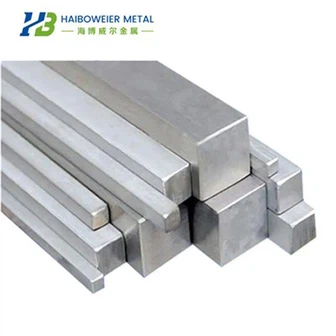
Why is titanium so expensive
When you buy high-end sports equipment and medical equipment, you are often surprised by the price of products marked "titanium alloy": a pair of titanium alloy glasses frames costs thousands of yuan, and titanium implants are even more expensive. Why is the price of this silvery-white metal far higher than common metals such as steel and aluminum? This article will reveal the deep reasons for the high price of titanium from the dimensions of resource characteristics, smelting process, application value, etc., and explore feasible paths to optimize costs.

The real dilemma and root cause analysis of high titanium prices
In the industrial manufacturing and consumer markets, the high price of titanium has always been a pain point for companies and consumers. The high cost of purchasing titanium alloy materials for aerospace companies has limited the research and development progress of new aircraft; ordinary consumers are deterred by the high price of titanium daily necessities. Even in the context of continued growth in demand, the price of titanium remains strong, and it is difficult to reduce costs due to economies of scale like other metals. This phenomenon is due to multiple factors. From the resource side, titanium ore is scattered and mostly associated with minerals. For example, the titanium resources in Panzhihua, my country often coexist with vanadium and iron, making mining difficult. In the smelting process, titanium has active chemical properties and needs to be refined by titanium tetrachloride reduction in a high-temperature vacuum environment. The energy consumption cost is several times that of steel smelting. At the same time, titanium material processing has extremely high requirements for equipment precision and process. Cold processing is prone to cracking, and hot processing requires strict temperature control, which further pushes up manufacturing costs.
Industry breakthroughs to ease titanium price pressure
In order to reduce the cost of titanium materials, the industry is seeking breakthroughs from the entire industry chain. In smelting technology, research on new molten salt electrolysis has made progress. By simplifying the process and reducing energy consumption, it is expected to reduce production costs by more than 20%; in the processing stage, the application of 3D printing technology reduces the material loss of traditional cutting processing, and the processing cost of some complex titanium alloy parts is reduced by 30%. In addition, enterprises enhance bargaining power and share fixed costs through large-scale procurement of titanium ores and co-construction of smelting bases.
Understanding the significance of titanium price logic and cost reduction practice path
Understanding the reasons why titanium is expensive is instructive for both enterprises and consumers. For industrial enterprises, cost pressure can be alleviated by optimizing processes and joint procurement; for consumers, understanding the value of titanium can make them look at product pricing more rationally. In the long run, technological breakthroughs and industrial collaboration will drive down the cost of titanium materials and help them be popularized and applied in more fields. Cost reduction practice can be divided into three steps:
(1)the first step is to increase investment in new smelting technologies on the R&D side and work with universities and scientific research institutions to tackle key technologies;
(2)the second step is to introduce intelligent processing equipment on the production side, optimize process flow, and improve material utilization;
(3)the third step is to establish a strategic alliance on the supply chain side to share resources and reduce procurement costs.
The high price of titanium is the result of the combined effects of resource scarcity, complex processes and high-end applications. With technological innovation and industrial upgrading, the cost of titanium is expected to be gradually optimized. Whether it is enterprises seeking to reduce costs and increase efficiency, or consumers pursuing high cost performance, they should pay attention to industry trends and seize development opportunities. Looking forward to more technological breakthroughs and industrial cooperation, so that titanium, the "future metal", can serve all aspects of social development at a more affordable price!