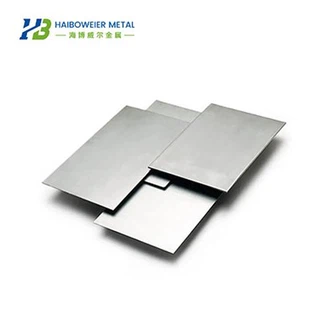
Advantages Of Titanium Plates in Aircraft Fuselage Structures
With the continuous advancement of aviation technology, modern aircraft impose increasingly stringent requirements on fuselage materials. The fuselage not only supports the weight of wings, tail, and engines but also needs to withstand aerodynamic loads, vibrations, and thermal stresses during flight. While traditional aluminum alloys are lightweight and easy to process, they have limitations in terms of strength, durability, and high-temperature performance. Titanium plates, with their high strength, low density, excellent corrosion resistance, and high-temperature capability, have gradually become a key material in modern fuselage design, providing enhanced safety, reliability, and long-term performance for aircraft.

High Strength and Lightweight
- Superior Load-Bearing Capacity: Titanium plates offer excellent tensile and yield strength, making them ideal for critical load-bearing components such as fuselage frames, skins, and door frames, ensuring structural stability and safety. Their high strength is particularly beneficial in areas subject to sudden impact loads or aerodynamic pressure variations.
- High Specific Strength: Compared to steel and some aluminum alloys, titanium plates maintain high strength while reducing overall weight, supporting lightweight fuselage design.
- Improved Flight Efficiency and Payload Capacity: Reducing fuselage weight enhances fuel efficiency and range while increasing usable payload capacity, allowing better performance on long-distance or high-load missions.
- Design Flexibility and Safety Assurance: The combination of strength and lightweight allows engineers to design thinner, lighter structural components without compromising safety, meeting modern aircraft performance requirements.
Excellent Corrosion Resistance
- Resistance to Air and Salt Corrosion: Titanium plates remain stable under high humidity, salt spray, and varied climatic conditions, preventing rapid deterioration of fuselage skins and structural components.
- Extended Service Life: Thanks to corrosion resistance, fuselage structures maintain integrity even after long-term exposure to UV radiation, rain, and humid environments, reducing the frequency of replacements.
- Lower Maintenance Costs: Strong corrosion resistance reduces the need for inspections, cleaning, and repairs, minimizing downtime and operational expenses.
- Enhanced Flight Safety: Stable material performance ensures that the fuselage structure remains intact and reliable, reducing the risk of structural failures due to corrosion.
- Adaptation to Extreme Environments: Titanium plates maintain structural integrity under both low temperatures at high altitudes and high humidity in tropical regions, ensuring safe operation across diverse climates.
Good Machinability and High-Temperature Performance
- Precision Machining Capabilities: Titanium plates can be stamped, welded, milled, drilled, and threaded, ensuring high dimensional accuracy and assembly quality. They are ideal for critical fuselage components such as skins, longitudinal beams, connection plates, and door frames.
- High-Temperature Stability: Titanium maintains its mechanical properties under high-temperature conditions, such as near engine areas or due to aerodynamic heating during high-speed flight.
- Fatigue and Thermal Stress Resistance: Titanium plates resist cracking or deformation under repeated pressure cycles and temperature variations, significantly prolonging component lifespan.
- Application in Critical Structural Components: Titanium plates are widely used for fuselage skins, longitudinal beams, wing root connection plates, and door frames, ensuring long-term reliability.
- Strong Process Adaptability: Titanium plates can be used in combination with composite materials and aluminum alloys to optimize structural performance, balancing strength, weight, and durability.
Titanium plates combine high strength, lightweight, excellent corrosion resistance, high-temperature performance, and good machinability, providing a solid material foundation for modern aircraft fuselage design. They not only enhance flight safety and structural reliability but also extend fuselage service life and reduce maintenance costs. As aviation technology continues to advance, the demand for higher-performance, lighter, and more durable materials grows. The use of titanium plates in fuselage structures is expected to expand further. Coupled with composite materials and advanced manufacturing techniques, titanium plates will continue to be a core structural material for modern aircraft, providing long-term, safe, and reliable material support for high-performance aviation applications.