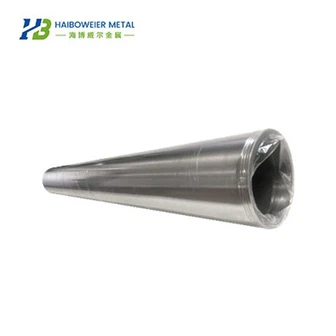
Applications Of Medical-Grade Titanium Alloys in Surgical Instruments
Medical devices have extremely stringent requirements for materials, demanding not only excellent mechanical properties but also compliance with biocompatibility and safety standards. Medical-grade titanium alloys, due to their lightweight, high strength, and excellent corrosion resistance, are widely used in surgical instrument manufacturing. With the advancement of medical technology, the value of these materials in precision surgery continues to increase.

Material Characteristics of Medical-Grade Titanium Alloys
Medical-grade titanium alloys are characterized by low density and high strength, making surgical instruments both robust and durable while remaining lightweight. Their surface can form a stable oxide film, effectively resisting corrosion from bodily fluids and chemicals. The material itself is non-toxic and has good biocompatibility with human tissue, reducing the risk of rejection reactions. These characteristics make them an important choice for medical device manufacturing.
Specific Application Scenarios in Surgical Instruments
Medical-grade titanium alloys are widely used in various surgical instruments, such as surgical scissors, forceps, clamps, and orthopedic implant-related tools. In minimally invasive surgical equipment, titanium alloys ensure that instruments maintain sufficient strength and stability even when operating within confined spaces. For instruments that require prolonged contact with human tissue, material safety is paramount, and titanium alloys excel in this regard.
Advantages of Titanium Alloys in Surgical Instruments
In practical applications, medical-grade titanium alloys exhibit several advantages:
- Lightweight: Reduces the workload for doctors and improves the stability of delicate procedures.
- Strong corrosion resistance: Suitable for various sterilization methods, extending service life.
- High strength: Capable of withstanding repeated use and high-intensity operations.
- Good biocompatibility: Reduces irritation and impact on human tissues.
These advantages give it an important position in the field of high-end medical devices.
Impact of Processing Technology on Performance
The processing of titanium alloys requires high-precision equipment and professional technical support. Machining is challenging, but high-precision surfaces can be obtained by optimizing process parameters. Surface treatment technologies such as polishing and sandblasting can improve the smoothness and durability of instruments. Good processing technology can further enhance material properties.
Adaptability to Sterilization and Reuse
Surgical instruments require sterilization under high temperature, high pressure, or chemical methods, necessitating material stability. Medical-grade titanium alloys exhibit stable performance under various sterilization environments, resisting deformation or performance degradation. This characteristic makes them suitable for reusable instruments, reducing replacement frequency and costs.
Comparison with Other Materials
Compared to traditional materials such as stainless steel, titanium alloys offer significant advantages in weight and corrosion resistance. While stainless steel is less expensive, it may experience corrosion or wear over long-term use. Titanium alloys, on the other hand, demonstrate greater stability in demanding environments, making them more suitable for the manufacturing needs of precision and high-end surgical instruments.
Industry Development Trends and Application Prospects
With continuous advancements in medical technology, the requirements for surgical instruments are also increasing. The development of new technologies such as minimally invasive surgery and robotic surgery places higher demands on material performance. Medical-grade titanium alloys, with their superior properties, will maintain an important position in the future medical device field. Through material improvements and process upgrades, their application scope is expected to expand further.
The application of medical-grade titanium alloys in surgical instruments reflects a high degree of integration between material performance and medical needs. With their lightweight, high strength, and excellent biocompatibility, these materials play a crucial role in improving surgical efficiency and safety. As technology continues to develop, its application value in the medical field will continue to increase.