


Applications Of Titanium Alloys in High-Precision Medical Equipment
High-precision medical equipment places extremely stringent demands on material performance, focusing not only on structural strength but also on stability, processing precision, and long-term reliability. As medical equipment evolves towards minimally invasive, intelligent, and high-end solutions, traditional materials are increasingly unable to meet the higher standards required in some applications. Titanium alloys, with their lightweight, high strength, corrosion resistance, and excellent machinability, are finding wider application in high-precision medical equipment and have become a key material choice.
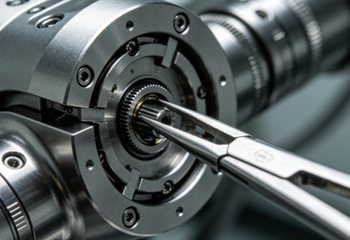
High Strength and Lightweight Design Suitable for the Structural Needs of Precision Equipment
High-precision medical equipment typically has complex structures, requiring materials that offer both sufficient strength and controlled weight to ensure stable operation and structural flexibility. Titanium alloys combine high mechanical strength with relative lightness, making them suitable for demanding structural components. For precision equipment requiring dimensional stability and dynamic response, excessive weight can negatively impact operational efficiency, while insufficient strength can reduce structural reliability. Titanium alloys offer a good balance between these two factors, thus possessing significant application value.
Stable Performance Supports Long-Term Reliable Equipment Operation
Medical equipment operating environments often demand high material stability, especially high-precision equipment which requires consistent performance over long periods. Titanium alloys possess excellent corrosion resistance and fatigue resistance, helping to reduce the risk of performance degradation during long-term use. For equipment components requiring high repeatability and reliability, material stability directly affects equipment lifespan and operational accuracy. Therefore, titanium alloys are frequently used in medical equipment structural systems with high stability requirements.
Precision Machining Capabilities Drive Complex Structural Applications
High-precision medical equipment often involves complex structural designs, requiring materials not only to have excellent performance but also to meet precision manufacturing requirements. With the support of advanced machining technologies, titanium alloys can meet the forming needs of complex structural components.
- Precision machining capabilities support the manufacturing of complex parts
- High dimensional stability helps ensure assembly accuracy
- Complex geometric forming is suitable for the structural needs of high-end equipment
- Personalized machining supports the development of specialized medical equipment
- Integration with advanced manufacturing technologies enhances design freedom
These characteristics drive the development of titanium alloys from basic structural materials to key components of high-end equipment.
Biocompatibility Expands Application Scope
In some high-precision medical devices that come into contact with the human body, material compatibility is equally important. Titanium alloys possess excellent biocompatibility, making them suitable not only for structural components but also for certain functional parts. As the integration of medical devices and treatment systems increases, the importance of this characteristic further strengthens. Materials that meet both mechanical performance requirements and biocompatibility advantages extend the application scope of titanium alloys from traditional equipment structures to high-value-added scenarios.
High-End Medical Upgrades Drive Deeper Applications of Titanium Alloys
Medical devices are evolving towards higher precision and reliability, placing higher demands on materials. Traditional materials struggle to meet performance upgrade needs in some scenarios, while titanium alloys, with their comprehensive advantages, are more easily adapted to the design direction of next-generation high-end medical devices. With the continuous advancement of advanced manufacturing, intelligent equipment, and precision medicine, there is still room for improvement in the depth and breadth of titanium alloy applications in high-precision medical devices. The simultaneous advancement of material performance and technological development will continue to drive the release of its application value.


