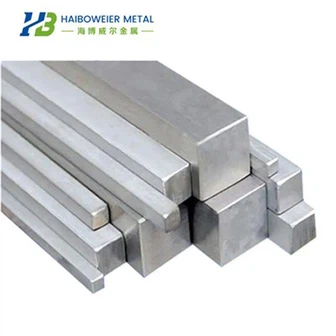
The Core Value Of Titanium Rods in High-Performance Racing Cars
In the field of racing cars and high-performance vehicles, the choice of materials directly affects the vehicle's speed performance, handling stability, and overall safety. Titanium rods, as a high-strength, low-density, and corrosion-resistant metallic material, are increasingly being used in engine components, suspension systems, and connecting structures. Compared to traditional steel or aluminum alloys, titanium significantly reduces weight while maintaining strength, resulting in noticeable improvements in acceleration, braking, and steering response. Especially in the extreme conditions of racing, where components must withstand high temperatures and pressures, as well as frequent impacts and continuous vibrations, titanium rods become a crucial choice due to their stable physical properties. Simultaneously, its fatigue resistance extends the service life of key components, ensuring vehicle reliability during prolonged, high-intensity racing.

Specific Advantages of Titanium Rods
· Lightweight yet High Strength
Titanium rods have a low density, but their tensile strength is close to or even exceeds that of some steels, effectively reducing the overall vehicle weight.
· Superior High-Temperature Resistance
They maintain structural stability and are not easily deformed even under the high temperatures of an engine.
· Strong Corrosion Resistance
Suitable for racing in rainy or high-humidity environments, it is not prone to rust and has a longer lifespan.
· Good Fatigue Resistance
Suitable for long-term exposure to high-frequency vibrations, such as suspension links and transmission system components.
· Improved Vehicle Handling
Reduced inertia due to weight reduction makes steering more responsive and acceleration more direct.
Differences Between Titanium Rods and Traditional Materials
Comparing titanium rods with traditional steel reveals significant performance differences. While steel has high strength, its weight increases the overall load on the vehicle, affecting acceleration and braking distance. Aluminum alloys, while lighter, are prone to fatigue or deformation under extreme stress. Titanium rods strike a balance between the two: possessing strength close to steel and the lightweight advantage of aluminum alloys. This comprehensive performance is particularly crucial in racing applications. Furthermore, in high-temperature environments, steel is prone to structural changes due to thermal expansion and contraction, while titanium is more stable, ensuring consistent performance during continuous high-speed racing. Therefore, from a material performance perspective, titanium rods are an ideal compromise between lightweight and strength for high-performance vehicles.
Why are titanium rods suitable for racing cars?
Q: Why aren't racing cars made entirely of steel?
A: Because steel is too heavy, affecting acceleration and handling agility.
Q: Titanium rods are expensive, so why use them?
A: Because they can reduce weight while maintaining strength, improving overall performance.
Q: Are titanium rods suitable for all components?
A: No, they are typically used in critical load-bearing areas, such as connecting rods, bolts, and suspension systems.
Q: Are titanium rods easily damaged?
A: On the contrary, they have strong fatigue resistance and are more durable than ordinary materials.
These questions demonstrate that the application of titanium rods in racing cars is not a "complete replacement," but rather an optimized selection for key components to maximize performance.
The Development Process from Basic to High-End Applications
High-performance cars prioritize weight reduction, so titanium rods were initially used for simple connecting parts, such as bolts and fasteners. With advancements in materials processing technology, titanium rods have gradually been applied to suspension systems and steering structures, making vehicle dynamic response more sensitive. Further development has led some high-end racing cars to incorporate titanium into internal engine components, such as connecting rods and valve systems, to reduce reciprocating mass and increase engine speed limits. Titanium alloys are even used in integrated structural designs, such as integrated lightweight brackets, achieving a better balance between overall vehicle rigidity and weight. This process demonstrates the evolution of titanium rod applications from "auxiliary materials" to "core performance materials."
The Significance of its Applications
In actual racing engineering, the value of titanium rods lies not only in their single performance aspect but also in the combined effect of multiple advantages. The speed improvement brought by lightweighting, the safety assurance brought by strength, and the stable performance brought by durability together form an important foundation for optimizing racing car performance. Simultaneously, it can maintain performance consistency in extreme environments, making the car less prone to performance degradation during long races. Therefore, the use of titanium rods is not a simple material replacement but a systematic engineering optimization approach.
The core value of titanium rod applications in racing cars and high-performance vehicles lies in achieving a balance between lightweighting and high strength. By reducing the weight of key body components, acceleration performance and handling agility can be significantly improved without sacrificing structural safety. Even under extreme conditions of high temperature, high pressure, and high-frequency vibration, titanium materials maintain stable performance, making them irreplaceable in the field of motorsports. In practical applications, titanium rods not only improve the performance of individual components but also optimize the overall dynamic performance of the vehicle, enabling race cars to have more stable output capabilities in complex track environments. Although its cost is high, in the field of racing cars and high-performance vehicles that pursue ultimate performance, the value of this material far outweighs its price. By applying titanium rods appropriately, engineers can achieve higher levels of performance optimization at the design level, achieving a more ideal balance between speed, handling, and durability.