


Why Are Titanium Alloys Used in Space Robotic Arm Joints?
In aerospace missions, space robotic arms are responsible for critical tasks such as capturing, assembling, and repairing equipment, and their performance directly impacts mission success. The joints, as the core components responsible for movement and load-bearing, must not only provide high strength but also maintain precision and stability under extreme conditions. The space environment-characterized by vacuum, radiation, and drastic temperature fluctuations-places exceptionally high demands on materials. Among various engineering materials, titanium alloys have become the preferred choice for robotic arm joints due to their outstanding comprehensive properties, achieving an ideal balance between lightweight design and high reliability.
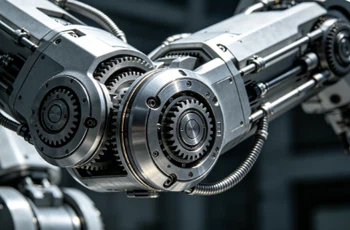
High Strength-to-Weight Ratio Meets Lightweight and Load Requirements
Space systems require minimal weight while maintaining high structural strength.
- Titanium alloys offer exceptional strength-to-weight performance, enabling reduced mass without sacrificing load-bearing capacity
- Help lower total launch weight, reducing mission costs
- Maintain structural integrity under complex multi-directional stresses
- Support precision structural design, balancing lightweight construction with high strength
This combination of strength and lightness makes titanium alloys ideal for critical joint components.
Excellent Environmental Resistance for Extreme Space Conditions
The harsh space environment demands highly stable materials.
- Titanium alloys maintain performance under extreme temperature variations
- Resist degradation in vacuum environments
- Provide good resistance to space radiation for long-term missions
- Exhibit strong thermal fatigue resistance under repeated temperature cycling
These properties ensure reliable long-term operation of robotic arm joints in space.
Wear Resistance and Fatigue Strength Ensure Motion Precision
Robotic arm joints undergo frequent movement, requiring durable materials.
- Titanium alloys have excellent fatigue resistance, handling repeated motion loads
- Maintain performance without cracking or degradation during high-frequency use
- Surface-treated titanium alloys offer improved wear resistance, reducing friction losses
- Help maintain precise joint movement and control accuracy over time
These characteristics are essential for high-precision space operations.
Structural Stability Enhances System Reliability
Robotic arms must maintain precision and stability over long missions.
- Titanium alloys maintain dimensional stability under temperature changes
- Provide sufficient rigidity to preserve joint alignment and accuracy
- Suitable for precision machining, meeting complex structural requirements
- Improve coordination and overall system reliability
- Extend service life while reducing maintenance needs
This stability ensures reliable performance in demanding aerospace applications.
As aerospace technology continues to advance, the functional and precision requirements of space robotic arms are increasing. Titanium alloys, with their high strength-to-weight ratio, excellent environmental resistance, superior wear and fatigue performance, and outstanding structural stability, demonstrate clear advantages in joint applications. They not only enable effective weight reduction but also ensure long-term reliability and precision. With continued advancements in manufacturing processes, titanium alloys will play an even more important role in space systems and high-end engineering applications.


