Titanium Alloy Rocket Tanks: The Perfect Balance Between Weight Reduction And Strength
In aerospace engineering, rocket tanks are critical structural components used to store propellants, directly influencing launch efficiency and flight safety. As the aerospace industry continues to demand higher performance materials, traditional materials are increasingly unable to balance weight and strength under complex mission requirements. Especially during long-duration flights and under extreme conditions, rocket tanks must withstand pressure, temperature variations, and maintain high reliability. Titanium alloys, with their outstanding comprehensive properties, have become a key material choice, achieving significant weight reduction while maintaining excellent strength, thus supporting advancements in aerospace technology.
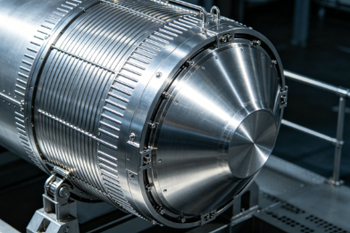
High Strength-to-Weight Ratio Balances Lightweight Design and Pressure Resistance
Reducing weight is always a core objective in aerospace engineering.
- Titanium alloys provide exceptional strength-to-weight performance, reducing tank weight while maintaining pressure-bearing capacity
- Compared to traditional steel, they significantly lower overall structural mass, improving payload efficiency
- Maintain structural stability under complex stress conditions, meeting propellant storage requirements
- Support optimized structural design for more efficient load distribution
This combination of lightness and strength is a key reason for their widespread use in rocket tanks.
Excellent Low-Temperature Performance for Propellant Storage
Rocket tanks often store cryogenic propellants, requiring materials with superior low-temperature performance.
- Titanium alloys retain strong mechanical properties even at low temperatures
- Resist brittleness, ensuring structural safety
- Maintain stability under rapid temperature changes
- Help preserve overall structural integrity of the tank
These properties make them highly suitable for aerospace propulsion systems.
Superior Corrosion Resistance Enhances Long-Term Reliability
Materials must withstand environmental and chemical exposure during storage and operation.
- Titanium alloys form a dense oxide layer that protects against corrosion
- Maintain stable performance in various chemical environments
- Reduce performance degradation caused by material aging
- Extend service life and lower maintenance costs
This corrosion resistance improves reliability in demanding aerospace conditions.
Structural Stability and Machinability Improve Overall Performance
Rocket tanks require not only strength but also precision and stability.
- Titanium alloys maintain dimensional stability under temperature variations
- Suitable for precision machining to meet complex design requirements
- Provide sufficient rigidity to maintain sealing performance
- Enhance overall structural safety and operational stability
- Enable the integration of lightweight and high-performance design
These advantages make titanium alloys highly competitive in advanced aerospace equipment.
As aerospace technology continues to advance, the demand for high-performance materials is steadily increasing. Titanium alloys, with their high strength-to-weight ratio, excellent low-temperature performance, superior corrosion resistance, and strong structural stability, demonstrate significant advantages in rocket tank applications. They not only achieve an ideal balance between weight reduction and strength but also improve safety and reliability for complex missions. In the future, with ongoing advancements in materials and manufacturing technologies, titanium alloys will play an even more important role in aerospace systems and high-performance engineering.