


Heat treatment characteristics of titanium alloys
(1) Martensite transformation will not significantly change the properties of titanium alloys. This feature is different from the martensitic phase transformation of steel. The heat treatment strengthening of titanium alloys can only rely on the aging decomposition of the metastable phase (including the martensitic phase) formed by quenching. Moreover, the heat treatment method for pure A-type titanium alloys is basically impossible. Effective, that is, the heat treatment of titanium alloys is mainly used for α+β type titanium alloys.
(2) Heat treatment should avoid the formation of ω phase. The formation of the ω phase will make the titanium alloy brittle, and the correct selection of the aging process (for example, using a higher aging temperature) can cause the ω phase to decompose.
(3) It is difficult to refine titanium alloy grains by using repeated phase changes. This is also different from steel materials. Most steels can use repeated phase transformations of austenite and pearlite (or ferrite, cementite) to control the nucleation and growth of new phases to achieve grain refinement. There is no such phenomenon in titanium alloys.
(4) Poor thermal conductivity. Poor thermal conductivity can lead to poor hardenability of titanium alloys, especially α+β titanium alloys, large quenching thermal stress, and parts are prone to warping during quenching. Due to poor thermal conductivity, titanium alloys can easily cause excessive local temperature rise when deformed, making it possible for the local temperature to exceed the β transformation point and form a Widmanstatten structure.
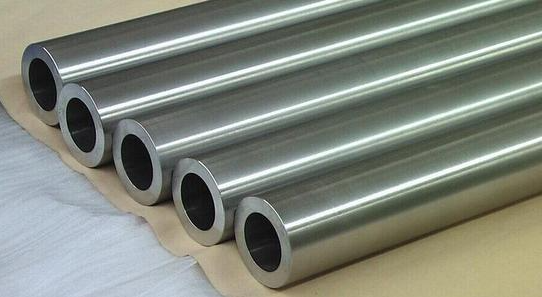
(5) Chemically active. During heat treatment, titanium alloys easily react with oxygen and water vapor, forming an oxygen-rich layer or oxide scale with a certain depth on the surface of the workpiece, which reduces the performance of the alloy. At the same time, titanium alloys easily absorb hydrogen during heat treatment, causing hydrogen embrittlement.
(6) There is a large difference in β transition points. Even if the ingredients are the same, due to different smelting heats, their β transformation
Temperatures sometimes vary greatly.
(7) When heated in the β phase region, β grains tend to grow. The coarsening of β grains can cause the plasticity of the alloy to drop sharply, so the heating temperature and time should be strictly controlled, and heat treatment in the β phase region should be used with caution.
Heat treatment types of titanium alloys
The phase change of titanium alloy is the basis of heat treatment of titanium alloy. In order to improve the performance of titanium alloy, in addition to reasonable alloying, it must be combined with appropriate heat treatment. There are several heat treatment methods for titanium alloys. Commonly used ones include annealing treatment, aging treatment, deformation heat treatment and chemical heat treatment.
1 Annealing treatment
Annealing is suitable for various titanium alloys, and ultimately improves the plasticity of the alloy, eliminates its stress and stabilizes the structure. Annealing forms include stress relief annealing, recrystallization annealing, double annealing, isothermal annealing and vacuum annealing.
(1) Stress relief annealing. In order to eliminate the internal stress generated during casting, cold deformation and welding processes, stress relief annealing can be used. The temperature of stress relief annealing should be lower than the recrystallization temperature, generally 450~650°C. The time required depends on the cross-sectional size of the workpiece, the processing history and the degree of stress relief required.
(2) Ordinary annealing. The purpose is to eliminate basic stress in titanium alloy semi-finished products and have high strength and plasticity that meets the technical requirements. The annealing temperature is generally equivalent to or slightly lower than the recrystallization starting temperature. This annealing process is generally used when metallurgical products leave the factory, so it can also be called factory annealing.
(3) Complete annealing. The purpose is to completely eliminate work hardening, stabilize the structure and improve plasticity. This process mainly occurs recrystallization, so it is also called recrystallization annealing. The annealing temperature is preferably between the recrystallization temperature and the phase transformation temperature. If the phase transformation temperature is exceeded, Widmanstatten structure will be formed and the properties of the alloy will be deteriorated. The type, temperature, and cooling method of annealing vary among the various types of titanium alloys.
(4) Double annealing. To improve the fracture toughness, plasticity and stable structure of the alloy, two annealings are required. The alloy structure after annealing is more uniform and close to equilibrium. In order to ensure the stability of the structure and properties of heat-resistant titanium alloys under high temperatures and long-term stress, this type of annealing is often used. Double annealing involves heating and air cooling the alloy twice. The heating temperature of the first high-temperature annealing is higher than or close to the end temperature of recrystallization, so that recrystallization can be fully carried out without causing the grains to grow significantly, and the volume fraction of the ap phase can be controlled. After air cooling, the structure is not stable enough, so a second low-temperature annealing is required. The annealing temperature is lower than the recrystallization temperature and kept for a long time to fully decompose the metastable β phase obtained by high-temperature annealing.
(5) Isothermal annealing. Isothermal annealing provides the best plasticity and thermal stability. This kind of annealing is suitable for dual-phase titanium alloys with higher β-stabilizing element content. Isothermal annealing adopts a graded cooling method, that is, after heating to a temperature above the recrystallization temperature and maintaining heat, it is immediately transferred to another lower temperature furnace (generally 600~650°C) for heat preservation, and then air-cooled to room temperature.
2Quenching treatment

Quenching aging is the main method of heat treatment and strengthening of titanium alloys. It uses phase change to produce a strengthening effect, so it is also called strengthening heat treatment. The strengthening effect of titanium alloy heat treatment depends on the nature, concentration and heat treatment specifications of the alloy elements, because these factors affect the type, composition, quantity and distribution of the metastable phase obtained by quenching the alloy, as well as the nature of the precipitated phase during the decomposition of the metastable phase. Structure, degree of dispersion, etc., which are related to the composition of the alloy, heat treatment process specifications and original structure.
For alloys with a certain composition, the effect of age strengthening depends on the selected heat treatment process. The higher the quenching temperature, the more obvious the aging strengthening effect. However, quenching above the β transformation temperature will cause brittleness due to excessively coarse grains. For two-phase titanium alloys with lower concentration, higher temperature quenching can be used to obtain more martensite, while for two-phase titanium alloys with higher concentration, lower temperature quenching can be used to obtain more metastable β phase. , so as to obtain the maximum time-effective strengthening effect. The cooling method is generally water cooling or oil cooling, and the quenching process must be rapid to prevent the β phase from decomposing during the transfer process and reducing the aging strengthening effect. The selection of aging temperature and time should be based on the best comprehensive performance. Generally, the aging temperature of α+β titanium alloy is 500~600℃ and the aging time is 4~12h; while the aging temperature of β-type titanium alloy is 450~550℃. , time 8~24h, cooling method is air cooling.


