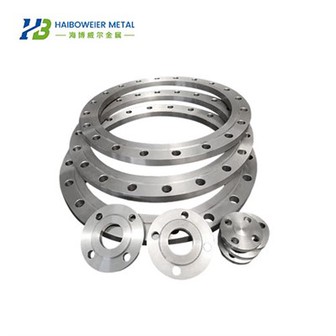
How to break the residual stress of titanium forgings
In the precision instrument manufacturing workshop, a batch of newly forged titanium forgings seem flawless, but in the subsequent processing or use, they inexplicably have problems such as deformation and cracking, which give engineers a headache. These "invisible killers" - residual stress, are quietly affecting the performance and life of titanium forgings. Whether it is a key component of aerospace or a precision part of medical equipment, residual stress may lead to reduced accuracy, reduced reliability, and even serious safety accidents. How to find out the root cause of residual stress and what method should be used to eliminate it? This article will reveal the mystery for you and provide professional solutions.

The troubles and formation of residual stress
The residual stress in titanium forgings is like a "time bomb" hidden inside. It will cause the size of the forging to change during the processing process, and the original precision parts cannot be assembled due to deformation; in long-term use, the residual stress is superimposed on the external load, accelerating the initiation and expansion of cracks, and greatly shortening the service life. Especially in areas with extremely high reliability requirements, the potential risks brought by residual stress cannot be ignored.
The generation of residual stress is closely related to the manufacturing process of titanium forgings. During forging, the deformation of various parts of the metal is uneven, and the first and last deformation areas are mutually constrained, resulting in residual stress; during heat treatment, the phase change and thermal expansion and contraction of titanium alloys are not synchronized, and stress is generated during organizational transformation and temperature changes; during mechanical processing, tool cutting force and cutting heat will also cause residual stress on the surface. These stresses interact with each other inside the forgings. If not handled in time, they will become a hidden danger affecting quality.
Multi-pronged approach to eliminate residual stress
For the residual stress of titanium forgings, a variety of elimination methods have emerged. Heat treatment annealing is a common method. By heating the forging to a specific temperature and keeping it warm for a certain period of time, the metal atoms can obtain enough energy to diffuse, thereby relaxing the stress. For example, stress relief annealing can effectively eliminate the residual stress generated during the processing process; vibration aging uses the resonance principle to make the forging produce tiny vibrations, dislocation movement of the internal crystal structure, and release residual stress. This method is easy to operate, energy-saving and environmentally friendly; shot peening uses high-speed projectiles to hit the surface of the forging, causing the surface material to undergo plastic deformation, forming a compressive stress layer, offsetting the internal residual tensile stress, and improving the fatigue resistance of the forging. In addition, there are stretching method, temperature difference method, etc., which can effectively reduce residual stress according to different working conditions and needs.
The value and implementation steps of eliminating residual stress
Eliminating residual stress in titanium forgings is of great significance to improving product quality and reliability. It can reduce forging deformation, ensure processing accuracy, and improve the qualified rate of parts; reduce the risk of cracks, extend service life, and reduce maintenance costs. Especially in the field of high-end manufacturing, it is more helpful to enhance the core competitiveness of enterprises.
Eliminating residual stress can be implemented in three steps:
(1) Conduct residual stress detection on titanium forgings, and use X-ray diffraction, blind hole method and other technologies to accurately grasp the stress distribution and size;
(2) According to the test results and the use requirements of forgings, select the appropriate elimination method and formulate process parameters, such as heat treatment temperature, time, vibration aging frequency, etc.;
(3) Detect residual stress again and verify the elimination effect. If it does not meet the standard, adjust the process parameters and reprocess until the stress is reduced to a safe range.
Although the residual stress of titanium forgings is invisible and intangible, it seriously affects the performance of the product. Understanding its generation mechanism, using scientific elimination methods and strictly implementing them can effectively control residual stress. Both production enterprises and scientific research institutions should pay attention to the problem of residual stress. Take action now to optimize the production process, eliminate the hidden dangers of residual stress, and lay a solid foundation for the manufacture of high-quality titanium forgings!