


Life of titanium tubes
Titanium tubes are widely used in aviation, chemical industry, marine engineering and other fields due to their excellent corrosion resistance and high strength. So, how long can the life of titanium tubes be used? This is a question that many consumers and engineers are concerned about. This article will provide you with a comprehensive answer by analyzing the durability of titanium tubes, factors affecting their lifespan, and how to extend the service life of titanium tubes.
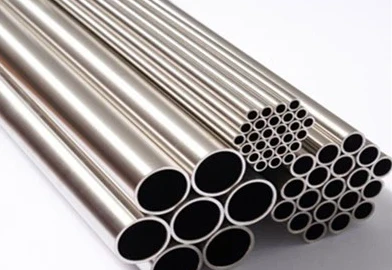
Durability analysis of titanium tubes
The durability of titanium tubes mainly comes from the special properties of titanium itself. Titanium and its alloys have extremely strong corrosion resistance and can resist the erosion of most acids, alkalis and salts. Especially in seawater environments, titanium tubes perform particularly well, so they are often used in the construction of marine facilities. In addition, titanium tubes have a high strength-to-weight ratio, and they can maintain good structural stability even in high temperature or high pressure environments.
Generally speaking, the life of titanium tubes can reach more than 20 years, or even longer. If titanium tubes are often well maintained under normal use conditions, their service life can be longer.
Factors affecting the life of titanium tubes
Working environment
The use environment of titanium tubes is one of the main factors affecting their lifespan. If the titanium tube is in a highly corrosive environment (such as strong acid or alkali) for a long time, the loss of the titanium tube may be accelerated. For example, acidic gases or chemical solutions in some industrial environments may corrode the surface of the titanium tube, thereby shortening its service life.
Temperature
The operating temperature range of titanium tubes is usually between -150℃ and +600℃. Exceeding this range may cause the performance of the titanium tube to deteriorate. Too high or too low temperature will affect the corrosion resistance and strength of the titanium tube, thereby reducing its service life.
Mechanical damage
If the titanium tube is hit or compressed by external force during transportation, installation, and use, it may cause the tube body to deform or break. Even if there is no obvious damage on the surface, it may affect the overall strength of the titanium tube, thereby affecting its service life.
Titanium tube quality
The production process and material selection of titanium tubes will also affect its service life. High-quality titanium tubes usually use advanced production processes to ensure the corrosion resistance and strength of titanium tubes, thereby effectively extending their service life.
Extending the service life of titanium tubes
Regular inspection and maintenance
Although titanium tubes are highly corrosion-resistant, regular inspection and maintenance are still necessary. Regularly cleaning and inspecting the surface of the titanium tube, timely discovering and solving potential problems can greatly extend its service life.
Choose a suitable working environment
Try to avoid exposing the titanium tube to overly harsh chemical environments, especially strong acid and alkali environments. For high temperature or high pressure working environments, pay special attention to the temperature and pressure limits when using titanium tubes to avoid overload and damage to the titanium tube.
Protect the surface of the titanium tube
The oxide film on the surface of the titanium tube plays an important anti-corrosion role. During use, avoiding mechanical damage can effectively protect the integrity of the surface oxide film. If necessary, a protective film can be applied to the surface of the titanium tube to enhance its corrosion resistance.
The life of the titanium tube can usually be used for more than 20 years, but the length of this life is affected by many factors, including the working environment, temperature, mechanical damage and the quality of the titanium tube itself. Through regular inspection and maintenance, choosing a suitable working environment, and protecting the surface of the titanium tube, the service life of the titanium tube can be effectively extended.


