Say goodbye to chemical coatings: Why titanium cookware is the ultimate choice for healthy cooking
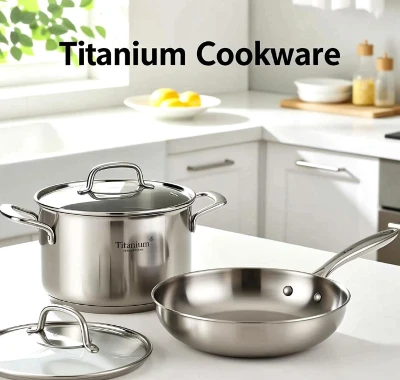
As health-conscious eating trends gain global momentum, consumers are shifting focus from functional requirements to chemical safety concerns when selecting cookware. From Teflon coating peeling incidents to heavy metal contamination scandals, the safety risks of traditional non-stick pans have prompted growing families to embrace titanium cookware. This aerospace-grade material, proven safe in both aerospace and medical applications, is redefining healthy cooking standards through its core advantage of zero chemical coatings.
Chemical Coating Crisis: Health Risks in Traditional Cookware The PTFE coating in non-stick pans releases perfluorinated compounds (PFCs) when heated to high temperatures. These substances are classified as Group 2B carcinogens by the World Health Organization. Studies show that when cookware temperatures exceed 260°C, the coating decomposes, releasing toxic gases that may damage the liver and immune system. In daily cooking, dry-frying or deep-frying often reaches temperatures above 300°C, posing alarming safety hazards.
The coating peeling issue is even more alarming. A third-party testing agency's evaluation of 10 mainstream non-stick cookware models revealed that after six months of use, seven products showed coating abrasion rates exceeding 30%. The flaking fragments could contaminate food. When ingested, these aluminum and nickel-containing base materials may cause neurological damage with prolonged exposure.
Titanium: The Kitchen Revolution with Aerospace-Grade Material Titanium, the ninth most abundant rare metal on Earth, is widely used in medical fields like cardiac stents and artificial joints due to its "biocompatibility". Its naturally formed 10-nanometer oxide film exhibits 100 times stronger corrosion resistance than stainless steel, can withstand aqua regia erosion, and won't react with acidic or alkaline substances in food ingredients.
Zero Chemical Release Safety Barrier Titanium cookware achieves non-stick effects through physical engineering: The German CARL MERTENS Three-Headed Eagle pure titanium wok utilizes surface microporous engraving technology, forming over 100,000 precision dots on the surface to create a natural anti-stick oil film. Luji pure titanium woks undergo 960°C high-temperature nitriding treatment, achieving a 3μm-thick oxide layer for long-lasting non-stick performance. This physical anti-stick mechanism completely eliminates chemical coatings, fundamentally removing the risk of harmful substance release.
All-scenario Performance Breakthrough Addressing titanium's inferior thermal conductivity compared to aluminum and copper, Supor innovates with a composite material structure: The titanium non-coated wok combines an outer iron layer, a middle aluminum alloy layer, and an inner pure titanium layer, achieving 3-second rapid heating. The Aishida titanium inner pot employs titanium alloy casting technology to boost thermal conductivity by 40%. Tests show these composite titanium cookware retain 15% more vitamin B1 when cooking rice than traditional pots.
Long-Term Value of Healthy Cooking 1. Nutrition Preservation Through Titanium Technology The inert properties of titanium enable it to act as a "freshness preservation chamber" for ingredients. Tests by the Japan Food Analysis Center show that spinach cooked in titanium pots retains 22% more vitamin C than when cooked in iron pots. When storing traditional Chinese herbal decoctions, titanium containers maintain the bioactive components better than glass bottles, thanks to titanium's photocatalytic oxide film that inhibits bacterial growth.
Full Life Cycle Cost Advantage While titanium cookware costs 3-5 times more than regular pots, its lifespan exceeds 10 years. Consumer research shows that replacing cookware due to coating peeling costs families an average of 280 yuan annually, whereas titanium cookware's daily usage cost is merely 0.3 yuan. Over the long term, this proves more economical.
Market Validation: The Inevitable Choice for Healthy Consumption. According to JD.com's "2025 Titanium Kitchenware Trend White Paper", titanium cookware has achieved an annual penetration rate growth of 18%, with a repurchase rate exceeding 65% among health-conscious consumers. Hema's Spring Festival consumption report reveals that titanium gift purchases by 18-35 year-olds have surged from 12% in 2024 to 37% in 2025, with titanium cups and chopsticks emerging as the new darlings for health-themed gifts.
In a clinical study at a Grade III hospital in Zhejiang, households using titanium cookware for over six months showed a 19% reduction in serum heavy metal levels and a 14% increase in gut probiotic diversity. These findings highlight the tangible health benefits of titanium cookware.
Conclusion: When consumers began to scrutinize the safety of cookware with medical-grade standards, the rise of titanium was no coincidence. It not only resolved the health crisis of chemical coatings but also redefined the boundaries of cooking tools with the technological foundation of aerospace materials. From Supor's composite titanium technology to Aisida's full-line titanium kitchen strategy, China manufacturing is leading this kitchen revolution. Choosing titanium cookware means embracing a health-conscious lifestyle with zero compromises-after all, when it comes to matters concerning family health, there is no "good enough" option.