


Should ship propellers choose titanium forgings or castings
Ship propellers are like the "heart" of ships, and the choice of materials directly affects the performance, reliability and life of ships. Titanium forgings and castings are both used in this field. This article deeply analyzes the advantages and disadvantages of the two and provides professional material selection references.
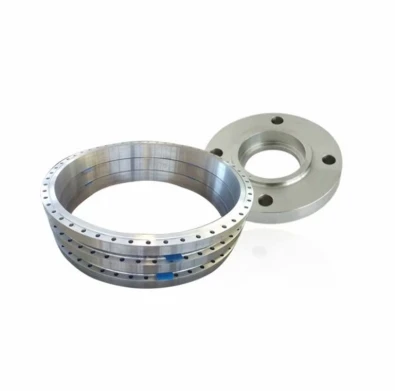
Key considerations and sources of differences in ship propeller selection
Users are most concerned about material strength, corrosion resistance, processing difficulty and cost. Titanium forgings have high strength and good toughness. They can maintain a stable structure under complex water flow impact and high-load operation, and have excellent corrosion resistance, which can extend the service life of the propeller. However, its processing is complex, requiring large equipment and professional technology, and the cost is relatively high. Titanium castings have obvious advantages in molding, can manufacture complex-shaped parts, and have a short production cycle. However, casting is prone to defects such as pores and shrinkage, which affect the density and strength of the material. The performance is prone to decline under long-term high-load operation, and its surface and internal defects will also weaken the corrosion resistance in seawater. The difference in performance between the two is due to different manufacturing processes. Forgings are densified through plastic deformation, while castings are formed by cooling and solidifying liquid metal.
Feasible strategies for optimizing the application of ship propulsion materials
For titanium forgings, the forging process can be optimized, and simulation technology can be used to reduce waste and processing time to reduce costs. At the same time, cooperation with suppliers can be strengthened to obtain better prices. For titanium castings, the casting process can be improved, precision casting can be used, and pouring and cooling parameters can be strictly controlled to reduce defects. The quality can be improved through subsequent heat treatment and processing. When designing, titanium forgings are used in key stress-bearing parts, and titanium castings are used in auxiliary structures with complex shapes and small stresses to achieve complementary advantages.
The far-reaching significance and implementation path of scientific material selection for ship propulsion systems
Scientific material selection can improve the performance of the propulsion system. Titanium forgings ensure stable operation and reduce maintenance costs. Optimized titanium castings improve propulsion efficiency and enhance the market competitiveness and economic benefits of ships.
Material optimization application is promoted in stages:
(1) Accurate positioning of demand: Comprehensively analyze the use environment, load and design requirements of the propeller, and clarify the material performance indicators.
(2) Process cost trade-off: compare the manufacturing process, cost and quality stability of the two materials, and select the adaptation plan.
(3) Structural optimization design: allocate the use parts according to the material characteristics, taking into account the feasibility of processing and assembly.
(4) Strict control of production quality: produce according to process standards and strictly test key performance indicators.
(5) Continuous optimization and iteration: track operating performance, collect feedback, and continuously improve material application.
In summary, titanium forgings and castings have their own advantages and disadvantages in the application of ship propulsion. Only by deeply understanding the performance differences and adopting targeted optimization strategies can we achieve complementary advantages. Faced with the key decision of material selection, it is recommended that ship manufacturers and operators refer to the analysis of this article and scientifically plan material selection plans to lay a solid foundation for efficient navigation of ships.


