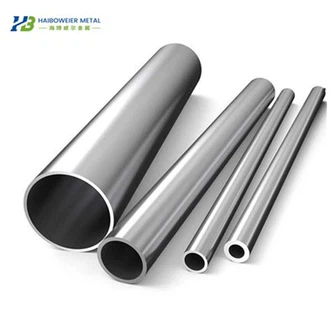
The difference between grade 1 titanium and grade 5 titanium
Titanium metal occupies a key position in aerospace, medical, marine engineering and other fields with its excellent biocompatibility, corrosion resistance and high specific strength. However, titanium materials are not of a single type. According to the difference in purity and alloy composition, international standards divide them into grade 1 to grade 5 titanium. Different grades have significant differences in material composition, mechanical properties and application scenarios. Understanding these differences is crucial for material selection and engineering applications.

Material composition: gradient design of purity and alloy elements
Grade 1 titanium: With high purity as the core feature, the titanium content is usually above 99.6%, and the content of impurity elements (oxygen, nitrogen, hydrogen, iron) is strictly controlled at an extremely low level. This design gives it excellent corrosion resistance, especially for extreme corrosive environments such as strong acids, strong alkalis and seawater. Its low impurity characteristics also ensure biocompatibility, making it an ideal choice for medical implants.
Grade 4 titanium: It belongs to the category of industrial pure titanium, and the upper limit of impurity content is increased to 0.4%. Through cold working strengthening, its strength is significantly higher than that of grade 1 titanium, while maintaining good ductility. This balance makes it widely used in scenarios that require certain strength and corrosion resistance, such as chemical equipment, marine structures, etc.
Grade 5 titanium: As a typical α+β type titanium alloy, its core components are 90% titanium, 6% aluminum and 4% vanadium. Aluminum improves strength through solid solution strengthening, and vanadium refines grains to enhance toughness and improves hot working performance. This alloy design makes it have high strength, high toughness and good heat resistance, making it the preferred material in the high-end engineering field.
Mechanical properties: Coordinated optimization of strength, toughness and fatigue properties
Strength gradient: From grade 1 titanium to grade 5 titanium, the tensile strength increases exponentially. The tensile strength of grade 1 titanium is 240-345MPa, grade 4 titanium can reach 550-740MPa after cold working strengthening, and the tensile strength of grade 5 titanium can exceed 1100MPa after heat treatment. This strength increase makes titanium alloy leap from a lightweight structural material to a high-strength engineering material.
Fracture toughness: The fracture toughness of grade 5 titanium is significantly better than that of pure titanium, and its value can reach 510-620MPa·m(1/2), which is much higher than the 300-400MPa·m(1/2) of grade 1 titanium. The high toughness enables it to withstand impact loads and crack propagation, and is suitable for high-stress scenarios such as aircraft engine blades and ship propellers.
Fatigue performance: The fatigue strength of grade 5 titanium reaches 510MPa (10⁷ cycles), while that of grade 4 titanium is only 300MPa. This difference stems from the fine grain structure and uniform alloy distribution of grade 5 titanium, which makes it less likely to crack under repeated loads, significantly extending the service life of the material.
Elastic modulus: The elastic modulus of each grade of titanium is between human bones (10-30GPa) and stainless steel (200GPa), with grade 1 titanium being 105GPa, grade 4 titanium being 110GPa, and grade 5 titanium being 113GPa. This "intermediate modulus" characteristic can reduce the stress shielding effect and promote bone integration, and has unique advantages in the field of medical implants.
Application scenarios: Layered coverage from basic industries to cutting-edge technologies
Grade 1 titanium: Mainly focuses on corrosion-resistant scenarios, such as nitric acid heat exchangers and chlor-alkali production equipment in the chemical industry, and desalination equipment in marine engineering. Its biological inertness also makes it the first choice for non-load-bearing medical implants, such as skull repair plates and pacemaker housings.
Grade 4 titanium: With the balance between strength and cost, it is widely used in scenarios that require a certain load-bearing capacity. In the chemical industry, it is used to manufacture pressure-resistant containers and pipelines; in marine engineering, it has become a common material for ship propellers and deep-sea detector housings. In addition, grade 4 titanium has excellent cold processing performance and can be used to manufacture complex-shaped parts through processes such as spinning and stretching.
Grade 5 titanium: Dominates the high-end market, especially in areas with strict requirements on material performance. In the aerospace field, it is used to manufacture key components such as engine compressor discs and casings; in marine engineering, it becomes the core material for deep-sea pressure-resistant shells; in the medical field, it is used to manufacture molar implants that withstand high bite forces and long-term wear-resistant joint prostheses.
Technological evolution: a breakthrough path from pure titanium to alloying
The development of titanium materials has undergone a key transition from pure titanium to alloying. In the early days, grade 1 titanium had high purity and strong corrosion resistance, but insufficient strength limited its application range. In the 1950s, the development of grade 5 titanium (Ti-6Al-4V) increased its strength to three times that of pure titanium through the synergistic strengthening of aluminum and vanadium, while maintaining good corrosion resistance. Entering the 21st century, new materials such as titanium-zirconium alloys have further optimized performance, and expanded the application boundaries of titanium alloys in the medical field by reducing elastic modulus and improving biological activity.
The grading of titanium materials is essentially an art of balancing performance and cost. Grade 1 titanium provides reliable corrosion resistance at a low cost and is suitable for non-load-bearing scenarios; grade 4 titanium strikes a balance between strength and economy to meet medium load requirements; grade 5 titanium dominates the high-end engineering field with its excellent mechanical properties and durability.