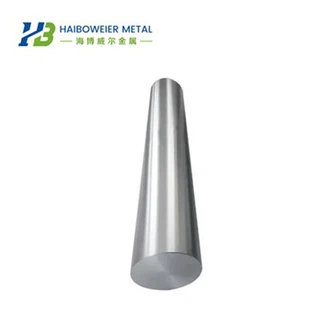
The use of titanium rods and titanium alloy rods in orthopedic surgery
With the rapid development of medical technology, titanium rods and titanium alloy rods, as two important internal fixation materials, play a crucial role in orthopedic surgery due to their unique properties and wide application prospects. This article will delve into the use of titanium rods and titanium alloy rods in orthopedic surgery, helping readers better understand the characteristics of these two materials and their practical applications in surgery.

1. Application of Titanium Rod
The titanium rod is made of pure titanium and has a series of unique properties, which give it certain application advantages in orthopedic surgery:
1) Biocompatibility: Titanium rods have good compatibility with human tissues and are less likely to cause rejection or allergic reactions after implantation, which is beneficial for patients' postoperative recovery.
2) Corrosion resistance: Titanium rods have excellent corrosion resistance and can maintain stability in the body for a long time, making them less susceptible to corrosion and damage.
3) Lightweight design: Titanium rods have lower density and lighter weight, which can reduce the burden of surgical operations and minimize trauma to the patient's body.
In orthopedic surgery, titanium rods are often used for fracture fixation, bone reconstruction, and other surgeries to provide stable support for the fracture site, promote bone healing and recovery.
2. Application of Titanium Alloy Rod
Titanium alloy rods are made of an alloy composed of titanium and other metal elements, which have higher strength and hardness compared to pure titanium, and are suitable for surgeries that require higher strength support:
1) High strength: Titanium alloy rods have relatively higher strength and hardness, providing more stable support and suitable for handling complex fractures or surgeries that require high-strength fixation.
2) Good mechanical properties: Titanium alloy rods have excellent mechanical properties, able to withstand large stresses and pressures, and are not prone to deformation or fracture.
3) Biocompatibility: Titanium alloy rods also have good biocompatibility and are not prone to rejection or allergic reactions after implantation.
In orthopedic surgery, titanium alloy rods are commonly used for artificial joint manufacturing, spinal correction and other surgeries, providing patients with long-term stable support and functional recovery.

3. Choose Suggestions
When choosing between using titanium rods or titanium alloy rods, doctors will comprehensively consider the patient's specific situation, surgical needs, and material performance characteristics:
1) Fracture type and degree: For simple fractures or surgeries that require mild support, titanium rods can be used as an option; For complex fractures or surgeries that require high-strength support, titanium alloy rods are more suitable.
2) Individual patient situation: Factors such as the patient's age, physical condition, and allergy history can also affect the selection of materials. For example, for patients who are allergic to metals, it is necessary to choose materials with better biocompatibility.
3) Surgical requirements: Different surgeries require different materials. For example, in the manufacturing of artificial joints, it is necessary to choose titanium alloy rods with higher strength and durability; In some simple fracture fixation surgeries, lighter titanium rods can be chosen. Application of Titanium Alloy Rod
The choice of titanium rod or titanium alloy rod is not fixed, but needs to be comprehensively considered based on the specific situation of the patient, surgical needs, and the performance characteristics of the material. As professional decision-makers, doctors should fully understand the characteristics of these two materials, and tailor the most suitable internal fixation plan for patients based on their actual condition and surgical needs.