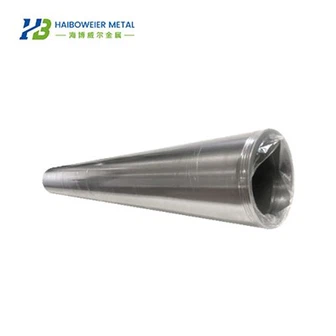
Titanium alloy welding technology
The perfect combination of materials science and technology
Titanium alloys are widely used in aviation, medical, chemical and other fields due to their excellent strength, corrosion resistance and lightweight properties. However, the counterpart is its high structure and difficulty in welding, which requires precision welding technology to ensure welding quality and material performance. Key processes and parameters for titanium alloy welding will be discussed to help achieve high-quality titanium alloy welding.
Welding process
Gas shielded welding (GTAW/TIG): Gas shielded welding, also known as TIG (tungsten inert gas) welding, is a process commonly used for welding titanium alloys. The process uses a fiber-optic, non-melting tungsten electrode to heat the workpiece and filler material with an electric arc while using argon gas (usually helium or argon arc welding) to protect against oxygen and nitride the weld. GTAW is suitable for thin plate materials and high For demanding applications, nitriding welding is popular for its high quality.
Electric Arc Welding (PAW): Plasma Arc Welding is similar to TIG welding, but the arc is generated by a discharge between a refrigerant gas (usually air pressure) and an electrode. This makes the welding process more energy dense and can be used to weld thicker titanium alloy materials. PAW welding enables higher welding speeds and brazing seam penetration.
laser beam welding: Laser beam welding is a high-energy-density welding process that rapidly heats and melts the welding area by focusing the laser beam on the surface of the workpiece. This method can be used to weld thin plates and titanium alloy parts with complex geometries, but requires higher precision equipment and precise welding control.
Welding parameters
Regardless of which welding process is chosen, critical welding parameters influence weld quality and material properties. The following are some important welding parameters:
Current and voltage: The current determines the heat of the welding arc, while the voltage affects the stability of the arc. When welding titanium alloys, lower current is usually required to reduce thermal deformation of the material and the generation of pores. At the same time, ensure sufficient voltage to maintain a stable arc.
Gas protection:Gas shielding is important to prevent oxygen and nitrogen from entering the weld. Nitrogen is typically used for high temperature applications, while nitrogen gas is used for most conventional welding. Selecting the appropriate gas and flow rate is critical to welding quality.
Welding speed: Welding speed is the feed speed of the welding material, which directly affects the width and depth of the weld. Too fast a welding speed may result in a narrow weld, while too slow a welding speed may result in an enlarged heat affected zone. Therefore, the welding speed must be optimized according to the specific application.
Pre- and post-heat treatment
Preheating can weaken thermal deformation during welding and improve welding quality. Post heat treatment is beneficial to eliminate fatigue in the welding area and improve material properties. The temperature and time of these two steps must be determined according to the type and requirements of the titanium alloy.
To sum up, titanium alloy welding technology is a complex engineering science that requires precise process control and material knowledge. Selecting the appropriate welding process and parameters to achieve high-quality welded connection bolts, as well as an understanding of the material and practical experience are also keys to successful welding of titanium alloys. Through continuous research and innovation, we can continuously improve titanium alloy welding technology and provide more reliable solutions for high-performance applications in various fields.