Why is Ti-15-3-3-3 titanium alloy the preferred material for eyeglass frames?
Why is Ti-15-3-3-3 titanium alloy the preferred material for eyeglass frames?
Titanium alloys have become the preferred raw material for high-end eyewear manufacturing. Among various titanium metal materials, Ti-15-3-3-3 titanium alloy sheet possesses high strength, excellent toughness, lightweight, and superior processing performance. These properties have become the primary consideration for major eyewear manufacturers when selecting materials, and it has also become the preferred material for manufacturing precision eyewear components.
Choosing Titanium Alloys for Eyeglass Frames
High-end eyeglass frames must be comfortable to wear, maintaining comfort and pressure-free even after prolonged use. Furthermore, the temples must not deform after repeated opening, closing, compression, and storage, and should not cause allergic reactions upon prolonged skin contact. Simultaneously, designers pursue slender, simple lines and refined surface textures. Slender contours, smooth lines, and overall texture make the entire frame appear light and elegant. Therefore, these factors must be considered when selecting materials. We cannot choose materials that are too soft or too hard; the best material is the one that best suits our needs. Using materials that are difficult to process may increase costs.
Titanium alloys, with their lightweight, high strength, and low density, have become the preferred material in the eyewear industry. It not only meets the demand for slim designs but also caters to consumers' pursuit of lightweight structures. For high-end eyewear manufacturers, this means greater freedom in frame design.
What is Ti-15-3-3-3 titanium alloy?
Compared to ordinary pure titanium, Ti-15-3-3-3 is primarily composed of elements such as molybdenum, chromium, tin, and aluminum. This combination of alloying elements makes it superior in terms of strength, machinability, and lightweight. Therefore, when choosing a frame material, we must consider whether its performance characteristics are suitable. For eyewear manufacturing, the value of this alloy goes far beyond its strength. Frame manufacturers typically need to use relatively thin titanium sheets, machining them into precise geometries, bending them, or performing other manufacturing processes to achieve a smooth surface. Therefore, the selected material must be suitable for both the manufacturing process and the requirements of the final product.
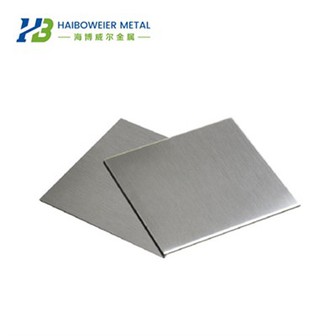
Ti-15-3-3-3 titanium sheets are particularly suitable for manufacturers using sheet metal to manufacture components. Depending on the frame design, titanium sheets can be machined into front frames, bridges, temples, reinforcing ribs, and other precision parts. A major advantage of using sheet metal as a raw material is its dimensional flexibility. Manufacturers can choose the appropriate thickness and then create the desired geometry through cutting, forming, machining, and surface finishing processes. During production, even subtle variations in material properties become very noticeable. Eyeglass frames may appear simple, but their internal components can contain narrow cross-sections, rounded corners, drilled holes, notches, hinges, and fine edges. Material stability is particularly important when maintaining consistency in these characteristics across mass production. Wearing glasses for extended periods can cause discomfort if the face feels heavy.
Titanium alloys are already well-known in the eyewear industry for their lightweight properties. For manufacturers seeking higher-strength titanium alloys, Ti-15-3-3-3 is another ideal choice. This greatly assists designers in developing thinner or more refined frame structures. The goal is not only to make each component as thin as possible but also to ensure the material provides sufficient mechanical strength within a given geometry, while allowing designers to effectively control the overall weight of the frame. This consideration is crucial for high-end eyewear. Well-designed titanium alloy frames should be lightweight and comfortable, yet strong and durable. This provides manufacturers with greater flexibility to design components with specific strength and forming requirements. For eyeglass frame designers, the final manufacturing process must be considered simultaneously when selecting materials.
Even with the same alloy, performance characteristics can vary due to differences in thickness, processing, heat treatment, and specific production processes. Therefore, eyewear manufacturers should communicate the intended use of the products with titanium alloy suppliers before placing large orders.
Surface treatment is just as important as the alloy material itself. The quality of a premium titanium alloy frame depends on its mechanical properties and appearance. After forming and machining, the surface may require polishing, grinding, sandblasting, coloring, coating, or other surface treatments, depending on the final design requirements. Minor surface defects acceptable on industrial parts may be very noticeable elsewhere.
Therefore, manufacturers sourcing Ti-15-3-3-3 titanium alloy sheets should focus on the following aspects:
Surface cleanliness, flatness, thickness uniformity, edge condition, surface defects, material traceability, and compatibility with planned surface treatment processes. Surface quality requirements should be determined before production, not after.
Choosing the Appropriate Thickness
Not all titanium alloy frames are suitable for the same thickness. The appropriate thickness depends on the component design, frame structure, forming process, and required rigidity. Thin sheets may be suitable for some lightweight frame components, while components requiring additional structural support may need thicker materials. Therefore, eyewear manufacturers should not only provide the material grade when requesting a quote; detailed specifications should typically include the following:
Material: Ti-15-3-3-3 / Ti-15V-3Cr-3Sn-3Al titanium alloy sheet (thin or thick)
Product: Titanium alloy sheet (thin or thick)
Thickness: Required thickness and tolerance
Width: Required width
Length: Fixed length or roll/sheet material
Surface treatment: Rolled, polished, ground, or other specified surface treatments
Application: Frames or eyeglass components
Quantity: Sample, trial order, or mass production. This information will help us provide you with feasible production solutions and accurate quotations.
Titanium Alloy Eyeglass Frame Manufacturing Process
The production of titanium alloy eyeglass frames involves multiple processes, including laser cutting, stamping, CNC machining, bending, forming, welding, polishing, and surface treatment. The specific processes depend on the frame structure. For example, a manufacturer producing simple titanium alloy frames might focus on precision cutting and controlled bending processes; while a manufacturer producing more complex frame designs might require extensive machining. It's best to test a small quantity of material under actual production conditions before mass production. This helps uncover practical problems that might not be apparent from material certificates alone.
What questions should eyewear manufacturers ask titanium suppliers?
When sourcing Ti-15-3-3-3 titanium sheets, we need to understand the following:
1. Confirm the exact material grade and applicable technical specifications.
2. Confirm the material's condition. The mechanical properties of a material often depend on processing and heat treatment; therefore, the condition of the material upon delivery must be clearly defined.
3. Discuss dimensional tolerances. Dimensional control requirements for thin titanium sheets used in precision eyewear are typically more stringent than for general industrial applications.
If we choose this material for a new eyeglass frame design, it's best to obtain samples for testing before placing a mass production order to ensure it's suitable for our product. Samples allow manufacturers to directly evaluate the material's performance in cutting, forming, surface treatment, and welding, and whether it conforms to existing overall production processes.
Why Material Consistency is Crucial for High-End Eyewear
The production of high-end eyewear typically involves components that are small in size but require extremely high precision. Even minute deviations in sheet thickness can affect the molding process; differences in surface quality may become apparent after polishing or coating; fluctuations in mechanical properties can affect the performance of components during bending or adjustment. Therefore, material consistency has become an indispensable part of the entire manufacturing process. As a titanium supplier, quality control should not be limited to test reports. Product specifications, surface treatment, mechanical property testing, and packaging are all key elements in ensuring product safety and reliability.
Flexibility and Frame Design
Eyeglass frames are repeatedly deformed during daily use. They open and close frequently during daily wear and adjust to face shape and comfort. Furthermore, they are inevitably subjected to compression during transportation and storage. Therefore, in addition to being lightweight, excellent strength and resistance to deformation are also key factors in material selection. Ti-15-3-3-3 possesses good toughness, strength, and resistance to deformation. Through appropriate heat treatment and processes, we can adjust its mechanical properties to meet the structural and usage requirements of different eyewear. Product Availability.
Ti-15-3-3-3 titanium alloy sheet is an ideal material for eyeglasses. The eyeglasses market is moving towards lighter structures, thinner profiles, more unique designs, and superior long-term performance