


Titanium zirconium tube welding process
The titanium zirconium tube welding process is an extraordinary welding process for titanium zirconium tubes, intended to guarantee welding quality and dependability of the weld. Titanium zirconium pipe is a high-strength, erosion safe metal line material generally utilized in compound industry, medication, aviation and different fields. The titanium and zirconium tube welding process and its key advances will be presented underneath.
To start with, readiness is vital to guaranteeing a fruitful weld. Prior to welding, the titanium zirconium tube should be surface cleaned to eliminate debasements and oxides. In the wake of cleaning, utilize extraordinary apparatuses to definitively adjust the lines to guarantee welding exactness and strength.
The preheat treatment that comes after welding is next. Preheating is to decrease welding pressure and further develop welding quality. By warming the titanium zirconium tube and the welding region, the pressure focus brought about by cooling can be killed while working on the mechanical properties of the welded joint. The preheating temperature and time ought to be sensibly chosen in light of the particular material and line size.
Then, at that point, comes the welding activity. Generally involved welding strategies for titanium zirconium tubes incorporate argon curve welding, plasma welding and opposition welding. Among them, argon bend welding is one of the most regularly utilized welding techniques. During the welding system, it is important to keep up with proper welding current and voltage, and control the welding velocity and point to guarantee the quality and presence of the weld.
Post-weld treatment is required after welding is finished. Post-weld treatment incorporates welding slag expulsion, weld crushing, ultrasonic testing and different cycles. The purpose of these steps is to lower the qualification rate for non-destructive testing, improve the surface finish of welded joints, and get rid of welding residues.
The last step is post-weld heat treatment. By heat treating welded joints, welding pressure can be wiped out and the sturdiness and consumption obstruction of the weld can be moved along. Heat treatment temperature and time ought to be sensibly chosen in light of explicit materials and welding prerequisites.
The titanium zirconium pipe welding process incorporates readiness work, preheating treatment, welding activity, post-weld treatment and post-weld heat treatment. The quality and dependability of welded joints can be guaranteed with reasonable control over the parameters and process requirements of each step. The fruitful utilization of titanium and zirconium tube welding innovation will offer strong specialized help for the advancement of related enterprises.
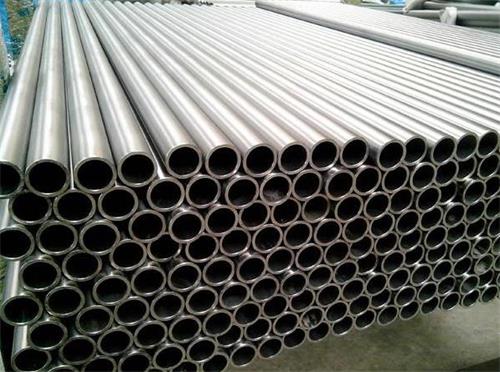
Things to note while welding titanium zirconium tubes:
The welding of titanium and zirconium pipes is a moderately exceptional cycle, in light of the fact that the two metals have a few unique properties. Welding titanium and zirconium pipes requires cautious activity, guaranteeing that proper measures are taken in a controlled climate to guarantee welding quality and keep away from material dirty. If it's not too much trouble, observe the significant welding guidelines and particulars as indicated by the particular circumstance and welding necessities. When welding titanium zirconium tubes, pay attention to the following aspects:
Pick the right welding technique: Titanium and zirconium are receptive metals that respond effectively with components like oxygen and nitrogen at high temperatures. Usually utilized welding techniques incorporate TIG (Tig Welding), EBW (Electron Shaft Welding) and Laser Welding. Picking the proper welding strategy can assist with decreasing the gamble of responses.
Keep a dormant climate: During the welding system, an idle gas (normally argon) is utilized to safeguard the welding region and keep oxygen and different debasements from entering the weld. This diminishes metal oxidation and other conceivable tainting.
Appropriate Welding Current and Voltage: Guarantee appropriate welding quality without causing overheating or underheating by changing the welding current and voltage. This should be adapted to explicit material thickness and measurement.
Preheating and post-heat treatment: Welding of titanium and zirconium normally requires preheating and present intensity therapy on lessen pressure in the welding region and further develop welding execution. This evades breaks and different imperfections in the wake of welding.
Select proper welding materials: Use welding materials reasonable for welding titanium and zirconium, for example, appropriate welding wire and motion. To avoid further contamination, check that these materials are of high quality and pure.
Stringently control welding speed: Limit the speed of the weld to ensure adequate penetration and control of the weld pool. A welding speed that is too fast can lead to the weld area overheating, while a welding speed that is too slow can make the material more sensitive.
Quality examination: Subsequent to finishing the welding, quality examination is performed, including X-beam investigation, ultrasonic review, and so forth., to guarantee that the welded joints have no breaks, pores and different imperfections.
Keep away from cross-contamination: Cross-contamination can be prevented by avoiding contact with other metals. Cross-defilement can prompt erosion of materials and other bothersome impacts.


