What is the difference between forged titanium rods and rolled titanium rods?
Forging is a common metalworking process used to change the shape of metal and improve its mechanical properties through plastic deformation. For forging titanium rods, the following are general steps and considerations:
Material preparation: Select titanium alloy blanks of appropriate quality and purity. Ensure that blanks comply with relevant standards and specifications.
Preheating: Titanium alloys are prone to brittle fracture at lower temperatures, so the blanks usually need to be preheated before forging. The preheating temperature is usually between 850°C and 1100°C to improve the plasticity of titanium.
Forging die selection: Select the appropriate forging die to achieve the desired shape and size. The design of the forging mold should take into account the fluidity and deformability of the material to ensure a good shape during the forging process.
Forging operation: Put the preheated titanium blank into the forging die, and then apply forging force to cause it to plastically deform. The forging process can be divided into rough forging and precision forging to obtain the required shape and size.
Cooling: Forged parts require proper cooling to maintain their shape and mechanical properties. Control of cooling rate is also important to reduce residual stress and improve microstructure.
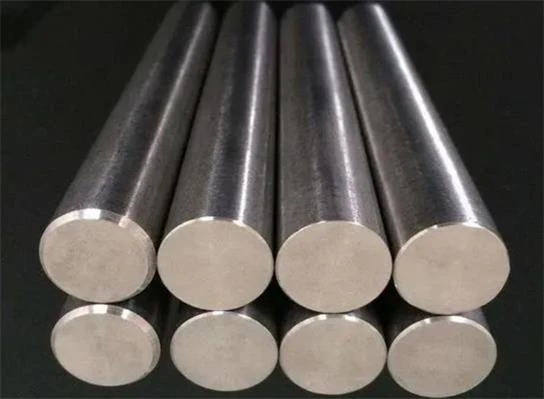
Post-treatment: After forging, the titanium rod may require heat treatment to improve its mechanical properties. Heat treatment can include aging, solution treatment, etc.
Inspection and testing: Inspection and testing of forged parts are carried out to ensure that they meet relevant quality standards. This may include checking dimensions, surface quality, chemical composition and mechanical properties, etc.
It should be noted that titanium alloys have strong chemical activity at high temperatures, so appropriate atmosphere protection measures, such as the use of inert gases, need to be taken during the forging process to prevent oxidation. In addition, for parts with complex shapes, multiple forgings and heat treatments may be required to achieve final requirements.
Rolling is a common metalworking process used to change the shape and size of metal sections through continuous extrusion and stretching. For rolled titanium rods, the following are general steps and considerations:
Material preparation: Select titanium alloy blanks of appropriate quality and purity. Ensure that blanks comply with relevant standards and specifications.
Heating: Titanium alloys usually need to be heated at higher temperatures to improve their plasticity. The heating temperature is usually between 800°C and 1100°C, which can make the titanium more easily deformed and rolled.
Rolling operation: The preheated titanium billet is placed into a rolling mill and passed through a series of rolls to gradually reduce its cross-sectional area to obtain the desired shape and size. The rolling process is usually divided into preliminary rolling and finishing rolling to gradually reduce the cross-sectional area.
Cooling: The rolled titanium rod requires proper cooling to maintain its shape and mechanical properties. The method of cooling can affect the microstructure and properties of the final product.
Straightening: For some applications, it may be necessary to straighten the rolled titanium rod to achieve greater dimensional accuracy.
Surface Treatment: The rolled surface may need to be treated to improve its surface quality. This can include pickling, polishing or other surface treatments.
Inspection and testing: Inspection and testing of rolled products are carried out to ensure that they meet relevant quality standards. This may include checking dimensions, surface quality, chemical composition and mechanical properties, etc.
It should be noted that during the rolling process, attention should be paid to controlling the rolling temperature and speed to avoid excessive plastic deformation and maintain the mechanical properties of titanium. In addition, different rolling process parameters may be required for different types of titanium alloys. Rolling is a cost-effective processing method suitable for mass production and is suitable for producing titanium rods of various shapes and sizes.
Forging and rolling are two different metal working processes that use different methods in processing materials, resulting in different properties and characteristics of the final product. Here are some of the key differences between forged titanium rods and rolled titanium rods:
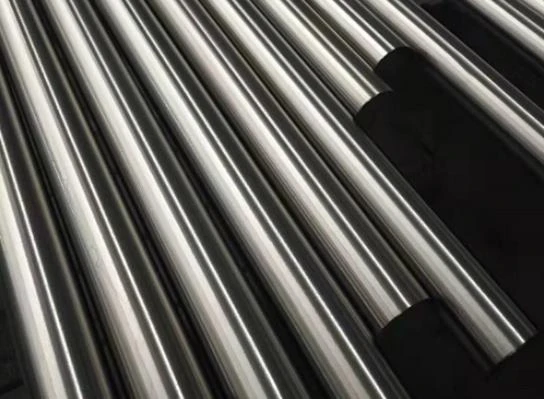
Forged titanium rod:
Process principle: Forging is to apply force to the metal blank at high temperature to cause it to plastically deform, thereby changing its shape and size. This is a process of compressive deformation.
Heating requirements: Forging usually requires preheating the titanium billet to increase its plasticity, making it easier to deform during the forging process. Preheating temperatures are typically between 850°C and 1100°C.
Shape adjustment: Forging is suitable for parts with more complex shapes and larger sizes. By applying force in the mold, various shapes can be formed, suitable for manufacturing shafts, rings, etc.
Microstructure: Forging can improve the uniformity and mechanical properties of the metal and help remove impurities and pores.
Rolled titanium rod:
Process principle: Rolling is to continuously squeeze and stretch the metal blank through a series of rollers, thereby gradually reducing its cross-sectional area to change the shape and size.
Heating requirements: Rolling usually requires heating the titanium billet to improve its plasticity, making it easier for plastic deformation to occur during the rolling process. Heating temperatures are usually between 800°C and 1100°C.
Shape adjustment: Rolling is suitable for producing longer and thinner products, such as plates, bars, etc. It can achieve high dimensional accuracy and is suitable for mass production.
Microstructure: Rolled products usually have an ordered grain structure along the rolling direction, which may affect its mechanical properties. The microstructure needs to be adjusted through appropriate heat treatment.
Overall, the choice between forged or rolled depends on specific product requirements, shape, and use. Forging is often used to produce parts with complex shapes and larger sizes, while rolling is suitable for producing products with simple shapes and smaller sizes, such as plates and bars.