


Why Defense Manufacturers Prefer Titanium Bars?
In modern defense manufacturing, material selection directly impacts equipment performance, reliability, and safety. From fighter jet structural components to key ship parts and various high-end weapon systems, lightweight, high strength, and corrosion resistance are core requirements. Among numerous metallic materials, titanium rods have gradually become a key choice for defense manufacturers due to their superior comprehensive performance. So, why do defense manufacturers favor titanium rods? The answer can be understood from three aspects: material properties, practical application performance, and long-term service value.
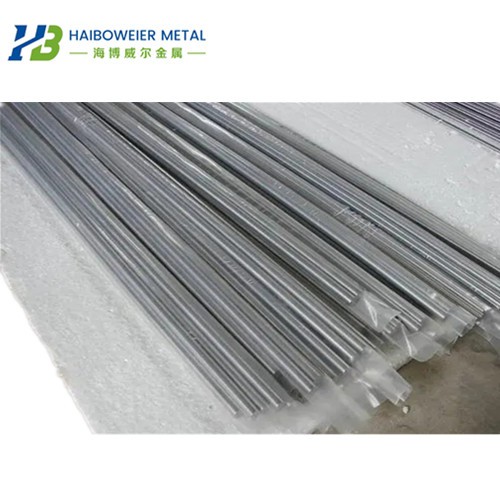
Titanium rods' material properties meet high defense standards.
Defense equipment typically faces high-intensity loads, complex environments, and extreme climatic conditions, placing extremely high demands on material performance. Titanium rods possess characteristics such as low density, high strength, and corrosion resistance, enabling lightweight design while ensuring structural safety.
- Low density helps reduce overall equipment weight.
- High strength allows it to withstand high loads and impact environments.
- Strong corrosion resistance adapts to marine and complex climatic conditions.
- Good fatigue resistance is suitable for long-term, high-frequency use.
These material advantages make titanium rods a crucial component in high-performance equipment structural parts.
Advantages of Titanium Rods in Defense Equipment
In actual manufacturing, titanium rods are frequently used in load-bearing structures, connecting components, and critical shaft parts. Defense equipment has extremely high requirements for safety and stability, and titanium rods can maintain stable performance under complex operating conditions, thereby improving the overall system reliability.
- Suitable for aerospace structural components, improving flight performance.
- Resistant to salt spray corrosion in ship equipment, extending service life.
- Used in high-end mechanical components, ensuring structural stability.
- Maintains mechanical properties even in high-temperature environments.
These applications demonstrate that titanium rods not only possess excellent material properties but also directly enhance the overall level of equipment.
Comprehensive Value of Titanium Rods in Long-Term Service
Defense equipment often requires long-term service and must withstand complex environments and high-intensity operation. Material failure not only increases maintenance costs but may also affect safety. After proper processing, titanium rods have a uniform internal structure, enabling them to maintain stable performance over long-term use.
In aircraft, ships, and high-end equipment systems, the corrosion resistance and fatigue resistance of titanium rods reduce maintenance frequency and improve equipment uptime. Lightweight design can also reduce energy consumption or improve mobility, optimizing overall performance. In the long term, titanium rods not only improve equipment reliability but also help control maintenance costs and extend service life, which is a key reason why defense manufacturers continue to favor this material.
With its comprehensive advantages of being lightweight and high-strength, corrosion-resistant, fatigue-resistant, and high-temperature stable, titanium rods play a crucial role in modern defense manufacturing. They can meet the stringent requirements of high-performance equipment and maintain stable performance during long-term service. As defense technology continues to upgrade and the requirements for material performance continue to increase, the application of titanium rods in high-end equipment will further expand.


