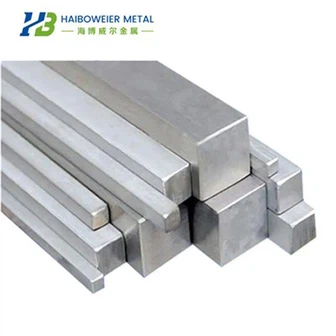
Will titanium alloy corrode?
Titanium alloy is a material with high corrosion resistance. Due to its excellent corrosion resistance, titanium alloys are widely used in fields such as aerospace, medical equipment, chemical industry, etc.
Titanium alloy has good corrosion resistance due to the formation of a stable oxide film on its surface. This oxide film can prevent harmful substances such as oxygen, water, acid, and alkali from further corroding the titanium alloy. In addition, elements such as aluminum, zinc, and iron in titanium alloys can also increase their corrosion resistance.

Titanium alloys exhibit good corrosion resistance in many common corrosive environments. For example, titanium alloys protect against corrosion in fresh and seawater. It can also withstand corrosion from strong acids such as sulfuric acid, hydrochloric acid, nitric acid, and sulfuric acid at a certain concentration. In addition, titanium alloys also have good corrosion resistance to chloride, alkaline solutions, etc.
However, it should be noted that although titanium alloys have high corrosion resistance, they may still suffer corrosion in some extreme environments, such as high temperatures, high pressures, and extremely corrosive media. Therefore, in specific applications, it is also necessary to select appropriate titanium alloy materials according to conditions to ensure their corrosion resistance.
In our daily lives, the term titanium alloy is unlikely to be familiar to people, but it is a material that is favored in technology, medical, aviation and other fields. Today, we will focus on a generally doubtful question in the previous article: Will titanium alloys corrode? By understanding its nature, chemical composition and characteristics, we may be able to unravel this mystery.
Properties of titanium alloys
First, let us understand some basic properties of titanium alloys. Titanium alloy is a material alloyed with titanium and other metallic elements that has an ideal balance of strength and hardness. The relatively low density makes titanium alloy the first choice for lightweight titanium alloy design. This also explains why we often see the shape of this material on aircraft, cars, etc.
Effect of chemical composition on corrosion resistance
The corrosion resistance of titanium alloys is a property that attracts much attention. "Non-corrosion" here does not mean that it is absolutely immune to all corrosion, but it means that it can perform very well in many crocodile environments. This is due to some common alloying elements in titanium alloys, such as aluminum, vanadium, magnesium, etc.
The addition of chromium: Chromium is a "helper" with excellent corrosion resistance. It helps to form a dense oxide film, which effectively prevents some harmful substances from scanning the titanium alloy. You can think of it as a moat for reinforcement, protecting the safety of the castle.
Molybdenum's contribution: Adding molybdenum to a titanium alloy is like equipping it with a piece of reinforced armor. Especially in strong acid and alkali environments, molybdenum can significantly improve the corrosion resistance of titanium alloys, making them more resilient when facing challenges.
Nickel electroplating: In addition to enhancing the mechanical properties of the alloy, nickel can also enhance its resistance to corrosive media. This allows us to evaluate titanium alloys in a variety of different scenarios with greater confidence.
Corrosion resistance characteristics
The corrosion resistance of titanium alloy is quite eye-catching.
Resistance to seawater: Have you ever wondered why some offshore equipment, such as submarines and ocean platforms, often use titanium alloys? The reason is that titanium alloys exhibit excellent resistance to seawater corrosion.
Unlike other metals, it is more resistant to chloride ions in seawater.
Acid and alkali resistance: In our daily lives, acid rain may be an environmental problem we often hear about. However, titanium alloy's ability to withstand acid rain is reassuring. It corrodes relatively slowly in liquids such as sulfuric acid and liquids with higher concentrations.
Stability of organic compounds: In the chemical industry, various organic compounds often need to be processed. Titanium alloy shows excellent stability in such an environment and is not prone to corrosion, which makes people use it with more confidence.
Precautions in Practical Application
Although titanium alloys have outstanding corrosion resistance, they still need to be strictly dealt with in some special environments:
Strong oxidizing environment: In an oxidizing atmosphere at high temperatures, titanium alloys may undergo oxidation reactions. Therefore, you need to pay attention to protective measures when using it in such an environment.
Corrosion by hydrogen sulfate: In a hydrogen sulfate environment, the corrosion resistance of titanium alloys will be challenged. In this case, we need to select materials more carefully or take additional protective measures.
Overall, titanium alloys have become star materials in many industries due to their excellent performance and corrosion resistance. Through scientific alloy design and appropriate application environment selection, we can better take advantage of its corrosion resistance.