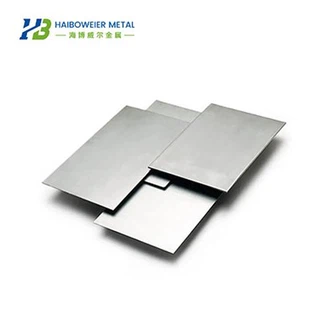
Corrosion Resistance Of Titanium Alloys in Deep-Sea Oil Production Equipment
Deep-sea oil production environments are complex, with equipment operating under high salinity, high pressure, and low temperatures for extended periods. Materials must possess extremely strong corrosion resistance to ensure system stability. Traditional metal materials are prone to corrosion, fatigue, and even structural failure in such environments, posing safety risks. Titanium alloys, due to their excellent chemical stability and corrosion resistance, have attracted widespread attention and are increasingly being applied in deep-sea oil production equipment. By appropriately utilizing this material, the reliability and service life of equipment in extreme environments can be significantly improved.

Formation Mechanism of Titanium Alloy Corrosion Resistance
The key to the excellent corrosion resistance of titanium alloys lies in the formation of a dense oxide film on their surface. This oxide film possesses good stability, preventing further penetration of external corrosive media into the material's interior. When the surface is slightly damaged, the oxide film can regenerate rapidly, thus continuing its protective function. In saline seawater and complex chemical environments, this self-healing ability allows titanium alloys to maintain long-term stability. The uniform internal structure of the material also reduces the possibility of localized corrosion, making it more reliable in deep-sea environments.
Corrosion Resistance Advantages of Titanium Alloys in Deep-Sea Environments
In deep-sea oil production equipment, titanium alloys exhibit multiple corrosion resistance advantages.
- Strong resistance to seawater corrosion: They are not prone to corrosion in high-salt environments.
- Resistance to pitting and crevice corrosion: They can reduce damage caused by localized corrosion.
- Resistance to stress corrosion cracking: They maintain structural stability under high pressure conditions.
- Resistance to biocorrosion: They have strong resistance to the adhesion of marine microorganisms.
- High long-term stability: Their performance changes little in complex environments.
These characteristics give titanium alloys a significant advantage in deep-sea equipment materials.
Impact on the Safety of Deep-Sea Oil Production Equipment
Deep-sea oil production equipment has extremely high safety requirements. Corrosion or damage to materials can lead to serious consequences. The high corrosion resistance of titanium alloys can reduce the risk of damage to pipelines, connectors, and critical structural parts, thereby improving the overall system safety. Due to the stable material properties, equipment is less prone to sudden failures during long-term operation, helping to maintain continuous operation. Stable material performance also reduces maintenance frequency, making equipment operation more reliable.
Adaptability to Complex Operating Conditions
The deep-sea environment is not only characterized by high salinity but may also contain sulfur-containing gases or other corrosive media. Titanium alloys maintain stable performance in these environments, showing little chemical reaction or performance degradation. Under low-temperature conditions, their mechanical properties remain stable, without significant performance decline due to environmental changes. Facing high-pressure environments, the structural strength of titanium alloys meets operational requirements, ensuring good adaptability in various extreme conditions.
Development Potential of Titanium Alloys in the Deep-Sea Field
With the increasing intensity of deep-sea resource development, the demand for high-performance materials continues to grow. The application of titanium alloys in deep-sea oil production equipment is gradually expanding, with more trials being conducted on everything from key components to overall structures. With improvements in manufacturing technology and cost optimization, the application scope of titanium alloy materials will further expand. In future deep-sea engineering, these materials are expected to play an even more important role, providing more stable and durable performance support for equipment.