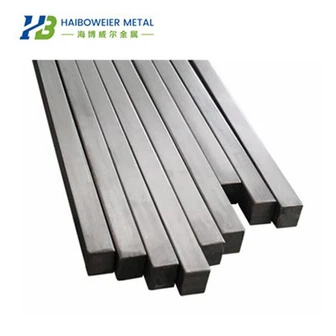
How Effective Are Titanium Alloy Plates in Protective Armor?
In modern protective equipment, the performance of armor materials directly determines both protection effectiveness and mobility. As the demand for lightweight solutions and enhanced protection continues to grow, traditional steel armor is increasingly unable to meet the requirements of high-performance systems. Titanium alloy plates, with their high strength-to-weight ratio, excellent impact resistance, and superior corrosion resistance, are becoming an important choice for protective armor materials. Whether used in military vehicles, aerospace protective structures, or specialized defense equipment, titanium alloy plates offer unique advantages and provide new solutions for improving overall protection performance.

Protection Advantages from High Strength-to-Weight Ratio
In armor design, material strength and weight directly influence protection efficiency and mobility:
- High strength with low density: Titanium alloy plates have strength comparable to high-strength steel but only about 60% of its density, significantly reducing overall weight.
- Improved mobility: Lightweight armor enhances the speed and maneuverability of vehicles and equipment.
- Strong resistance to impact loads: Maintains structural integrity under high-speed impacts.
- Higher safety margins: Provides greater protection strength under the same weight conditions.
Excellent Impact and Ballistic Resistance
The core function of protective armor is to resist impact and penetration, where titanium alloy plates perform effectively:
- High energy absorption capacity: Efficiently dissipates impact energy, reducing penetration risk.
- Stable ballistic performance: Offers reliable protection against medium-caliber projectiles.
- Resistance to crack propagation: Less prone to developing through-thickness cracks after impact.
- Compatibility with multilayer systems: Can be combined with ceramics or composite materials to form advanced armor systems.
Corrosion Resistance and Environmental Adaptability
Protective equipment often operates in harsh environments, making durability essential:
- Resistance to seawater and humid conditions: Suitable for naval equipment and coastal deployment.
- Chemical corrosion resistance: Maintains stable performance in saline or acidic environments.
- Long-term service stability: Minimizes performance degradation caused by corrosion.
- Reduced maintenance costs: Extends service life and lowers replacement frequency.
Processing and Structural Design Advantages
In addition to performance, titanium alloy plates also offer benefits in processing and structural design:
- Formable into complex structures: Suitable for curved armor and integrated protective designs.
- Good welding and joining properties: Supports multiple joining methods to enhance overall strength.
- Supports lightweight optimization: Reduces material usage while maintaining protection performance.
- Compatible with composite armor systems: Can be integrated with other materials to improve overall protection effectiveness.
Titanium alloy plates provide an effective solution for improving protection performance while reducing weight in armor applications. In modern equipment where both mobility and safety are critical, their advantages are increasingly evident. Through proper design and material integration, titanium alloy plates can meet diverse protection requirements while maintaining long-term stability in complex environments, offering reliable and high-performance material support for protective systems.