


How Strong Is The High-Temperature Resistance Of Aerospace-Grade Titanium Alloys?
In the aerospace field, materials are exposed to temperatures far beyond those found in conventional industrial environments. During high-speed flight or atmospheric re-entry, surface temperatures can rise rapidly, while engine components operate under sustained high-temperature and high-pressure conditions. Materials must not only resist heat but also retain strength, fatigue resistance, and dimensional stability. Aerospace-grade titanium alloys are widely used under these extreme requirements. Compared with traditional metals, they maintain strong overall performance in the 300°C to 600°C range, and some advanced alloys can withstand even higher temperatures for short durations. This makes titanium alloys a key material bridging lightweight design and high-temperature capability.
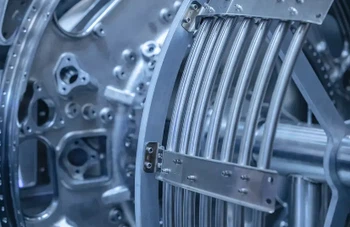
How Strong Is the Actual Temperature Resistance?
The high-temperature capability of aerospace-grade titanium alloys can be clearly understood through specific temperature ranges:
- Conventional α+β titanium alloys (such as Ti-6Al-4V) can operate continuously at around 300°C
- High-temperature titanium alloys can sustain long-term service at approximately 500°C
- Short-term temperature limits can exceed 600°C for components exposed to thermal spikes
This temperature range places titanium alloys in a unique position, filling the gap between aluminum alloys and high-temperature superalloys.
How Well Do They Retain Strength at High Temperatures?
Unlike many materials that rapidly lose strength when heated, titanium alloys maintain strong load-bearing capability:
- Retain about 70% or more of their room-temperature strength at around 300°C
- Maintain significant structural strength even near 500°C
- Exhibit good creep resistance, ensuring long-term stability under heat and stress
This ability to "retain strength under heat" makes them ideal for critical load-bearing components such as compressor discs and casings.
How Reliable Is Their Oxidation and Thermal Stability?
High-temperature environments also introduce oxidation and material degradation challenges:
- Oxidation rates remain relatively low within the 300°C–500°C range
- A naturally formed oxide layer protects the material from further degradation
- Stable performance under repeated thermal cycling reduces the risk of cracking
This means titanium alloys not only withstand high temperatures but also maintain long-term stability under continuous exposure.
Real-World Aerospace Performance Validation
The high-temperature resistance of titanium alloys has been proven in real aerospace applications:
- Compressor components operate continuously in airflow temperatures between 300°C and 500°C
- Aircraft skins endure rapid temperature spikes during high-speed flight without deformation
- Fasteners maintain structural integrity under high-temperature vibration conditions
These real-world applications demonstrate that titanium alloys deliver not just theoretical performance but also proven engineering reliability in demanding environments.
The high-temperature resistance of aerospace-grade titanium alloys is not defined by a single metric, but by a combination of temperature tolerance, strength retention, and long-term stability. Within the critical range of 300°C to 500°C, they not only withstand heat but also maintain structural integrity and reliability, providing consistent support for aerospace systems operating in extreme environments. This unique combination makes titanium alloys an essential material linking lightweight design with high-temperature performance, and they will continue to play a vital role as aerospace technology advances toward higher speeds and harsher conditions.


