


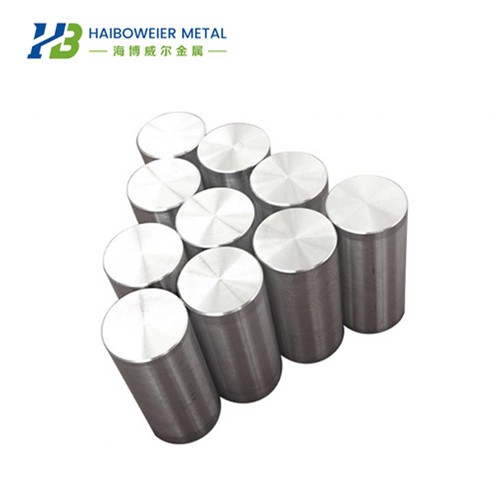
Titanium Rod Grade3
Name: titanium rod Grade3
Material: Grade 3 pure titanium
Company homepage: https://www.haibowellti.com
Tensile strength : 539Ma
Quality level : excellent quality
Usage: used in aerospace, chemical, medical and marine, etc.
Features: Excellent strength, corrosion resistance and weldability
Type: Known as Alpha Titanium
Product Introduction
Mechanical properties :
Titanium Rod Grade3 is a commercially pure titanium alloy primarily used in aerospace and marine applications. It is a low-density and lightweight material with excellent corrosion resistance and a high strength-to-weight ratio. This alloy is also known as Ti-3Al-2.5V, UNS R50550, and Grade 3 Titanium. Below 882°C, it has a close-packed hexagonal lattice structure, which is called alpha titanium. At room temperature, titanium alloys have three matrix categories: α alloy, (α+β) alloy and β alloy. The industrially pure titanium commonly used in industry is GR-2 because of its moderate corrosion resistance and comprehensive mechanical properties. Grade 3 can be used when requirements for wear resistance and strength are high. GR-1 can be used when better molding performance is required.
Mechanical properties :
|
GR3 titanium alloy mechanical properties : |
density / temperature |
|
|
tensile strength |
σ b/MPa2895 |
GR3 titanium alloy density : 4.5 (g/cm3) |
|
Specify residual elongation stress |
σ r0.2/MPa ≥ 825 |
|
|
Elongation |
85(%) ≥ 10 |
GR3 working temperature -100~550 ( ℃ ) |
|
rate of reduction in area |
85(%) ≥ 10 |
|
Chemical composition of titanium rod Grade3:
|
GR3 titanium alloy |
||||
|
Titanium (Ti) |
margin |
|
Hydrogen (H) |
≤ 0.015 |
|
Iron (Fe) |
≤ 0.30 |
|
Oxygen (O) |
≤ 0.20 |
|
Carbon (C) |
≤ 0.10 |
|
Aluminum (AI) |
5.5~ 6.8 |
|
Nitrogen (N) |
≤ 0.05 |
|
Vanadium (V) |
3.5~4.5 |
Titanium alloys can be divided according to their uses
For heat-resistant alloys
High-strength alloy
Corrosion-resistant alloys (titanium-molybdenum, titanium-palladium alloys, etc.)
Low temperature alloy
Special function alloys (titanium-iron hydrogen storage materials and titanium-nickel memory alloys)
The most widely used titanium alloys are Ti-6Al-4V (GR5), Ti-5Al-2.5Sn (GR6) and industrial pure titanium (GR-1, grade2 and grade 3).
Quality is trustworthy:
1
Strict quality inspection
2
Craftsmanship
3
Non-standard size
4
good quality
Our advantage:
Welcome your purchase and cooperation
Major: Continuous learning and innovation
Integrity: Integrity is the basis, and credibility is the key to dealing with others.
Concept: We always insist on building a brand with quality, exploring markets with innovation, and promoting development with efficiency.
After-sales: The company adheres to the business philosophy of "customer first, proactive" and provides customers with high-quality services."
Service: The company is deeply trusted by our customers with its business philosophy of "honesty, pragmatism, win-win benefits, credibility first"
Classification of titanium alloys :
At room temperature, titanium alloys have three matrix structures, and titanium alloys are divided into the following three categories: α alloys, (αβ) alloys and β alloys.
Alpha titanium alloy is a single-phase alloy composed of alpha phase solid solution. It is in α phase both at normal temperature and at higher practical application temperatures. The structure is stable, more wear-resistant than pure titanium, and has stronger oxidation resistance. At temperatures of 500°C to 600°C, it still maintains its strength and creep resistance, but it cannot be strengthened through heat treatment, and its room temperature strength is not high.
Beta titanium alloy is a single-phase alloy composed of beta phase solid solution. High strength without heat treatment. After quenching and aging treatment, the alloy is further strengthened, and the room temperature strength can reach 1372~1666 MPa; however, the thermal stability is poor and not suitable for use at high temperatures.
αβ titanium alloy is a dual-phase alloy with good comprehensive properties, good structural stability, good toughness, plasticity and high temperature deformation properties. It can be hot-pressured better and can be quenched and aged, making the alloy stronger than titanium. Alloy weaponization. The strength after heat treatment is about 50% to 100% higher than that of the annealed state; it has high high temperature strength and can work for a long time at temperatures of 400°C to 500°C. Its thermal stability is inferior to α titanium alloy.
Among the three titanium alloys, the most commonly used ones are α-titanium alloy and αβ-titanium alloy; α-titanium alloy has the best machinability, followed by αβ-titanium alloy, and β-titanium alloy is worse .
Titanium rod Grade3 has a variety of applications in different industries, such as:
1. Aerospace industry: used in the manufacturing of aircraft parts, engine components and aircraft hydraulic systems.
2. Marine industry: Due to its excellent corrosion resistance, it is used in the construction of ship propellers, hulls and marine pipelines.
3. Chemical industry: used to manufacture chemical processing equipment such as heat exchangers, pumps and valves.
4. Medical industry: used to produce surgical implants, pacemakers and other medical devices.
5. Sports equipment: Due to its lightweight and durable properties, it is used in the production of golf club heads, bicycle frames and tennis racket frames.
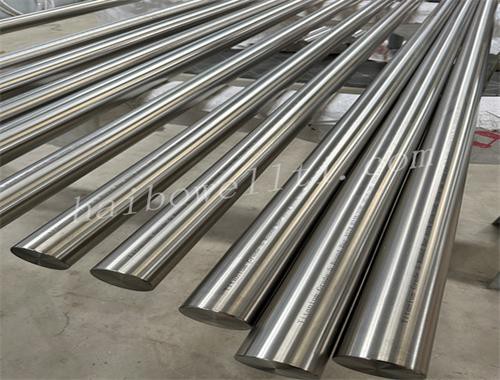
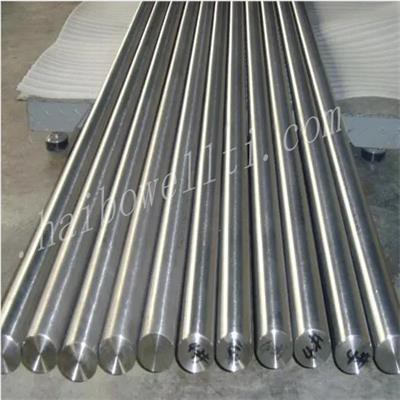
Our titanium rod diagram


Hot Tags: titanium rod grade3, China titanium rod grade3 manufacturers, suppliers, factory, ASTM B348 Titanium Rod, Titanium Square Bar, Titanium Rods for Aerospace, Forged Titanium Bar, Gr23 Titanium Bar, Gr7 Titanium Bar
You Might Also Like


Send Inquiry
