Innovative Applications Of Titanium Wire in Fitness Equipment
In the modern fitness environment, people are increasingly emphasizing the safety, durability, and user experience of equipment. Many focus on the appearance, weight adjustment, or brand of the equipment, neglecting changes in the internal structural materials. In fact, some seemingly insignificant material upgrades are quietly changing the way we exercise, with titanium wire being a prime example. Titanium, as a high-performance metal, is lightweight, high-strength, and corrosion-resistant, making it widely used in demanding fields such as medical and aerospace. When titanium wire is introduced into fitness equipment, it not only optimizes the equipment's structure but also improves safety and comfort.
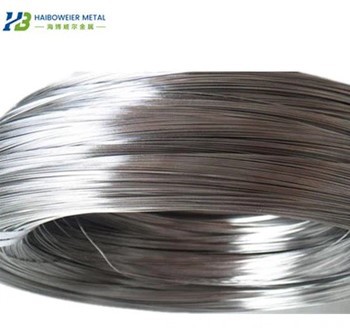
In strength training, cardio equipment, and even rehabilitation equipment, titanium wire can serve as a connection, support, or elastic structure. Compared to traditional materials, it is more durable and stable. While this change may not be immediately apparent, users can clearly feel the equipment becoming smoother and more reliable over long-term use. Titanium wire is becoming an important direction for the "internal upgrade" of fitness equipment, improving the training experience from the details.
Innovative Applications of Titanium Wire
• High-Strength Connecting Components
In strength training equipment, titanium wire can serve as an internal connecting structure, improving overall stability and reducing the risk of loosening.
• Elastic Support Systems
Some equipment utilizes the elasticity of titanium wire to provide smoother resistance changes, making movements more natural.
• Lightweight Design Applications
Replacing some traditional metal components with titanium wire can effectively reduce the weight of equipment, facilitating movement and adjustment.
• Corrosion-Resistant Structural Design
In high-humidity environments (such as gyms or outdoor areas), titanium wire is less prone to rust, extending the lifespan of equipment.
• Safety Protection Structures
In areas requiring repeated stretching, titanium wire can reduce the risk of breakage, improving training safety.
Advantages of Titanium Wire Compared to Traditional Materials
Compared to traditional steel wire, titanium wire is lighter without sacrificing strength, allowing for greater flexibility while maintaining stability. While steel wire is cheaper, it is prone to fatigue or rust after prolonged use. Compared to rubber or elastic ropes, titanium wire is more durable, less prone to aging or loss of elasticity, and is particularly suitable for high-frequency use in fitness environments. Compared to ordinary alloy materials, titanium wire excels in corrosion resistance, maintaining stable performance even in humid environments.Overall, titanium wire is more suitable for fitness equipment requiring long-term stable performance and high safety.
Questions about titanium wire in fitness equipment
Q: Will titanium wire make the equipment stiff and affect the user experience?
A: No. Titanium wire is usually used as an internal structural material in combination with other materials and will not directly affect the feel.
Q: Is equipment using titanium wire more expensive?
A: Generally, it will be slightly more expensive, but due to its higher durability, it is more cost-effective in the long run.
Q: Is it suitable for home fitness or commercial gyms?
A: It is suitable for both, especially in high-frequency commercial environments where its advantages are more obvious.
Q: Does it require special maintenance?
A: No, normal cleaning and maintenance are sufficient, and the maintenance cost is low.
Actual performance
For example, in multi-gyms, some high-end equipment uses titanium wire as an internal tension structure, making weight switching smoother and reducing jamming. In rowing machines, titanium wires can be used in the transmission system, making the pulling process more stable and reducing wear.In resistance training equipment, using titanium wire structures can provide more uniform resistance changes and is less prone to aging or breakage than ordinary rubber. In rehabilitation training equipment, the stability of titanium wires also helps users conduct safer and more controlled training, reducing the possibility of accidents.
The application of titanium wires in fitness equipment is a typical example of "detailed innovation." It doesn't change the basic function of the equipment, but it brings significant improvements in structure, durability, and safety. For users, this change is reflected in smoother operation, a more stable user experience, and a longer lifespan. The addition of titanium wires allows fitness equipment to optimize performance while maintaining its functionality. Whether for daily exercise or professional training, this material upgrade provides more reliable support. Although it's hidden inside the equipment, it is these unseen improvements that make every workout safer and more efficient.